Ottoman Genocide Begins: One Million Armenians Perish
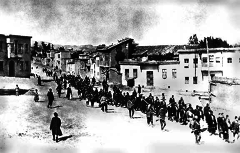
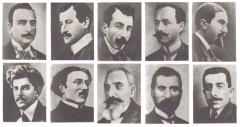
Ottoman police knocked on doors across Constantinople on the night of April 24, 1915, arresting 235 Armenian intellectuals, clergy, physicians, and community leaders. By dawn, the Armenian community in the imperial capital had been decapitated of its leadership. The arrested men were deported to prison camps in the Anatolian interior, where most were executed within months. That night marked the beginning of a systematic campaign to eliminate the Armenian population of the Ottoman Empire, a campaign now recognized as the first genocide of the twentieth century. The killings had political and demographic logic. The Ottoman government, led by the Committee of Union and Progress under the "Three Pashas," Enver, Talat, and Cemal, viewed the Armenian Christian minority as a security threat during World War I, particularly given Russia's proximity and the existence of Armenian volunteer units in the Russian army. The wartime crisis provided cover for a policy that went far beyond military necessity. Beginning in May 1915, Armenian civilians across eastern Anatolia were ordered to assemble, stripped of possessions, and marched into the Syrian desert on death marches designed to kill through exhaustion, starvation, and exposure. The scale was staggering. An estimated 1 to 1.5 million Armenians perished between 1915 and 1923 through mass shootings, forced marches, deliberate starvation, drowning, and burning. Women and children were frequently separated from men, with males executed and females subjected to forced conversion, sexual violence, and enslavement. The killing was not random but administratively organized, with deportation orders issued through official channels, special killing squads formed from released convicts, and property confiscation managed through legal mechanisms. The Republic of Turkey has consistently rejected the genocide designation, arguing that the deaths resulted from wartime chaos, disease, and intercommunal violence rather than a deliberate extermination policy. More than thirty countries, including the United States as of 2019, have formally recognized the Armenian Genocide. April 24 is commemorated worldwide as Armenian Genocide Remembrance Day, and the events of 1915 directly influenced Raphael Lemkin's coining of the word "genocide" in 1944.
April 24, 1915
111 years ago
Key Figures & Places
What Else Happened on April 24
A child inherited the throne of the most powerful empire on earth, and a woman ruled in his place for two decades. Thutmose III became pharaoh around 1479 BC up…
Greek soldiers crept out of a hollow wooden horse in the dead of night and opened the gates of Troy, ending a ten-year siege and launching one of the foundation…
Ten years of siege, one wooden horse hiding two thousand Greeks. When the gates creaked open, Priam's palace burned and his sons fell by the sword. Helen walked…
Eratosthenes pinned 1183 BC as the day Greek ships burned twelve thousand men and women alive inside wooden walls. He didn't care about gods; he counted the dea…
Charles V's horse, Euphrosine, bolted right into a swamp, leaving the Emperor stranded in muddy water while his son-in-law, the Duke of Alba, charged straight t…
Mary, Queen of Scots, wed the Dauphin François at Notre Dame, uniting the French and Scottish crowns under a single Catholic alliance. This marriage intensified…
Talk to History
Have a conversation with historical figures who witnessed this era. Ask questions, explore perspectives, and bring history to life.