Today In History
September 27 in History
Your birthday shares the stage with stories that shaped the world. Born on this day: Lil Wayne, Robert Edwards, and Asashōryū Akinori.

Einstein Unveils E=mc2: Physics Rewritten Forever
A twenty-six-year-old patent clerk in Bern, Switzerland, had already turned physics upside down three times that year when he submitted a three-page addendum that would become the most famous equation in science. On September 27, 1905, the journal Annalen der Physik received Albert Einstein's paper "Does the Inertia of a Body Depend Upon Its Energy Content?", which introduced E=mc² to the world. The paper was the final installment of Einstein's miraculous year, his annus mirabilis. In March, he had explained the photoelectric effect by proposing that light behaved as discrete packets of energy called quanta, work that would earn him the 1921 Nobel Prize. In May, he proved the existence of atoms by analyzing Brownian motion. In June, he published the special theory of relativity, demolishing the concept of absolute time and space. The September paper followed logically from special relativity. Einstein showed through elegant mathematical reasoning that mass and energy were not separate quantities but different expressions of the same thing, connected by the speed of light squared. Because the speed of light is enormous (roughly 186,000 miles per second), even a tiny amount of mass contained a staggering amount of energy. A single kilogram of matter, if fully converted, held the energy equivalent of 21 megatons of TNT. The equation was purely theoretical in 1905, and Einstein himself doubted it could ever be tested directly. Forty years later, the atomic bombs that destroyed Hiroshima and Nagasaki provided the most terrifying confirmation imaginable. Nuclear fission converts roughly 0.1 percent of a uranium atom's mass into energy. Nuclear fusion in hydrogen bombs converts about 0.7 percent. The sun, converting 600 million tons of hydrogen into helium every second, is a natural demonstration of E=mc² on a cosmic scale. Einstein's equation reshaped not only physics but philosophy, warfare, and energy policy. Nuclear power, medical imaging, carbon dating, and our understanding of stellar evolution all depend on the relationship between mass and energy that a young clerk derived from first principles on a few sheets of paper in 1905.
Famous Birthdays
b. 1982
1925–2013
Asashōryū Akinori
b. 1980
Nicos Anastasiades
b. 1946
Diane Abbott
b. 1953
Mari Kiviniemi
b. 1968
Randy Bachman
b. 1943
Historical Events
William, Duke of Normandy, had been waiting for weeks for the wind to change. On September 27, 1066, it finally blew from the south, and his invasion fleet of roughly 700 ships carrying 7,000 soldiers and 2,000 horses set sail from the mouth of the River Somme, launching the Norman conquest that would transform England, its language, its laws, and its ruling class forever. William's claim to the English throne rested on a tangle of promises and betrayals. Edward the Confessor, the childless English king, had allegedly promised the crown to William during a visit to Normandy around 1051. Harold Godwinson, England's most powerful earl, had supposedly sworn an oath supporting William's claim while a guest in Normandy in 1064. When Edward died on January 5, 1066, Harold took the throne for himself. William declared him an oath-breaker and began assembling an army. The invasion was an enormous logistical gamble. No army had successfully crossed the English Channel by force since the Romans. William spent months building ships, recruiting mercenaries from across France and Italy, and securing papal approval for his campaign. The fleet gathered at Dives-sur-Mer in August but was pinned down by unfavorable northerly winds for over a month. Meanwhile, Harold faced a second invasion threat from Harald Hardrada of Norway, who landed in Yorkshire with a Viking army. Harold force-marched north and destroyed the Norwegian invasion at the Battle of Stamford Bridge on September 25. Two days later, William's fleet crossed the Channel, landing at Pevensey Bay on the Sussex coast on September 28. Harold raced south with his exhausted army. The armies met at the Battle of Hastings on October 14, 1066. Harold was killed, traditionally depicted with an arrow through his eye, though the actual manner of his death remains debated. William marched on London and was crowned king on Christmas Day. The conquest replaced the entire English ruling class with a French-speaking Norman aristocracy, introduced feudal land tenure, reshaped the legal system, and injected thousands of French words into the English language. The England that emerged from 1066 was fundamentally different from the Anglo-Saxon kingdom that preceded it.
A twenty-six-year-old patent clerk in Bern, Switzerland, had already turned physics upside down three times that year when he submitted a three-page addendum that would become the most famous equation in science. On September 27, 1905, the journal Annalen der Physik received Albert Einstein's paper "Does the Inertia of a Body Depend Upon Its Energy Content?", which introduced E=mc² to the world. The paper was the final installment of Einstein's miraculous year, his annus mirabilis. In March, he had explained the photoelectric effect by proposing that light behaved as discrete packets of energy called quanta, work that would earn him the 1921 Nobel Prize. In May, he proved the existence of atoms by analyzing Brownian motion. In June, he published the special theory of relativity, demolishing the concept of absolute time and space. The September paper followed logically from special relativity. Einstein showed through elegant mathematical reasoning that mass and energy were not separate quantities but different expressions of the same thing, connected by the speed of light squared. Because the speed of light is enormous (roughly 186,000 miles per second), even a tiny amount of mass contained a staggering amount of energy. A single kilogram of matter, if fully converted, held the energy equivalent of 21 megatons of TNT. The equation was purely theoretical in 1905, and Einstein himself doubted it could ever be tested directly. Forty years later, the atomic bombs that destroyed Hiroshima and Nagasaki provided the most terrifying confirmation imaginable. Nuclear fission converts roughly 0.1 percent of a uranium atom's mass into energy. Nuclear fusion in hydrogen bombs converts about 0.7 percent. The sun, converting 600 million tons of hydrogen into helium every second, is a natural demonstration of E=mc² on a cosmic scale. Einstein's equation reshaped not only physics but philosophy, warfare, and energy policy. Nuclear power, medical imaging, carbon dating, and our understanding of stellar evolution all depend on the relationship between mass and energy that a young clerk derived from first principles on a few sheets of paper in 1905.
Ten months after President John F. Kennedy was shot dead in Dallas, the commission charged with investigating his assassination delivered its findings. On September 27, 1964, the Warren Commission released an 888-page report concluding that Lee Harvey Oswald, acting alone, had fired three shots from the sixth floor of the Texas School Book Depository, killing Kennedy and wounding Texas Governor John Connally. Jack Ruby, who shot Oswald on live television two days later, had also acted alone. Chief Justice Earl Warren had accepted the chairmanship reluctantly, and the seven-member commission included prominent figures from both parties: Senator Richard Russell, Senator John Sherman Cooper, Representative Hale Boggs, Representative Gerald Ford, former CIA Director Allen Dulles, and banker John J. McCloy. The commission heard testimony from 552 witnesses and reviewed thousands of documents. The report's central conclusion rested on what critics later called the "single bullet theory." The commission determined that one of Oswald's three rounds passed through Kennedy's neck and then struck Connally, causing multiple wounds. This trajectory was necessary to explain how both men were hit while only three shell casings were found at the scene. Commission member Arlen Specter developed the theory, which many Americans found physically implausible. Public skepticism was immediate and enduring. Polls taken in the decades after the report consistently showed that a majority of Americans believed in some form of conspiracy involving the CIA, the Mafia, Cuba, the Soviet Union, or elements within the U.S. government. The House Select Committee on Assassinations concluded in 1979 that Kennedy was "probably assassinated as a result of a conspiracy," though this finding was later challenged on methodological grounds. The Warren Commission's records were sealed for 75 years, fueling suspicion that the government was hiding evidence. Successive presidents have ordered partial releases, with the final batch scheduled for 2039. Whether the Warren Commission found the truth or buried it remains the most debated question in American criminal history.
Kabul fell without a fight. On September 27, 1996, Taliban fighters rolled into the Afghan capital in pickup trucks as the forces of President Burhanuddin Rabbani melted away to the north. Among their first acts was to seize former communist president Mohammad Najibullah from the United Nations compound where he had sheltered since 1992, torture him, and hang his mutilated body from a traffic pole in the city center. The Taliban had emerged just two years earlier from the chaos of the Afghan civil war. After the Soviet-backed government collapsed in 1992, rival mujahideen factions fought a devastating conflict that reduced Kabul to rubble and killed an estimated 50,000 civilians. The Taliban, a movement of religious students from Pashtun madrasas in southern Afghanistan and Pakistani border regions, gained popular support by promising to restore order, disarm the warlords, and impose strict Islamic law. Their military advance was swift. Supported by Pakistani intelligence, Saudi financing, and a steady supply of recruits from religious schools, the Taliban captured Kandahar in November 1994 and swept through western and eastern Afghanistan over the following two years. Their entry into Kabul gave them control of roughly three-quarters of the country. Only the Northern Alliance under Ahmad Shah Massoud held out in the northeast. The regime that followed imposed the most extreme interpretation of Islamic law seen in the modern world. Women were barred from schools, workplaces, and public life without a male guardian. Music, television, kite flying, and chess were banned. Public executions and amputations were carried out in Kabul's soccer stadium. The ancient Bamiyan Buddhas, carved into a cliff face in the 6th century, were dynamited in March 2001. The Taliban's decision to shelter Osama bin Laden and al-Qaeda proved fatally consequential. After the September 11, 2001, attacks, the United States invaded Afghanistan, and the Taliban government collapsed within weeks. The movement regrouped, fought a twenty-year insurgency, and recaptured Kabul in August 2021 after the American withdrawal, returning to power with many of the same leaders and the same ideology.
Ignatius of Loyola was a wounded soldier who became a saint, and the religious order he founded became the most influential educational and missionary organization in Catholic history. On September 27, 1540, Pope Paul III issued the papal bull Regimini militantis Ecclesiae, formally establishing the Society of Jesus with Ignatius as its first Superior General. Ignatius had conceived the order during a long convalescence from a cannonball wound suffered at the Battle of Pamplona in 1521. A Basque nobleman and career soldier, he underwent a spiritual transformation while reading the lives of saints and Christ during his recovery. He spent the next fifteen years studying, traveling, and gathering a small group of like-minded companions at the University of Paris, including Francis Xavier, who would become the greatest Christian missionary since Saint Paul. The Jesuits differed from existing religious orders in critical ways. They took a special vow of obedience to the pope, making them a direct instrument of papal authority. They dispensed with many monastic traditions: no required choir prayer, no distinctive habit, no fixed monastery. Members were expected to be mobile, educated, and adaptable. Ignatius's Spiritual Exercises, a structured program of meditation and self-examination, gave the order a shared spiritual discipline that could function anywhere in the world. Education became the Jesuits' defining mission. Within a decade of their founding, they were operating schools across Europe, and by 1600, they ran over 300 colleges and universities. Their curriculum, the Ratio Studiorum, standardized classical education across the Catholic world. Jesuit missionaries accompanied Spanish and Portuguese explorers to Asia, Africa, and the Americas, establishing missions from Paraguay to Japan. The order's influence made it enemies. Bourbon monarchs expelled the Jesuits from Portugal, France, and Spain in the 1760s, and Pope Clement XIV suppressed the entire order in 1773 under political pressure. Restored in 1814, the Society of Jesus rebuilt and today operates over 2,000 schools and 200 universities worldwide, including Georgetown, Boston College, and dozens of other institutions. The current pope, Francis, is the first Jesuit to lead the Catholic Church.
A locomotive named Locomotion hauled 36 wagons of coal, flour, and roughly 600 passengers along 25 miles of track from Shildon to Stockton-on-Tees on September 27, 1825, inaugurating the Stockton and Darlington Railway, the world's first public railway to use steam locomotives. The age of rail had begun. The railway was the brainchild of Edward Pease, a Quaker wool merchant from Darlington who saw an opportunity to transport coal from the mines around Bishop Auckland to the port at Stockton more cheaply than horse-drawn wagons could manage. Pease initially planned a horse-powered tramway, but George Stephenson, an engine-wright from Killingworth, persuaded him that steam locomotion was faster, more powerful, and ultimately cheaper. Stephenson surveyed the route, built the track to a gauge of 4 feet 8.5 inches (a measurement derived from local coal wagon axle widths that would become the global standard), and designed Locomotion No. 1, a steam engine capable of pulling loads at speeds up to 15 miles per hour. On opening day, Stephenson himself drove the engine, which hauled a combined load estimated at over 80 tons. The railway was primarily a freight line; for most of its early operation, horses still pulled passenger coaches while steam engines handled coal trains. But the demonstration that steam locomotives could operate on a public railway carrying both goods and people on a fixed schedule transformed investment in rail technology overnight. Within five years, Stephenson had built the Liverpool and Manchester Railway, the first fully steam-powered, timetabled passenger service, and railway mania was sweeping Britain. By 1850, Britain had over 6,000 miles of track, and railways were spreading across Europe and North America. The technology that Pease and Stephenson launched from a coal-hauling route in County Durham compressed distances, enabled industrial mass production, standardized time zones, and reshaped every aspect of modern life. The original Locomotion No. 1 survives and is displayed at the Head of Steam museum in Darlington.
Twenty-seven gold medals for one shipwreck. When the American merchant ship Ellen Southard broke apart in a Liverpool storm on December 22, 1875, lifeboat crews pulled her sailors from the water at enormous personal risk. Congress, deeply moved, awarded each rescuer a gold Lifesaving Medal, the most ever granted for a single event. The medals were struck in the United States and shipped to England. Britain had its own honors system. But America insisted on saying thank you anyway. The Ellen Southard was a square-rigged sailing vessel out of Richmond, Maine, carrying a cargo of cotton seed and staves across the Atlantic. The storm that hit Liverpool's harbor on December 22 was one of the worst in decades, with hurricane-force winds driving mountainous seas into the Mersey estuary. Multiple vessels were driven ashore or broken apart at their moorings. The Ellen Southard's anchor chains snapped, and the ship was smashed against the sea wall, breaking up rapidly in the freezing surf. Liverpool's volunteer lifeboat crews launched into conditions that would have justified staying ashore, rowing through waves that repeatedly swamped their boats. They reached the disintegrating vessel and pulled the crew to safety one by one. The rescue was witnessed by thousands of spectators lining the Liverpool waterfront, and American consul Thomas Haines Dudley personally recommended the awards to Congress. The gold Lifesaving Medal, established in 1874, was the nation's highest civilian honor for maritime rescue. Awarding twenty-seven at once was unprecedented and has never been repeated. The incident strengthened Anglo-American goodwill during a period when relations between the two nations were still recovering from Civil War-era tensions.
The last executions in Spain took place on September 27, 1975, when five political prisoners were killed by firing squad at the edge of the Francoist regime. Three were members of ETA, the Basque separatist organization, and two belonged to the Revolutionary Antifascist and Patriotic Front, a Marxist-Leninist group. The prisoners had been convicted by military tribunals for their involvement in the killing of police officers and Civil Guard members. International outrage was immediate and overwhelming. Pope Paul VI personally appealed for clemency. Fifteen European governments recalled their ambassadors from Madrid. Protesters attacked Spanish embassies in Lisbon and several other capitals. Mexico's president called for Spain's expulsion from the United Nations. The executions, carried out despite worldwide pleas for mercy, became the last act of a dying dictatorship. Franco himself was gravely ill, kept alive by machines in a Madrid hospital. He died on November 20, less than two months later, ending thirty-six years of authoritarian rule that had begun with his victory in the Spanish Civil War. Prince Juan Carlos, Franco's designated successor, moved quickly to dismantle the regime from within, legalizing political parties, freeing political prisoners, and guiding Spain through a democratic transition that culminated in the 1978 constitution. The September executions crystallized European opposition to the Franco regime at precisely the moment when its survival depended on international acceptance. Spain joined the European Economic Community in 1986 and has been a constitutional democracy ever since. The five prisoners were granted posthumous pardons in 2021.
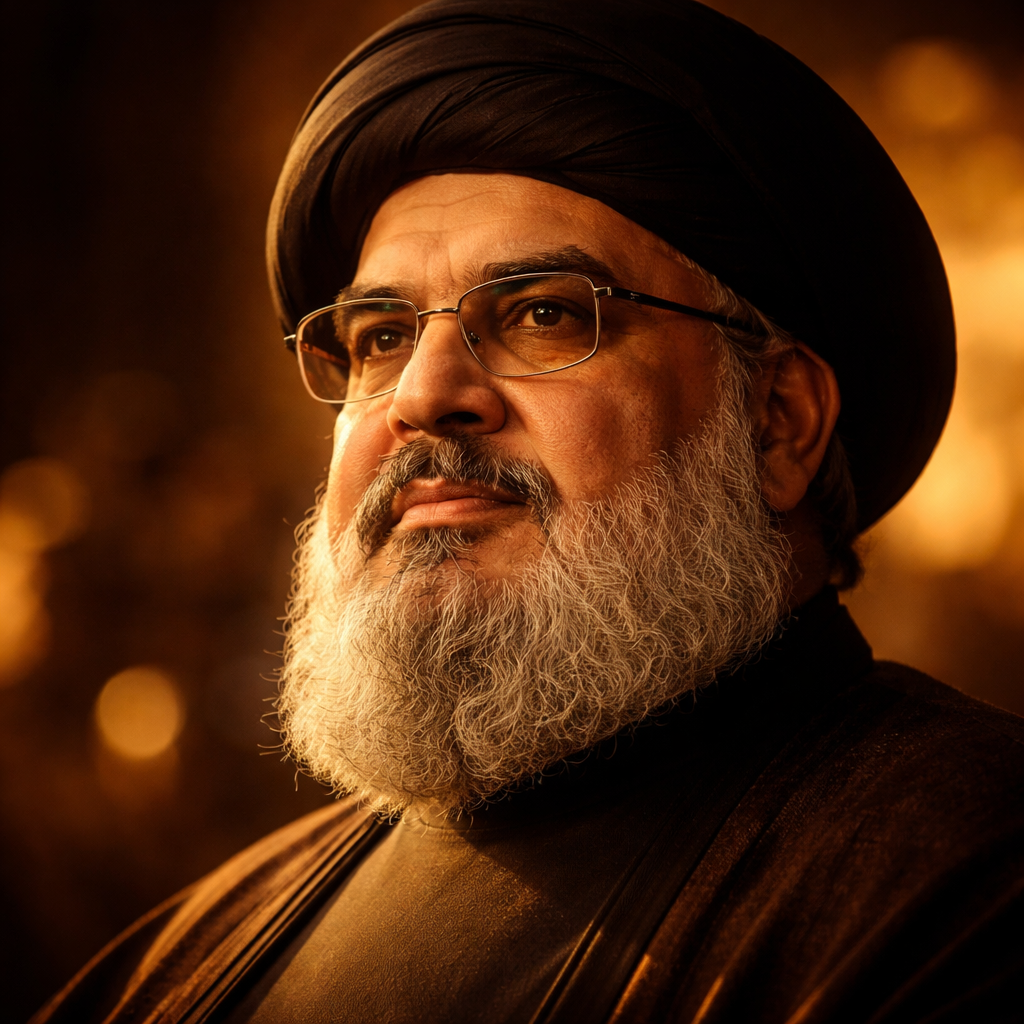
Hassan Nasrallah had led Hezbollah for 32 years, transforming it from a militia into a state within a state, when an Israeli airstrike killed him on September 27, 2024. The death of the most powerful non-state military leader in the Middle East sent shockwaves through Lebanon, Iran, and the broader region. Nasrallah became Secretary-General of Hezbollah in 1992 after Israel assassinated his predecessor, Abbas al-Musawi. Under his leadership, the organization evolved from a guerrilla force into a sophisticated political and military machine with a seat in the Lebanese parliament, a social welfare network serving Shia communities, and an arsenal of over 150,000 rockets and missiles pointed at Israel. He oversaw the campaign that forced Israel's withdrawal from southern Lebanon in 2000, the first time an Arab force had compelled an Israeli retreat. The 2006 war with Israel cemented Nasrallah's status across the Arab world. After Hezbollah fighters captured two Israeli soldiers in a cross-border raid, Israel launched a 34-day military campaign that devastated southern Lebanon but failed to destroy Hezbollah's fighting capacity or retrieve the soldiers. Nasrallah emerged from the rubble declaring "divine victory," and his popularity surged even among Sunni Arabs who had traditionally viewed Shia movements with suspicion. His intervention in the Syrian civil war after 2012, sending thousands of Hezbollah fighters to support Bashar al-Assad's regime, saved the Assad government but cost the organization dearly. Hundreds of fighters were killed, and Nasrallah's image as a resistance leader defending Arabs against Israel was complicated by his role in suppressing a largely Sunni uprising. Israel had attempted to kill Nasrallah multiple times over the decades, and he had lived in hiding, rarely appearing in public, for most of his tenure. The strike that killed him came amid an escalation of hostilities between Israel and Hezbollah that had intensified since October 2023. His death decapitated the organization's leadership structure and marked the most consequential Israeli targeted killing since the assassination of Hamas leaders in previous decades.
The Treaty of Melno ended something unusual: a border dispute between the Teutonic Knights and Lithuania that had been running, in one form or another, for over a century. The 1422 agreement fixed a frontier line that — remarkably — held almost unchanged for 500 years. Wars, empires, and partitions swept through the region repeatedly. That particular border survived them all, finally erased only by the upheaval of World War II.
He was elected Pope on September 15, 1590, and never actually got to run the Church. Pope Urban VII contracted malaria — almost certainly from the mosquitoes in the Roman marshes — and died just 13 days later, before he was even formally consecrated. He never celebrated a single papal Mass. He did manage to issue one notable act: a prohibition on smoking inside churches, making him history's first anti-tobacco legislator. The shortest papacy ever produced the world's first indoor smoking ban.
Twenty-one years. That's how long Venice held the fortress of Candia — modern-day Heraklion in Crete — against an Ottoman siege that began in 1648. It's the longest siege in recorded history. The Venetians resupplied the fortress by sea for two decades while the Ottomans dug trenches and detonated mines beneath the walls. When commander Francesco Morosini finally surrendered in 1669, he negotiated to leave with full honors and his artillery. Venice lost Crete. But they walked out with their cannons.
Agustín de Iturbide led the Army of the Three Guarantees into Mexico City on September 27, 1821, ending three centuries of Spanish colonial rule in a single triumphant march. Spain's viceroy had already signed the Treaty of Córdoba acknowledging Mexican independence, but Iturbide's entry made it real. Mexico formally declared independence the following day, launching a turbulent era of nation-building that would see Iturbide briefly crown himself emperor before being overthrown.
The SS Arctic went down in 1854 after colliding with a smaller French vessel in fog — and the reason 300 people died comes down to one brutal fact: the crew got in the lifeboats first. Passengers, including women and children, were left scrambling. Some clung to makeshift rafts. The captain survived; most of his passengers didn't. The disaster triggered the first serious public debate about maritime safety laws in the Atlantic, laying groundwork for lifeboat regulations that ships like the Titanic would still, famously, ignore.
The paddle steamer SS Arctic sinks off Newfoundland after colliding with the smaller SS Vesta, killing over 212 souls. Only 88 survivors escape the icy waters, while a dozen Vesta passengers die when their lifeboat crashes into the sinking giant. This tragedy forces maritime regulators to mandate stricter collision avoidance rules and compulsory lifeboat capacity for all transatlantic liners.
Fun Facts
Zodiac Sign
Libra
Sep 23 -- Oct 22
Air sign. Diplomatic, gracious, and fair-minded.
Birthstone
Sapphire
Blue
Symbolizes truth, sincerity, and faithfulness.
Next Birthday
--
days until September 27
Quote of the Day
“Mankind are governed more by their feelings than by reason.”
Share Your Birthday
Create a beautiful birthday card with events and famous birthdays for September 27.
Create Birthday CardExplore Nearby Dates
Popular Dates
Explore more about September 27 in history. See the full date page for all events, browse September, or look up another birthday. Play history games or talk to historical figures.