Einstein Unveils E=mc2: Physics Rewritten Forever
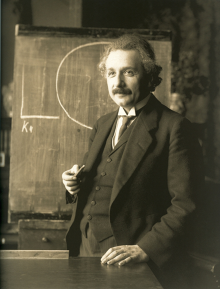
A twenty-six-year-old patent clerk in Bern, Switzerland, had already turned physics upside down three times that year when he submitted a three-page addendum that would become the most famous equation in science. On September 27, 1905, the journal Annalen der Physik received Albert Einstein's paper "Does the Inertia of a Body Depend Upon Its Energy Content?", which introduced E=mc² to the world. The paper was the final installment of Einstein's miraculous year, his annus mirabilis. In March, he had explained the photoelectric effect by proposing that light behaved as discrete packets of energy called quanta, work that would earn him the 1921 Nobel Prize. In May, he proved the existence of atoms by analyzing Brownian motion. In June, he published the special theory of relativity, demolishing the concept of absolute time and space. The September paper followed logically from special relativity. Einstein showed through elegant mathematical reasoning that mass and energy were not separate quantities but different expressions of the same thing, connected by the speed of light squared. Because the speed of light is enormous (roughly 186,000 miles per second), even a tiny amount of mass contained a staggering amount of energy. A single kilogram of matter, if fully converted, held the energy equivalent of 21 megatons of TNT. The equation was purely theoretical in 1905, and Einstein himself doubted it could ever be tested directly. Forty years later, the atomic bombs that destroyed Hiroshima and Nagasaki provided the most terrifying confirmation imaginable. Nuclear fission converts roughly 0.1 percent of a uranium atom's mass into energy. Nuclear fusion in hydrogen bombs converts about 0.7 percent. The sun, converting 600 million tons of hydrogen into helium every second, is a natural demonstration of E=mc² on a cosmic scale. Einstein's equation reshaped not only physics but philosophy, warfare, and energy policy. Nuclear power, medical imaging, carbon dating, and our understanding of stellar evolution all depend on the relationship between mass and energy that a young clerk derived from first principles on a few sheets of paper in 1905.
September 27, 1905
121 years ago
Key Figures & Places
What Else Happened on September 27
Odoacer had already lost to Theodoric once, at the Isonzo River. Then again at Milan. Now Verona. He kept losing battles but wouldn't surrender — retreating eac…
William, Duke of Normandy, had been waiting for weeks for the wind to change. On September 27, 1066, it finally blew from the south, and his invasion fleet of r…
Polish forces clashed with the Teutonic Order at Płowce, stalling the knights' advance despite suffering a tactical defeat. By preventing the capture of King Wł…
Polish forces under Władysław I the Elbow-high ambushed a retreating Teutonic Order column near Płowce, capturing high-ranking commanders and inflicting heavy c…
The Treaty of Melno ended something unusual: a border dispute between the Teutonic Knights and Lithuania that had been running, in one form or another, for over…
Suleiman the Magnificent arrived outside Vienna with somewhere between 100,000 and 300,000 troops — the estimates vary wildly because the number was almost inco…
Talk to History
Have a conversation with historical figures who witnessed this era. Ask questions, explore perspectives, and bring history to life.