Today In History logo TIH

Today In History

March 20 in History

Your birthday shares the stage with stories that shaped the world. Born on this day: Sting, Buddha Yodfa Chulaloke, and Ovid.

Newton Dies: Gravity's Author Passes at 84
1726Death

Newton Dies: Gravity's Author Passes at 84

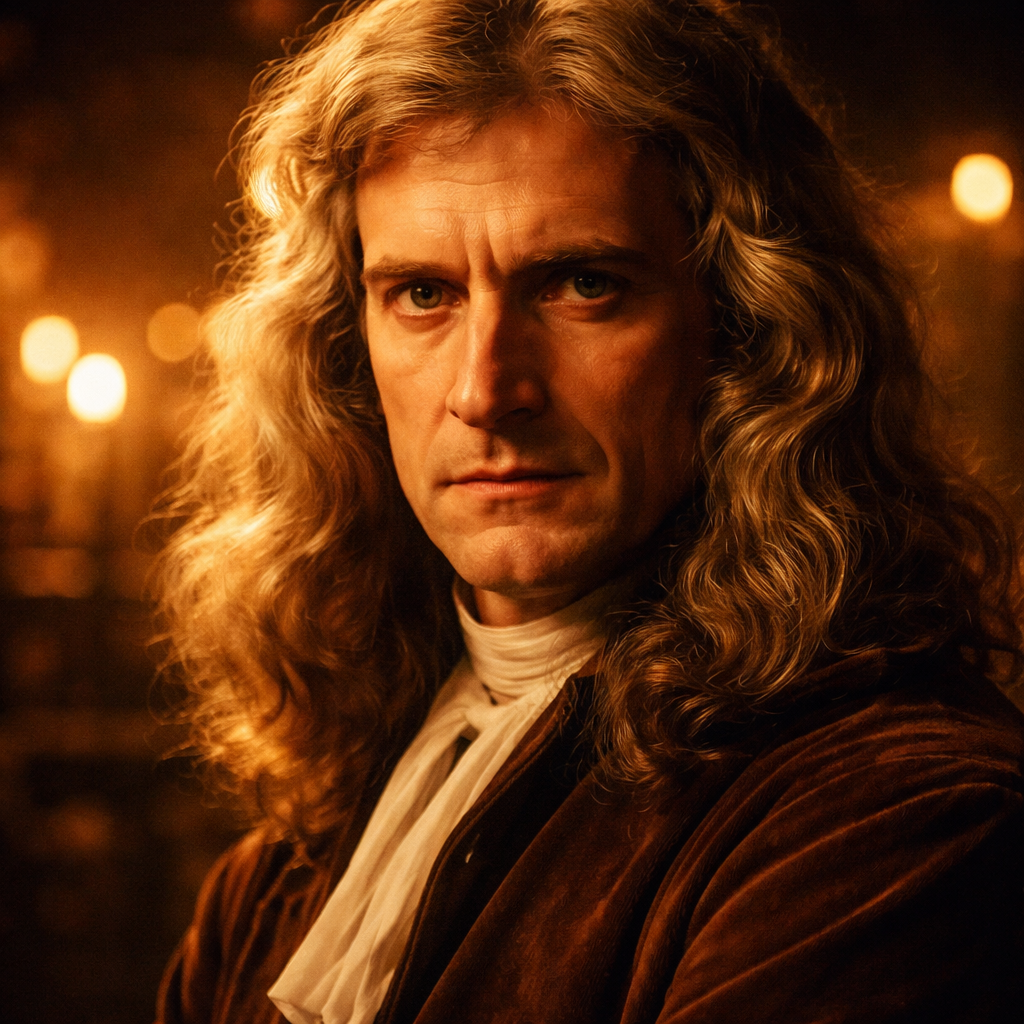
Isaac Newton died on March 20, 1727, at age eighty-four, in his sleep at his London residence, having outlived most of his rivals and all of his grudges. He was given a state funeral at Westminster Abbey, an honor previously reserved for royalty and national heroes, and six noblemen served as pallbearers. Voltaire, who attended, remarked that England honored a mathematician as other nations honored a king. Newton had published the Principia Mathematica in 1687, arguably the most important scientific work ever written, laying out the laws of motion and universal gravitation that explained everything from falling apples to planetary orbits in a single mathematical framework. He demonstrated that the same force that pulled objects to the ground held the moon in orbit around the Earth and the Earth in orbit around the sun. No one had ever unified so many natural phenomena under so few principles. His contributions extended far beyond gravity. Newton developed calculus simultaneously with Leibniz, though the priority dispute consumed years of both men's lives and poisoned scientific relationships across Europe. His work on optics demonstrated that white light was composed of a spectrum of colors, overturning centuries of assumption. He built the first practical reflecting telescope, designed the first successful method for computing the orbits of comets, and served as Warden and then Master of the Royal Mint, where he pursued counterfeiters with the same intensity he applied to physics. Newton's personality was as remarkable as his intellect. He was secretive, vindictive, and capable of sustaining feuds for decades. His dispute with Robert Hooke over the theory of light and his battle with Leibniz over calculus were conducted with a viciousness that damaged both opponents. Newton spent years working on alchemy and biblical chronology, pursuits that occupied as much of his time as physics but produced nothing of lasting value. He never married, had few close relationships, and spent his final years as the most revered intellectual figure in Europe. Newton proved that the universe operated by laws that human reason could discover, and that discovery changed everything.

Famous Birthdays

Sting
Sting

b. 1951

Ovid
Ovid

b. 43 BC

B. F. Skinner

B. F. Skinner

d. 1990

Brian Mulroney

Brian Mulroney

1939–2024

Carl Palmer

Carl Palmer

b. 1950

Chester Bennington

Chester Bennington

1976–2017

David Foster

David Foster

b. 1949

Alex Kapranos

Alex Kapranos

b. 1972

Alfonso García Robles

Alfonso García Robles

d. 1991

Lee "Scratch" Perry

Lee "Scratch" Perry

1936–2021

Napoleon II

Napoleon II

b. 1811

Historical Events

Napoleon marched into Paris on March 20, 1815, at the head of a growing army, without firing a shot. Louis XVIII, the Bourbon king restored to the throne after Napoleon's abdication ten months earlier, had fled the city hours before. The emperor who had been exiled to the tiny Mediterranean island of Elba was back in power, and Europe's great powers faced the nightmare they thought they had buried.

Napoleon had escaped Elba on February 26 with roughly 1,000 men and landed near Cannes on March 1. The journey north became a masterclass in political theater. At Laffrey, south of Grenoble, Napoleon encountered the 5th Regiment of the Line, sent to arrest him. He walked forward alone, opened his greatcoat, and reportedly declared: "Soldiers, if there is one among you who wishes to kill his Emperor, here I am." The regiment defected to him on the spot. Marshal Ney, who had promised Louis XVIII he would bring Napoleon back to Paris in an iron cage, joined Napoleon with his entire force at Auxerre.

The Bourbon monarchy collapsed without a battle. Louis XVIII's support evaporated as soldiers, officers, and entire garrisons declared for Napoleon. The king's flight to Ghent on the night of March 19-20 completed the restoration of Napoleonic power in exactly twenty days.

The Congress of Vienna, where European diplomats were redrawing the continent's borders, reacted with a joint declaration on March 13 branding Napoleon an outlaw and enemy of peace. Britain, Austria, Prussia, and Russia pledged 150,000 troops each to destroy him. Napoleon attempted to preempt the coalition by striking north into Belgium, defeating the Prussians at Ligny on June 16 and engaging Wellington at Waterloo on June 18.

Waterloo ended it. Napoleon's defeat, caused by a combination of tactical errors, the late arrival of Prussian reinforcements on Wellington's flank, and the exhaustion of the Imperial Guard, was total. He abdicated on June 22, surrendered to the British on July 15, and was exiled to Saint Helena in the South Atlantic, where he died in 1821.

The Hundred Days proved Napoleon could still inspire armies, but no longer defeat them.
1815

Napoleon marched into Paris on March 20, 1815, at the head of a growing army, without firing a shot. Louis XVIII, the Bourbon king restored to the throne after Napoleon's abdication ten months earlier, had fled the city hours before. The emperor who had been exiled to the tiny Mediterranean island of Elba was back in power, and Europe's great powers faced the nightmare they thought they had buried. Napoleon had escaped Elba on February 26 with roughly 1,000 men and landed near Cannes on March 1. The journey north became a masterclass in political theater. At Laffrey, south of Grenoble, Napoleon encountered the 5th Regiment of the Line, sent to arrest him. He walked forward alone, opened his greatcoat, and reportedly declared: "Soldiers, if there is one among you who wishes to kill his Emperor, here I am." The regiment defected to him on the spot. Marshal Ney, who had promised Louis XVIII he would bring Napoleon back to Paris in an iron cage, joined Napoleon with his entire force at Auxerre. The Bourbon monarchy collapsed without a battle. Louis XVIII's support evaporated as soldiers, officers, and entire garrisons declared for Napoleon. The king's flight to Ghent on the night of March 19-20 completed the restoration of Napoleonic power in exactly twenty days. The Congress of Vienna, where European diplomats were redrawing the continent's borders, reacted with a joint declaration on March 13 branding Napoleon an outlaw and enemy of peace. Britain, Austria, Prussia, and Russia pledged 150,000 troops each to destroy him. Napoleon attempted to preempt the coalition by striking north into Belgium, defeating the Prussians at Ligny on June 16 and engaging Wellington at Waterloo on June 18. Waterloo ended it. Napoleon's defeat, caused by a combination of tactical errors, the late arrival of Prussian reinforcements on Wellington's flank, and the exhaustion of the Imperial Guard, was total. He abdicated on June 22, surrendered to the British on July 15, and was exiled to Saint Helena in the South Atlantic, where he died in 1821. The Hundred Days proved Napoleon could still inspire armies, but no longer defeat them.

Isaac Newton died on March 20, 1727, at age eighty-four, in his sleep at his London residence, having outlived most of his rivals and all of his grudges. He was given a state funeral at Westminster Abbey, an honor previously reserved for royalty and national heroes, and six noblemen served as pallbearers. Voltaire, who attended, remarked that England honored a mathematician as other nations honored a king.

Newton had published the Principia Mathematica in 1687, arguably the most important scientific work ever written, laying out the laws of motion and universal gravitation that explained everything from falling apples to planetary orbits in a single mathematical framework. He demonstrated that the same force that pulled objects to the ground held the moon in orbit around the Earth and the Earth in orbit around the sun. No one had ever unified so many natural phenomena under so few principles.

His contributions extended far beyond gravity. Newton developed calculus simultaneously with Leibniz, though the priority dispute consumed years of both men's lives and poisoned scientific relationships across Europe. His work on optics demonstrated that white light was composed of a spectrum of colors, overturning centuries of assumption. He built the first practical reflecting telescope, designed the first successful method for computing the orbits of comets, and served as Warden and then Master of the Royal Mint, where he pursued counterfeiters with the same intensity he applied to physics.

Newton's personality was as remarkable as his intellect. He was secretive, vindictive, and capable of sustaining feuds for decades. His dispute with Robert Hooke over the theory of light and his battle with Leibniz over calculus were conducted with a viciousness that damaged both opponents. Newton spent years working on alchemy and biblical chronology, pursuits that occupied as much of his time as physics but produced nothing of lasting value.

He never married, had few close relationships, and spent his final years as the most revered intellectual figure in Europe.

Newton proved that the universe operated by laws that human reason could discover, and that discovery changed everything.
1726

Isaac Newton died on March 20, 1727, at age eighty-four, in his sleep at his London residence, having outlived most of his rivals and all of his grudges. He was given a state funeral at Westminster Abbey, an honor previously reserved for royalty and national heroes, and six noblemen served as pallbearers. Voltaire, who attended, remarked that England honored a mathematician as other nations honored a king. Newton had published the Principia Mathematica in 1687, arguably the most important scientific work ever written, laying out the laws of motion and universal gravitation that explained everything from falling apples to planetary orbits in a single mathematical framework. He demonstrated that the same force that pulled objects to the ground held the moon in orbit around the Earth and the Earth in orbit around the sun. No one had ever unified so many natural phenomena under so few principles. His contributions extended far beyond gravity. Newton developed calculus simultaneously with Leibniz, though the priority dispute consumed years of both men's lives and poisoned scientific relationships across Europe. His work on optics demonstrated that white light was composed of a spectrum of colors, overturning centuries of assumption. He built the first practical reflecting telescope, designed the first successful method for computing the orbits of comets, and served as Warden and then Master of the Royal Mint, where he pursued counterfeiters with the same intensity he applied to physics. Newton's personality was as remarkable as his intellect. He was secretive, vindictive, and capable of sustaining feuds for decades. His dispute with Robert Hooke over the theory of light and his battle with Leibniz over calculus were conducted with a viciousness that damaged both opponents. Newton spent years working on alchemy and biblical chronology, pursuits that occupied as much of his time as physics but produced nothing of lasting value. He never married, had few close relationships, and spent his final years as the most revered intellectual figure in Europe. Newton proved that the universe operated by laws that human reason could discover, and that discovery changed everything.

1916

Albert Einstein published his general theory of relativity in November 1915, presenting the final field equations to the Prussian Academy of Sciences in Berlin on November 25. The paper described gravity not as a force acting between objects, as Newton had proposed, but as the curvature of spacetime caused by the presence of mass and energy. It was the most radical reconception of gravity since Newton published the Principia Mathematica in 1687. Born in Ulm, Germany on March 14, 1879, Einstein had already revolutionized physics once. His 1905 papers on special relativity, the photoelectric effect, and Brownian motion had established him as one of the leading physicists in the world. But special relativity applied only to objects moving at constant velocity. It said nothing about gravity or acceleration. Einstein spent ten years developing general relativity, wrestling with the mathematics of curved spacetime. The final equations, elegant and compact, described how mass tells spacetime how to curve and how curved spacetime tells objects how to move. The theory predicted phenomena that Newtonian gravity could not explain: the precise precession of Mercury's orbit, the bending of light around massive objects, and the expansion of the universe itself. The first major confirmation came during a total solar eclipse on May 29, 1919, when British astronomer Arthur Eddington measured the deflection of starlight passing near the Sun. The measurements matched Einstein's predictions. The results, announced at a joint meeting of the Royal Society and the Royal Astronomical Society in London, made front-page news worldwide. Einstein became the most famous scientist on earth overnight. General relativity has since been confirmed by every experimental test, including the detection of gravitational waves by LIGO in 2015, exactly one hundred years after the theory was published. GPS satellites must account for relativistic time dilation to maintain accuracy. The theory remains the foundation of modern cosmology, describing black holes, the Big Bang, and the large-scale structure of the universe.

1600

Five Swedish noblemen were publicly beheaded in Linkoping on Maundy Thursday, executed by Duke Charles for supporting King Sigismund during the civil war over Sweden's throne and religious direction. The mass execution crushed Catholic opposition and consolidated Protestant rule, clearing the path for Charles to eventually claim the crown as Charles IX. The Linkoping Bloodbath of March 20, 1600, was the culmination of the War against Sigismund, a conflict rooted in the religious divide between Protestant Sweden and its Catholic king. Sigismund III Vasa had inherited both the Swedish and Polish thrones, attempting to govern Sweden from Warsaw while reimposing Catholicism on a country that had been Protestant for over sixty years. Duke Charles, Sigismund's uncle, positioned himself as the defender of Swedish Protestantism and Swedish sovereignty, rallying the nobility and the riksdag against the absent king. The military phase of the conflict ended with Sigismund's defeat at the Battle of Stangebro in 1598, but several powerful noble families continued to support his claim. Charles arrested the dissenting nobles and put them on trial before a hand-picked tribunal that convicted them of treason. The five men beheaded in Linkoping's main square on Maundy Thursday included Erik Sparre, one of Sweden's highest-ranking officials, and Gustav Banér, whose family had been prominent in Swedish politics for generations. The public executions sent a message that opposition to Charles was fatal. The Bloodbath eliminated the Catholic faction from Swedish politics, secured the Protestant Reformation permanently, and cleared Charles's path to the throne, which he claimed as Charles IX in 1604. His grandson would be Gustavus Adolphus, the "Lion of the North" who became Protestantism's greatest military champion during the Thirty Years' War.

2000

Federal marshals captured Jamil Abdullah Al-Amin, formerly known as H. Rap Brown of the Black Panthers, on March 20, 2000, after a manhunt that followed the shooting death of Fulton County Sheriff's Deputy Ricky Kinchen and the wounding of Deputy Aldranon English outside Al-Amin's grocery store in Atlanta four days earlier. Born Hubert Gerold Brown on October 4, 1943, in Baton Rouge, Louisiana, he had been one of the most incendiary figures of the 1960s Black Power movement. As chairman of the Student Nonviolent Coordinating Committee from 1967 to 1968, he earned the nickname "Rap" for his fiery rhetoric and was famously quoted as saying that "violence is as American as cherry pie." He was arrested multiple times for inciting riots and fled the country in 1970, spending time in Africa before converting to Sunni Islam and changing his name. He settled in Atlanta in the 1970s and became a community leader and imam, running a grocery store in the West End neighborhood. His followers described him as a reformed man who had turned from revolution to religion. The shooting of the two deputies in March 2000 shattered that narrative. Al-Amin fled but was captured four days later in a rural Alabama town. His trial in 2002 ended in conviction for murder and aggravated assault. He was sentenced to life in prison without parole. The case provoked intense debate about whether his prosecution was just or politically motivated, with supporters arguing that he had been targeted by federal surveillance for decades and critics pointing to the physical evidence and witness testimony. He remains imprisoned. His conviction closed a turbulent chapter that spanned from 1960s Black Power activism to religious transformation and ultimately to violent crime.

Gene Eugene died alone in his recording studio on March 20, 2000, at age thirty-nine, likely from a brain aneurysm. He was found the next morning surrounded by the mixing boards and instruments that had defined his life. The Canadian-American musician, born Eugene Andrusco in Vancouver, had spent two decades creating some of the most innovative and least commercially rewarded music in American alternative rock.

Eugene was the driving force behind Adam Again, a band that combined post-punk, psychedelia, electronic experimentation, and deeply personal lyrics into a sound that confounded categorization. He also contributed to The Swirling Eddies and Lost Dogs, collaborative projects with fellow musicians Terry Taylor, Derri Daugherty, and Mike Roe. His studio, the Green Room in Huntington Beach, California, became a creative hub where he produced albums for dozens of artists.

What made Eugene unusual was the tension between his artistic ambition and the audience he served. He operated primarily within the Christian music industry, a market that rewarded conformity and worship anthems, while making records that drew from David Bowie, Brian Eno, Talking Heads, and Prince. Adam Again's albums, including Dig (1992) and Perfecta (1995), pushed boundaries that most Christian labels and radio stations were unwilling to cross.

Eugene's production work at the Green Room influenced a generation of artists who would later achieve broader recognition. He approached production as a creative collaboration, bringing atmospheric textures and sonic experimentation to projects that might otherwise have sounded conventional. His studio became a sanctuary for musicians who did not fit neatly into commercial categories.

His death at thirty-nine shocked a community that recognized, too late, how central he had been. Tributes from musicians across genres acknowledged that Gene Eugene had been making the future of American alternative music in a converted garage, with almost no one watching.

The most talented person in the room is sometimes the one no one outside it has heard of.
2000

Gene Eugene died alone in his recording studio on March 20, 2000, at age thirty-nine, likely from a brain aneurysm. He was found the next morning surrounded by the mixing boards and instruments that had defined his life. The Canadian-American musician, born Eugene Andrusco in Vancouver, had spent two decades creating some of the most innovative and least commercially rewarded music in American alternative rock. Eugene was the driving force behind Adam Again, a band that combined post-punk, psychedelia, electronic experimentation, and deeply personal lyrics into a sound that confounded categorization. He also contributed to The Swirling Eddies and Lost Dogs, collaborative projects with fellow musicians Terry Taylor, Derri Daugherty, and Mike Roe. His studio, the Green Room in Huntington Beach, California, became a creative hub where he produced albums for dozens of artists. What made Eugene unusual was the tension between his artistic ambition and the audience he served. He operated primarily within the Christian music industry, a market that rewarded conformity and worship anthems, while making records that drew from David Bowie, Brian Eno, Talking Heads, and Prince. Adam Again's albums, including Dig (1992) and Perfecta (1995), pushed boundaries that most Christian labels and radio stations were unwilling to cross. Eugene's production work at the Green Room influenced a generation of artists who would later achieve broader recognition. He approached production as a creative collaboration, bringing atmospheric textures and sonic experimentation to projects that might otherwise have sounded conventional. His studio became a sanctuary for musicians who did not fit neatly into commercial categories. His death at thirty-nine shocked a community that recognized, too late, how central he had been. Tributes from musicians across genres acknowledged that Gene Eugene had been making the future of American alternative music in a converted garage, with almost no one watching. The most talented person in the room is sometimes the one no one outside it has heard of.

1600

Five noblemen were beheaded in Linkoping's main square on Maundy Thursday, the day Christians commemorate Jesus washing his disciples' feet as an act of humility and forgiveness. King Sigismund's supporters had backed the wrong side in Sweden's civil war, and Duke Karl, soon to be King Charles IX, wanted everyone in the kingdom to remember the cost of opposing him. The executions started at dawn on March 20, 1600. Four counts and one baron knelt on the scaffold before noon. Karl had promised the accused a fair trial, but the court was packed with his own loyalists, the charges were predetermined, and the sentences were never in doubt. What made the Linkoping Bloodbath particularly calculated was Karl's insistence that the condemned nobles' families be present to watch. He constructed wooden viewing platforms specifically for that purpose, forcing wives and children to witness the executions from an elevated position where they couldn't look away. The message wasn't subtle: oppose the duke, and your family watches you die on the holiest day of mercy in the Christian calendar. Karl secured his throne through the bloodbath, but it earned him a reputation for deliberate cruelty that haunted the Vasa dynasty for generations. His own son, the legendary Gustav II Adolf, spent much of his early reign trying to repair the political damage his father's brutality had caused with the Swedish nobility. The most ruthless political purge in Swedish history happened on a day specifically reserved for washing the feet of those who betrayed you.

1616

Thirteen years in the Tower of London, and James I didn't pardon him. He just let him out to hunt for gold. Sir Walter Raleigh, once the most favored courtier in Elizabeth I's court, had been convicted of treason in 1603 in a trial so procedurally corrupt that even the judges appeared uncomfortable with the verdict. The evidence was thin: a single witness who later recanted, and suspicions of involvement in a Spanish-backed plot to overthrow James. Raleigh spent thirteen years in the Tower's Bloody Tower, which he transformed into something between a laboratory and a library, conducting chemical experiments, writing his massive "History of the World," and entertaining visitors who included Prince Henry, the heir apparent, who admired him greatly. Henry's death in 1612 removed Raleigh's most powerful protector. But James I needed money, and Raleigh had spent years promising that he knew the location of a vast gold mine on the Orinoco River in South America. The king's deal was transactional: find El Dorado, fill the royal coffers, avoid any conflict with Spanish colonies, and maybe you live. Raleigh sailed in 1617 with a fleet of fourteen ships. He was 64, half-broken by imprisonment, and suffering from recurring fevers. His son Wat was killed in a skirmish with Spanish forces at San Thome, directly violating James's prohibition on attacking Spanish interests. Raleigh returned to England empty-handed in 1618. Spain's ambassador demanded his head, and James, desperate for a Spanish marriage alliance for his remaining son, simply reactivated the original death sentence from 1603. Raleigh was beheaded at Westminster on October 29, 1618. The pardon he'd been working toward for fifteen years never actually existed.

1903

The government auctioned off land that people already lived on. In 1903, Argentina's administration carved up 8.5 million acres of southern Patagonia into lots for wealthy buyers, ignoring the squatters and small ranchers who'd worked those windswept plains for decades. Families who'd survived brutal winters and built modest flocks watched strangers from Buenos Aires purchase their homes out from under them. The auctions created an oligarchy of absentee landlords—some lots exceeded 250,000 acres—while displacing the very people who'd proven the land could sustain life. Within two years, violent labor strikes erupted as displaced workers faced impossible conditions on estates owned by men who'd never felt Patagonian wind. The auctions didn't settle the frontier; they ignited it.

1916

He'd already rewritten physics once, but Einstein wasn't satisfied. Nine years after special relativity made him famous, he submitted an even wilder idea to Annalen der Physik: gravity wasn't a force pulling objects together—it was the warping of space and time itself. The math was so complex it took him nearly a decade to work out, collaborating with mathematician Marcel Grossmann just to develop the tensor calculus he needed. Three years later, Arthur Eddington's eclipse expedition would prove Einstein right by measuring how the sun bent starlight. But here's what's strange: Einstein's equations predicted something so bizarre he didn't believe it himself—black holes, regions where spacetime curves so violently that not even light escapes. He spent years trying to prove they couldn't exist.

1921

They voted in 1,510 separate districts, and somehow 98% of eligible voters showed up. The Upper Silesia plebiscite wasn't just about drawing lines on a map—it was three million people deciding whether they'd wake up German or Polish, with their jobs, property rights, and children's futures hanging on the outcome. The region held 75% of Germany's zinc and lead production. When results showed 60% favored Germany but most industrial towns voted Polish, the League of Nations faced an impossible task: how do you split a place that only works as one? They drew a border that satisfied no one, sparked armed uprisings within months, and proved that letting people vote doesn't mean they'll accept the answer.

1923

The woman who brought Picasso to America wasn't a museum director or art dealer—she was a socialite named Rue Winterbotham Carpenter who'd bought his drawings directly from his Paris studio for $30 each. The Arts Club of Chicago displayed 32 of his works in January 1923, beating New York's elite institutions by years. Chicago's newspapers called them "diseased," "insane," and "an insult to womanhood." But Carpenter didn't flinch. She'd already calculated that Midwestern industrialists with new money were braver than East Coast collectors with reputations to protect. She was right—within a decade, Chicago's Art Institute would house one of America's finest modern collections, all because a society woman decided the provinces didn't need permission from the coasts.

1926

Chiang Kai-shek invited Communist officers to a banquet in Guangzhou, then arrested them at gunpoint. March 20, 1926. His "Zhongshan Incident" wasn't about ideology—a warship had moved without his permission, and he suspected Soviet advisors were plotting a coup. He detained 50 Russians and executed the ship's captain. The Soviets backed down completely, giving Chiang exactly what he wanted: control of the army while keeping Moscow's money and weapons flowing. For another year, Communists and Nationalists kept pretending they were allies, even as Chiang systematically removed his future enemies from command positions. The dress rehearsal worked so well he'd repeat it nationwide in 1927, this time killing thousands.

Giuseppe Zangara was executed in Florida's electric chair on March 20, 1933, just thirty-three days after he attempted to assassinate President-elect Franklin Roosevelt in Miami and accidentally killed Chicago Mayor Anton Cermak instead. The speed of his trial, conviction, and execution remains one of the fastest in modern American legal history.

Zangara, an Italian-born bricklayer who had emigrated to the United States in 1923, opened fire on Roosevelt's motorcade at Bayfront Park in Miami on February 15, 1933. Roosevelt had just finished giving a short speech from the back of his open car. Zangara, standing on a wobbly folding chair in the crowd, fired five shots from a .32 caliber pistol. He missed Roosevelt but struck five bystanders, including Cermak, who was standing near the president-elect's car.

Cermak, hit in the abdomen, was rushed to the hospital and initially appeared to recover. Roosevelt visited him several times during his recuperation. Cermak reportedly told Roosevelt, "I'm glad it was me instead of you," a quote that became famous though its authenticity is debated. Cermak died on March 6, 1933, from complications of his wound, likely peritonitis caused by a fragment of the bullet lodging near his spine.

Zangara was charged with murder immediately after Cermak's death. His trial lasted one day. He offered no defense and expressed no remorse, telling the court he hated all presidents and all officials of government. He had earlier been sentenced to eighty years for the attempted murder of Roosevelt and assault on the other victims. The murder conviction carried a mandatory death sentence.

At his execution, Zangara reportedly cursed capitalists and expressed anger that there were no photographers present. His last words, according to witnesses, were: "Viva Italia! Goodbye to all poor peoples everywhere! Push the button! Go ahead, push the button!"

The assassination attempt that killed the wrong man came within inches of changing the course of the twentieth century. Had Zangara's aim been slightly better, America would have entered the Depression's darkest year without Roosevelt.
1933

Giuseppe Zangara was executed in Florida's electric chair on March 20, 1933, just thirty-three days after he attempted to assassinate President-elect Franklin Roosevelt in Miami and accidentally killed Chicago Mayor Anton Cermak instead. The speed of his trial, conviction, and execution remains one of the fastest in modern American legal history. Zangara, an Italian-born bricklayer who had emigrated to the United States in 1923, opened fire on Roosevelt's motorcade at Bayfront Park in Miami on February 15, 1933. Roosevelt had just finished giving a short speech from the back of his open car. Zangara, standing on a wobbly folding chair in the crowd, fired five shots from a .32 caliber pistol. He missed Roosevelt but struck five bystanders, including Cermak, who was standing near the president-elect's car. Cermak, hit in the abdomen, was rushed to the hospital and initially appeared to recover. Roosevelt visited him several times during his recuperation. Cermak reportedly told Roosevelt, "I'm glad it was me instead of you," a quote that became famous though its authenticity is debated. Cermak died on March 6, 1933, from complications of his wound, likely peritonitis caused by a fragment of the bullet lodging near his spine. Zangara was charged with murder immediately after Cermak's death. His trial lasted one day. He offered no defense and expressed no remorse, telling the court he hated all presidents and all officials of government. He had earlier been sentenced to eighty years for the attempted murder of Roosevelt and assault on the other victims. The murder conviction carried a mandatory death sentence. At his execution, Zangara reportedly cursed capitalists and expressed anger that there were no photographers present. His last words, according to witnesses, were: "Viva Italia! Goodbye to all poor peoples everywhere! Push the button! Go ahead, push the button!" The assassination attempt that killed the wrong man came within inches of changing the course of the twentieth century. Had Zangara's aim been slightly better, America would have entered the Depression's darkest year without Roosevelt.

1933

The first concentration camp wasn't Hitler's idea—it was a 32-year-old chicken farmer turned police chief. Heinrich Himmler, just weeks into running Munich's police force, commandeered an abandoned munitions factory in Dachau to hold 5,000 political prisoners. He appointed Theodor Eicke, a volatile SS officer recently released from a psychiatric clinic, as commandant. Eicke created the brutal template: systematic dehumanization, guard training manuals, punishment protocols. Within a year, he'd export his "Dachau model" to camps across Germany. The administrative efficiency of genocide didn't emerge from some grand plan—it was workshopped by an unstable middle manager in Bavaria, then franchised.

Fun Facts

Zodiac Sign

Pisces

Feb 19 -- Mar 20

Water sign. Compassionate, intuitive, and artistic.

Birthstone

Aquamarine

Pale blue

Symbolizes courage, serenity, and clear communication.

Next Birthday

--

days until March 20

Quote of the Day

“The real problem is not whether machines think but whether men do.”

Share Your Birthday

Create a beautiful birthday card with events and famous birthdays for March 20.

Create Birthday Card

Explore Nearby Dates

Popular Dates

Explore more about March 20 in history. See the full date page for all events, browse March, or look up another birthday. Play history games or talk to historical figures.