
Today In History
March 23 in History
Your birthday shares the stage with stories that shaped the world. Born on this day: Damon Albarn, Felix Yusupov, and Philip Zimbardo.

Give Me Liberty or Death: Henry's Call to Arms
Patrick Henry never wrote down the speech. The words "Give me liberty, or give me death!" come entirely from a reconstruction published 40 years later by William Wirt, Henry's biographer, who cobbled it together from the recollections of elderly attendees. What is certain is that on March 23, 1775, Henry addressed the Second Virginia Convention at St. John's Church in Richmond and persuaded the delegates to arm the Virginia militia against British forces. Virginia's political leadership was divided. Many delegates, including powerful planters, hoped for reconciliation with Britain and feared that military preparation would provoke an irreversible break. Henry, a self-taught lawyer who had made his reputation arguing the Parson's Cause case in 1763, argued that Britain had already made war inevitable through military buildup in Massachusetts and the passage of the Intolerable Acts. Henry presented resolutions calling for Virginia to organize a militia and place the colony "in a posture of defense." The debate was fierce. George Washington, Thomas Jefferson, and Richard Henry Lee supported Henry's position, but moderates led by Robert Carter Nicholas argued for continued negotiation. Henry's speech, delivered without notes to a packed church, reportedly left delegates stunned. Judge St. George Tucker later recalled that Henry's final words made him feel "sick with excitement." The convention passed Henry's resolutions, and Virginia began organizing its militia. Three weeks later, British regulars marched on Lexington and Concord. Henry became the first governor of the Commonwealth of Virginia in 1776. Whether his exact words were "liberty or death" or something close to it, the speech crystallized a colony's decision to choose resistance over submission.
Famous Birthdays
Damon Albarn
b. 1968
Felix Yusupov
d. 1967
Philip Zimbardo
1933–2024
Andrew Mitchell
b. 1956
Hermann Staudinger
d. 1965
Joseph Boxhall
b. 1884
José Manuel Barroso
b. 1956
Kenneth Cole
b. 1954
Lucio Gutiérrez
b. 1957
Margaret of Anjou
1429–1482
Michael Joseph Savage
1872–1940
Rex Tillerson
b. 1952
Historical Events
Patrick Henry never wrote down the speech. The words "Give me liberty, or give me death!" come entirely from a reconstruction published 40 years later by William Wirt, Henry's biographer, who cobbled it together from the recollections of elderly attendees. What is certain is that on March 23, 1775, Henry addressed the Second Virginia Convention at St. John's Church in Richmond and persuaded the delegates to arm the Virginia militia against British forces. Virginia's political leadership was divided. Many delegates, including powerful planters, hoped for reconciliation with Britain and feared that military preparation would provoke an irreversible break. Henry, a self-taught lawyer who had made his reputation arguing the Parson's Cause case in 1763, argued that Britain had already made war inevitable through military buildup in Massachusetts and the passage of the Intolerable Acts. Henry presented resolutions calling for Virginia to organize a militia and place the colony "in a posture of defense." The debate was fierce. George Washington, Thomas Jefferson, and Richard Henry Lee supported Henry's position, but moderates led by Robert Carter Nicholas argued for continued negotiation. Henry's speech, delivered without notes to a packed church, reportedly left delegates stunned. Judge St. George Tucker later recalled that Henry's final words made him feel "sick with excitement." The convention passed Henry's resolutions, and Virginia began organizing its militia. Three weeks later, British regulars marched on Lexington and Concord. Henry became the first governor of the Commonwealth of Virginia in 1776. Whether his exact words were "liberty or death" or something close to it, the speech crystallized a colony's decision to choose resistance over submission.
Lewis and Clark had spent the winter eating dog meat and whale blubber on the Oregon coast, and on March 23, 1806, the Corps of Discovery began the long journey home. They had reached the Pacific Ocean the previous November, fulfilling President Jefferson's directive to find an overland route to the western sea. Now they faced 4,000 miles of return travel through territory that had nearly killed them on the way out. Thomas Jefferson had dispatched the expedition in May 1804, less than a year after the Louisiana Purchase doubled the size of the United States. The primary mission was to find a navigable water route to the Pacific for trade purposes. Meriwether Lewis and William Clark led 33 permanent members of the Corps up the Missouri River, across the Rocky Mountains, and down the Columbia River, guided for a critical stretch by Sacagawea, a teenage Shoshone woman carrying her infant son. The return journey split the Corps into two groups to explore more territory. Lewis took a northern route to investigate the Marias River, while Clark followed the Yellowstone River. The groups reunited in August 1806 near the confluence of the Yellowstone and Missouri rivers. Lewis was accidentally shot in the buttock by one of his own men during a hunting incident, an injury that slowed but did not stop the expedition. The Corps of Discovery reached St. Louis on September 23, 1806, having been given up for dead by many who had sent them off. They brought back detailed maps, descriptions of 178 plants and 122 animals unknown to Western science, and the unwelcome news that no easy water passage to the Pacific existed. The expedition's journals remain the most comprehensive firsthand account of the pre-settlement American West.
Benito Mussolini founded the Fasci Italiani di Combattimento in Milan on March 23, 1919, at a meeting in the Piazza San Sepolcro attended by approximately 200 people. The gathering included war veterans, nationalists, futurists, former socialists, and disaffected members of various radical movements. Within three years, this fringe organization would seize control of Italy and establish the first fascist regime in European history. Born in Predappio, Romagna on July 29, 1883, Mussolini was the son of a blacksmith and a schoolteacher. He was a socialist journalist and agitator before World War I, editing the socialist newspaper Avanti! He was expelled from the Italian Socialist Party in 1914 for supporting Italy's entry into the war. He served in the Italian army and was wounded. The movement he founded in 1919 was initially eclectic and contradictory: anti-capitalist and anti-communist, nationalist and revolutionary, modernist and violent. Its early members wore black shirts and formed squads (squadristi) that attacked socialist and communist organizations, trade unions, and cooperative societies, particularly in the agricultural regions of the Po Valley. Local landowners and industrialists tolerated or funded the violence because it targeted their political enemies. The March on Rome in October 1922 was less a military conquest than a political performance. Mussolini's Blackshirts gathered outside the capital while Mussolini himself waited in Milan. King Victor Emmanuel III, fearing civil war and doubting the army's willingness to resist, refused to sign a declaration of martial law and instead invited Mussolini to form a government. Mussolini arrived by train. He spent the next three years consolidating power, converting Italy from a parliamentary democracy into a one-party dictatorship. He abolished opposition parties, controlled the press, and built a cult of personality around himself as Il Duce (The Leader). The regime he created became the template for authoritarian movements worldwide. Hitler admired and studied Mussolini's methods. Franco, Salazar, and Peron adapted elements of the fascist model to their own countries.
Japanese forces captured the Andaman Islands in the Indian Ocean on March 23, 1942, seizing the archipelago from the British garrison without significant resistance. The islands, located approximately 700 miles east of the Indian mainland, became a critical strategic outpost for Japan's naval operations in the eastern Indian Ocean. The garrison consisted of a small force of Indian and British troops that had been given no reinforcement as Japanese forces swept through Southeast Asia in the months following Pearl Harbor. The British command had decided that the Andamans could not be defended and withdrew most of its forces before the Japanese arrived. The remaining troops surrendered quickly. Japan administered the Andamans through a combination of military occupation and a puppet government nominally led by Subhas Chandra Bose's Indian National Army, which collaborated with Japan in the hope of achieving Indian independence from Britain. The Japanese raised the Indian tricolor over Port Blair and declared the islands' "liberation" from British rule, a propaganda coup designed to encourage Indian nationalism. The reality of Japanese occupation was harsh. The local population, including the indigenous Andamanese peoples, suffered from forced labor, food shortages, and systematic brutality. Japanese forces executed hundreds of suspected spies and resisters. The islands' isolation made it difficult for the Allies to gather intelligence or provide support to any local resistance. Strategically, the Andaman garrison allowed Japan to monitor British naval movements across the Bay of Bengal and threaten the sea lanes connecting India to British forces in Burma and Malaya. The Royal Navy, already stretched thin by the war in the Atlantic and Mediterranean, was forced to divert resources to counter the Japanese presence. The Allies chose to bypass the Andamans rather than attempt a costly recapture. Japanese forces remained on the islands until the general surrender in August 1945, enduring increasing isolation and shortages as the tide of the Pacific war turned against Japan.
Pakistan adopted its first constitution on March 23, 1956, nine years after gaining independence from British India, transforming itself from a dominion into the world's first Islamic republic. The date was chosen deliberately: March 23 was already celebrated as Pakistan Day, the anniversary of the 1940 Lahore Resolution in which the All-India Muslim League demanded a separate Muslim state. The constitution attempted to balance competing demands that had paralyzed Pakistani politics since independence. Secular modernists wanted a Western-style parliamentary democracy. Religious scholars demanded that Islamic law (Sharia) be the basis of legislation. Regional leaders, particularly in East Pakistan (now Bangladesh), wanted provincial autonomy and an end to domination by the Punjabi-Muhajir elite of West Pakistan. The resulting document was a compromise that satisfied no one completely. It established a parliamentary system with a unicameral legislature and declared that sovereignty belonged to Allah but was exercised by the people through their elected representatives. An advisory body was created to review existing laws for conformity with Islamic principles, but its recommendations were not binding. The "Islamic republic" designation was the first of its kind. No previous state had formally adopted the title, though several Muslim-majority countries governed according to Islamic principles. Pakistan's constitutional model influenced subsequent constitutions in Iran, Mauritania, and Afghanistan, each of which would adopt the "Islamic republic" framework. The constitution lasted just over two years. In October 1958, General Ayub Khan staged a military coup, abrogated the constitution, and declared martial law. Pakistan would cycle through three more constitutions and multiple periods of military rule over the following decades. The current constitution, adopted in 1973, remains in effect but has been suspended or amended by military governments multiple times. The 1956 constitution's significance lies less in its longevity than in the precedent it set: the idea that a modern state could formally ground its legal and political system in Islamic identity while maintaining democratic institutions.
Court official Ho Quy Ly deposed the Tran Dynasty after 175 years of rule in 1400, seizing the Vietnamese throne and establishing the short-lived Ho Dynasty. The Tran had governed Vietnam since 1225, repelling three Mongol invasions and building one of Southeast Asia's most sophisticated administrative systems. By the late fourteenth century, however, the dynasty had weakened through factional infighting, succession disputes, and the inability to address growing economic inequality. Ho Quy Ly, who had served as a senior minister and regent, gradually accumulated power through strategic marriages and bureaucratic appointments before forcing the last Tran emperor to abdicate. His reforms were ambitious and ahead of their time. He redistributed land from the aristocracy to peasant farmers, imposed limits on the size of individual landholdings, reformed the tax system to reduce the burden on the poor, replaced copper coins with paper currency, and restructured the civil service examination system to emphasize practical skills over literary accomplishment. These policies threatened the established order and alienated the aristocratic families whose support any Vietnamese ruler needed. Ho Quy Ly also moved the capital from Thang Long to Tay Do, building a massive stone citadel whose ruins survive today as a UNESCO World Heritage Site. The Ming dynasty in China, which had long viewed Vietnam as a tributary state, used the overthrow of the Tran as a pretext for intervention. A massive Ming army invaded in 1406, defeated Ho Quy Ly's forces, and occupied Vietnam for the next twenty years. The Chinese occupation was brutal but ultimately unsuccessful: Le Loi led a resistance war that expelled the Ming in 1428 and established the Le Dynasty.
Patrick Henry delivered his "Give me liberty, or give me death" speech at St. John's Church in Richmond, Virginia, persuading the Virginia Convention to commit troops to the revolutionary cause. His declaration became the most quoted line of the American Revolution and crystallized the colonists' willingness to choose armed conflict over submission to British authority. The speech was delivered on March 23, 1775, to a gathering of Virginia's most prominent political figures, including Thomas Jefferson and George Washington. Henry was arguing for a resolution to organize the Virginia militia for potential armed conflict with Britain, a measure that moderates in the convention considered premature and reckless. His speech, which built through a catalog of British offenses to the famous peroration, carried the vote. Yet the exact words of the speech are uncertain. No transcript was made at the time, and the version universally quoted today was reconstructed by William Wirt in his 1817 biography of Henry, based on the memories of attendees interviewed decades after the event. Wirt acknowledged he was working from imperfect recollections. Whether or not Henry spoke the precise words attributed to him, the speech had its intended effect: the Virginia Convention approved the militia resolution, and within weeks the battles at Lexington and Concord proved Henry's warnings prophetic. Henry went on to serve as the first and sixth governor of Virginia, but he opposed the Constitution in 1787, arguing that it concentrated too much power in the federal government. His anti-Federalist warnings about executive overreach and the need for a Bill of Rights were vindicated when the first ten amendments were adopted in 1791.
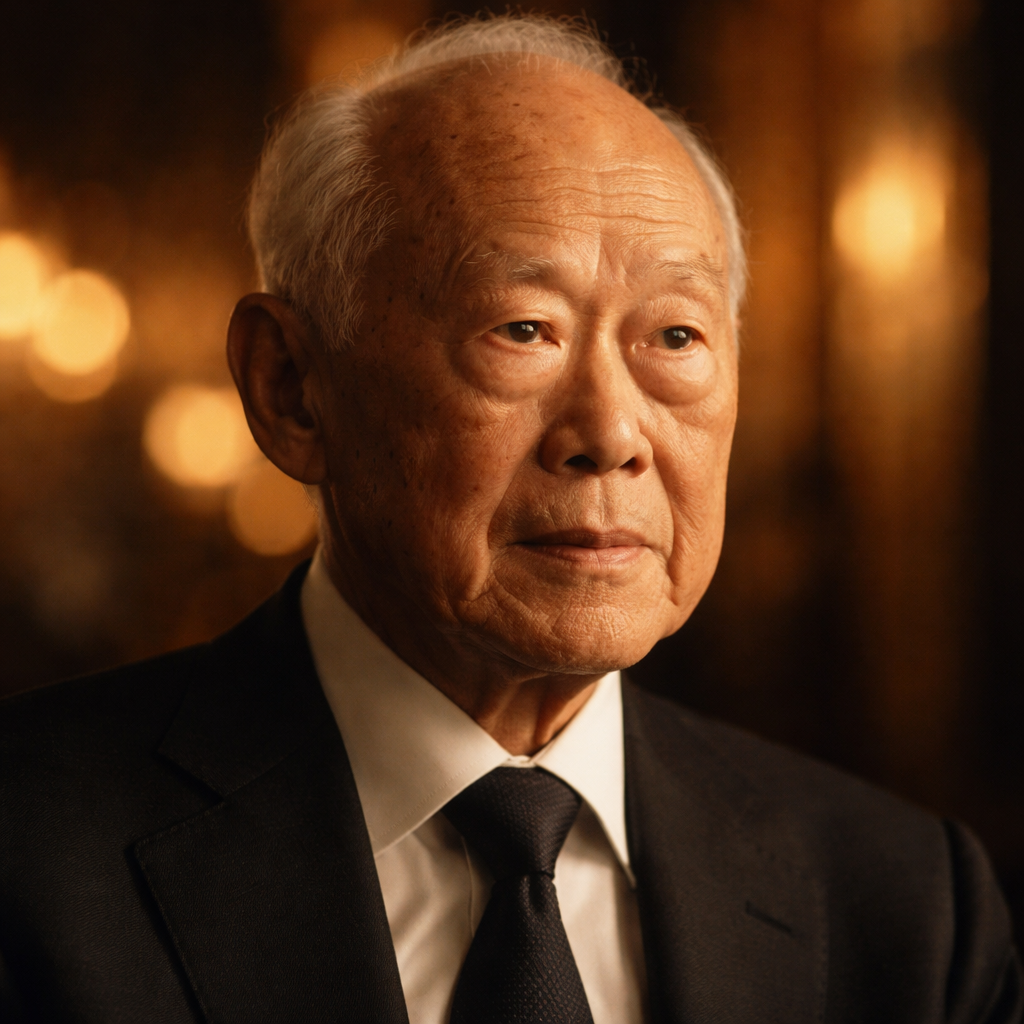
Singapore's per capita GDP surpassed Britain's in 1993, a statistic that would have seemed like fantasy fiction when Lee Kuan Yew took over a swampy, impoverished colonial port city in 1959. When Lee died on March 23, 2015, at age 91, he had governed Singapore for 31 years as prime minister and remained the dominant force in its politics for two decades after that. No other leader in the 20th century oversaw a more dramatic economic transformation of a single nation. Lee took power over a city-state with no natural resources, no military, and no hinterland. Singapore had been expelled from the Malaysian federation in 1965, and Lee wept on television at the announcement, calling it "a moment of anguish." He then spent the next three decades proving that a disciplined government could turn geography into irrelevance, building Singapore into a global financial center through strict rule of law, zero tolerance for corruption, mandatory bilingual education, and aggressive courtship of multinational investment. His methods were authoritarian by any Western standard. Political opponents were bankrupted through defamation lawsuits. The press was tightly controlled. Chewing gum was banned. Lee made no apologies, arguing that Western-style liberalism was a luxury that a tiny, multiethnic nation surrounded by larger powers could not afford. He called his philosophy "Asian values," and it became a template studied by leaders from China to Rwanda. The results were difficult to argue with. Singapore's GDP per capita rose from $500 at independence to over $55,000 by the time of Lee's death, surpassing the United States. Life expectancy, education, and public safety ranked among the world's best. Whether his model could survive without him was the question he left behind.
Muhammad's archers abandoned their posts to collect battlefield spoils, and that single decision cost the Muslims their certain victory at Uhud. The Prophet had positioned fifty archers on a hill with explicit orders: hold position no matter what. But when the Quraysh appeared to retreat, most archers rushed down for plunder. Khalid ibn al-Walid—who'd later become Islam's greatest general—was still fighting for Mecca that day, and he seized the moment, circling behind to attack from the undefended hill. Seventy Muslims died, including Muhammad's uncle Hamza. The Prophet himself was wounded, his tooth broken, blood streaming down his face. What looked like catastrophic defeat became Islam's most taught lesson about discipline and obedience—the battle they lost on purpose taught more than the ones they won.
The last monk to surrender didn't go quietly. Robert Fuller, abbot of Waltham Abbey, held out until March 23, 1540—outlasting 800 other monasteries that Henry VIII had already seized. He'd watched the king's men strip lead from roofs across England, turning 12,000 monks and nuns into the road. When Fuller finally handed over the keys, Henry owned one-quarter of England's land. The abbey's bells, which legend said were rung by angels, were melted down for cannons. What began as Henry's divorce became the largest property grab in English history—and those displaced monks flooding the countryside helped create the vagrant crisis that would haunt England for generations.
The peace treaty lasted six months. Catherine de' Medici and her teenage son Charles IX granted French Protestants freedom of conscience and the right to worship anywhere except Paris—massive concessions that enraged Catholic nobles who'd just spent a year fighting. But Catherine wasn't being generous. She was buying time. Her real strategy was to split the Huguenot leadership, and she'd already begun secret negotiations with Spain's Philip II about a Catholic alliance. When fighting resumed that September, it would spark the St. Bartholomew's Day Massacre four years later, killing thousands. The "peace" was just an intermission in a forty-year religious war that wouldn't end until a Protestant convert took the throne.
Discontented Russian nobles stormed Tsar Paul I's bedroom in St. Michael's Castle, striking him with a sword, strangling him, and trampling him to death. His son Alexander I ascended the throne the same night, and though he publicly attributed the death to natural causes, the palace coup established a pattern of violent succession that haunted the Romanov dynasty.
They named their new city after Edinburgh's Gaelic name before they'd even seen the land. The John Wickliffe's 247 Scottish Free Church passengers spent 108 days at sea clutching plans for street names like Princes Street and George Street, determined to build "the Edinburgh of the South" in a place they knew only from surveyor maps. Captain Thomas Wing had navigated them to Port Chalmers, where they'd establish Dunedin and Otago province with such fierce Presbyterian discipline that pubs would be banned on Sundays for the next century. The irony? They'd sailed halfway around the world to escape religious persecution, only to immediately impose their own.
The first battle lasted twenty minutes and decided almost nothing, but it started a war that reshaped the western coast of South America. At Topater on March 23, 1879, a force of 135 Chilean soldiers clashed with 548 Bolivian and Peruvian troops near the oasis town of Calama in the Atacama Desert. Chile won the skirmish easily, but the War of the Pacific would drag on for four more years. The underlying cause was bird excrement. The Atacama Desert contained enormous deposits of guano and sodium nitrate, essential fertilizers in an era before synthetic alternatives existed. Bolivia controlled the coastal territory where most deposits lay, but Chilean companies did the mining, and Chilean workers vastly outnumbered Bolivians in the region. When Bolivia raised taxes on Chilean mining operations in violation of an 1874 treaty, Chile seized the port of Antofagasta. Bolivia invoked its secret alliance with Peru, and the three-way war began. Chile's navy dominated the Pacific coast, allowing it to land troops at will while Bolivia and Peru struggled to coordinate their forces across the vast desert interior. The decisive naval battle at Angamos in October 1879 gave Chile unchallenged control of the sea and the ability to strangle its enemies' supply lines. Chile's victory was total. By 1883, Chilean troops had occupied Lima, and both Peru and Bolivia were forced to cede territory. Bolivia lost its entire coastline, becoming the landlocked nation it remains today. Peru surrendered the nitrate-rich provinces of Tarapaca, Tacna, and Arica. Bolivia has pursued access to the Pacific through diplomacy and international courts ever since, making its lost coastline one of the longest-running territorial disputes in the Western Hemisphere.
Funston disguised his soldiers as prisoners, marching them into Aguinaldo's remote jungle headquarters with fake Tagalog-speaking guards. The American general even forged letters from other Filipino commanders to make the ruse believable. When they reached Palanan on March 23, 1901, Aguinaldo welcomed what he thought were reinforcements. Within minutes, he was in American custody. The capture didn't end Filipino resistance—guerrilla fighting continued for another year, and some regions fought until 1913. But Washington got what it wanted: the face of Philippine independence silenced, replaced with a colonial governor who'd rule from Manila for the next four decades. The republic's president spent his first weeks of captivity in the same palace where he'd once declared independence.
Fun Facts
Zodiac Sign
Aries
Mar 21 -- Apr 19
Fire sign. Courageous, energetic, and confident.
Birthstone
Aquamarine
Pale blue
Symbolizes courage, serenity, and clear communication.
Next Birthday
--
days until March 23
Quote of the Day
“Love is a fire. But whether it is going to warm your hearth or burn down your house, you can never tell.”
Share Your Birthday
Create a beautiful birthday card with events and famous birthdays for March 23.
Create Birthday CardExplore Nearby Dates
Popular Dates
Explore more about March 23 in history. See the full date page for all events, browse March, or look up another birthday. Play history games or talk to historical figures.