

Historical Figure
Wilhelm Röntgen
1845–1923
German experimental physicist (1845–1923)
Talk to Wilhelm Röntgen
Have a conversation with this historical figure through AI
Biography
Wilhelm Conrad Röntgen was a German experimental physicist who produced and detected electromagnetic radiation in a wavelength range known as X-rays. In 1901, Röntgen became the first recipient of the Nobel Prize in Physics "in recognition of the extraordinary services he has rendered by the discovery of the remarkable rays subsequently named after him." The element roentgenium is named in his honor.
Timeline
The story of Wilhelm Röntgen, told in moments.
Earned his PhD from the University of Zurich. Became a physics instructor, then professor. Spent 25 years doing solid, quiet experimental work on gases and crystals. Nobody outside physics knew his name.
Discovered X-rays while experimenting with cathode ray tubes in a darkened lab at the University of Wurzburg. Noticed a fluorescent screen glowing across the room. Spent six weeks sleeping in his lab to understand what he'd found.
X-rayed his wife Anna Bertha's hand. The image showed her bones and wedding ring. She reportedly said: "I have seen my death." The photograph became the most famous scientific image of the 19th century.
Received the first Nobel Prize in Physics. Donated the entire prize money to the University of Wurzburg. Refused to patent X-rays, believing medical discoveries should belong to everyone. He died nearly broke.
Died of intestinal cancer in Munich at 77. Inflation from World War I had wiped out his savings. His personal papers were burned per his instructions. The element roentgenium was later named in his honor.
In Their Own Words (4)
I was working with a Crookes tube covered by a shield of black cardboard. A piece of barium platino-cyanide paper lay on the bench there. I had been passing a current through the tube, and I noticed a peculiar black line across the paper. … The effect was one which could only be produced, in ordinary parlance, by the passage of light. No light could come from the tube, because the shield which covered it was impervious to any light known, even that of the electric arc. … I did not think; I investigated. I assumed that the effect must have come from the tube, since its character indicated that it could come from nowhere else. I tested it. In a few minutes there was no doubt about it. Rays were coming from the tube which had a luminescent effect upon the paper. I tried it successfully at greater and greater distances, even at two metres. It seemed at first a new kind of invisible light. It was clearly something new, something unrecorded.
1896
I am not a prophet, and I am opposed to prophesying. I am pursuing my investigations, and as fast as my results are verified I shall make them public.
1896
Having discovered the existence of a new kind of rays, I of course began to investigate what they would do. … It soon appeared from tests that the rays had penetrative power to a degree hitherto unknown. They penetrated paper, wood, and cloth with ease; and the thickness of the substance made no perceptible difference, within reasonable limits. … The rays passed through all the metals tested, with a facility varying, roughly speaking, with the density of the metal. These phenomena I have discussed carefully in my report to the Würzburg society, and you will find all the technical results therein stated.
1896
We shall see what we shall see. We have the start now; the developments will follow in time.
1896
Artifacts (15)

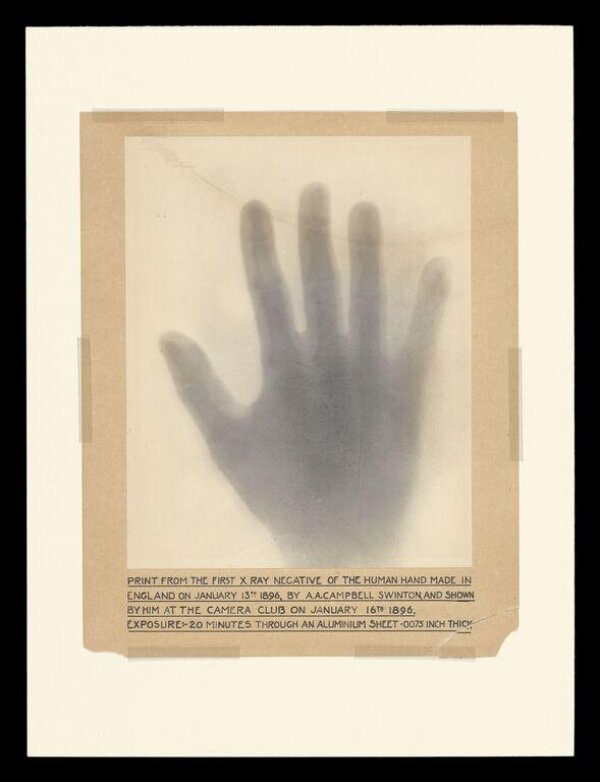

X-ray by Wilhelm Röntgen of Albert von Kölliker's hand - 18960123-01
Wilhelm Röntgen; originally uploaded to en.wikipedia by E rulez.


WilhelmRöntgen
Nobel foundation
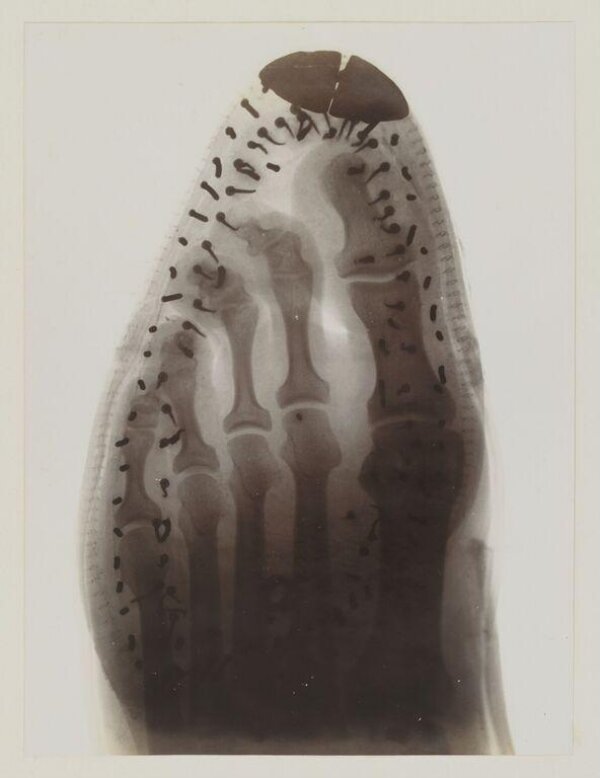
The Röntgen rays in medical work (IA rntgenraysinmedi00wals)
Walsh, David .mw-parser-output .messagebox{margin:4px 0;width:auto;border-collapse:collapse;border:2px solid var(--border-color-progressive,#6485d1);background-color:var(--background-color-neutral-sub


First medical X-ray by Wilhelm Röntgen of his wife Anna Bertha Ludwig's hand - 18951222
Wilhelm Röntgen
More from the Industrial


Explore what happened on the days that shaped Wilhelm Röntgen's life. Today In History connects historical figures with the events, births, and deaths that defined their era. Browse all historical figures or explore today's events.