

Historical Figure
Francis Xavier
1506–1552
Navarese Catholic saint and missionary (1506–1552)
Talk to Francis Xavier
Have a conversation with this historical figure through AI
Biography
Francis Xavier, venerated as Saint Francis Xavier, was a Navarrese cleric and missionary. He co-founded the Society of Jesus and, as a representative of the Portuguese Empire, led the first Christian mission to Japan.
In Their Own Words (5)
St Xavier had come to the East representing both the Pope ‑ as a Legate ‑ and the King as an inspector of missions. As missionary work was a State enterprise charged to the Crown's revenues in Portugal, this identification of national, interests with religious activity should not be a matter of surprise.
K. M. Panikkar. Asia and Western Dominance: a survey of the Vasco Da Gama epoch of Asian history, 1498–1945. , 1498
The impatient Xavier, still dissatisfied with the result of his labour wrote to the King of Portugal that the only hope of increasing the number of Christians was by the use of the secular power of the State. As a result of this note, the King issued orders that in Goa and other Portuguese settlements, “all idols shall be sought out and destroyed, and severe penalties shall be laid upon all such as shall dare to make an idol or shall shelter or hide a Brahmin”.
Page 54 History of Missions Richter quoted from Madhya Pradesh (India), Goel, S. R., Niyogi, M. B. (1998). Vindicated by time: The Niyogi Committee report on Christian missionary activities , 1998
By the aid of the vice-regal troops he pulled down the heathen temples in the neighbourhood of Goa, and appropriated their very considerable property for the use and benefit of the new College." (Page 89)
Theodor Griesinger-"The Jesuits; a complete history." translated from German into English by A. J. Smith. M. D. and was published in 1892 by W. H. Allen and Co. publishers to the India office London. quoted from Shraddananda, Hindu Sangathan, Saviour of the Dying Race (Delhi 1926) , 1892
All the heathen are filled with admiration at the holiness of the law of God, and express the greatest shame at having lived so long in ignorance of the true God. They willingly hear about the mysteries and rules of the Christian religion, and treat me, poor sinner as I am, with the greatest respect. Many, however, put away from them with hardness of heart the truth which they well know. When I have done my instruction, I ask one by one all those who desire baptism if they believe without hesitation in each of the articles of the faith. All immediately, holding their arms in the form of the cross, declare with one voice that they believe all entirely. Then at last I baptize them in due form, and I give to each his name written on a ticket. After their baptism the new Christians go back to their houses and bring me their wives and families for baptism. When all are baptized I order the temples of their false gods to be destroyed and all the idols to be broken in pieces. I can give you an idea of the joy I feel in seeing this done, witnessing the destruction of the idols by the very people who but lately adored them. In all the towns and villages I leave the Christian doctrine in writing in the language of the country. I prescribe at the same time the manner in which it is to taught in the morning and evening schools.
But it was St. Xavier who made anti-Brahminism the central theme of his missionary thrust. “These are,” he wrote, “the most perverse people in the world...they never tell the truth, but think of nothing but how to tell subtle lies and to deceive the simple and ignorant people...the poor simple people do exactly what the Brahmins tell them...If there were no Brahmins in the area, all Hindus would accept conversion to our faith.”
Timeline
The story of Francis Xavier, told in moments.
Took vows with Ignatius of Loyola and five others in a chapel on Montmartre. This small group became the Society of Jesus.
Arrived in Goa, Portuguese India. Spent months learning Tamil by translating prayers phonetically. He walked through villages ringing a bell to gather crowds.
Reached Japan. Learned enough Japanese to preach in the streets of Kagoshima. Converted around 100 people in the first year. The local daimyo tolerated him.
Died of fever on Shangchuan Island off the Chinese coast. He was trying to enter mainland China but couldn't get past the trade embargo. He was 46. His body was found months later, reportedly uncorrupted.
Artifacts (8)
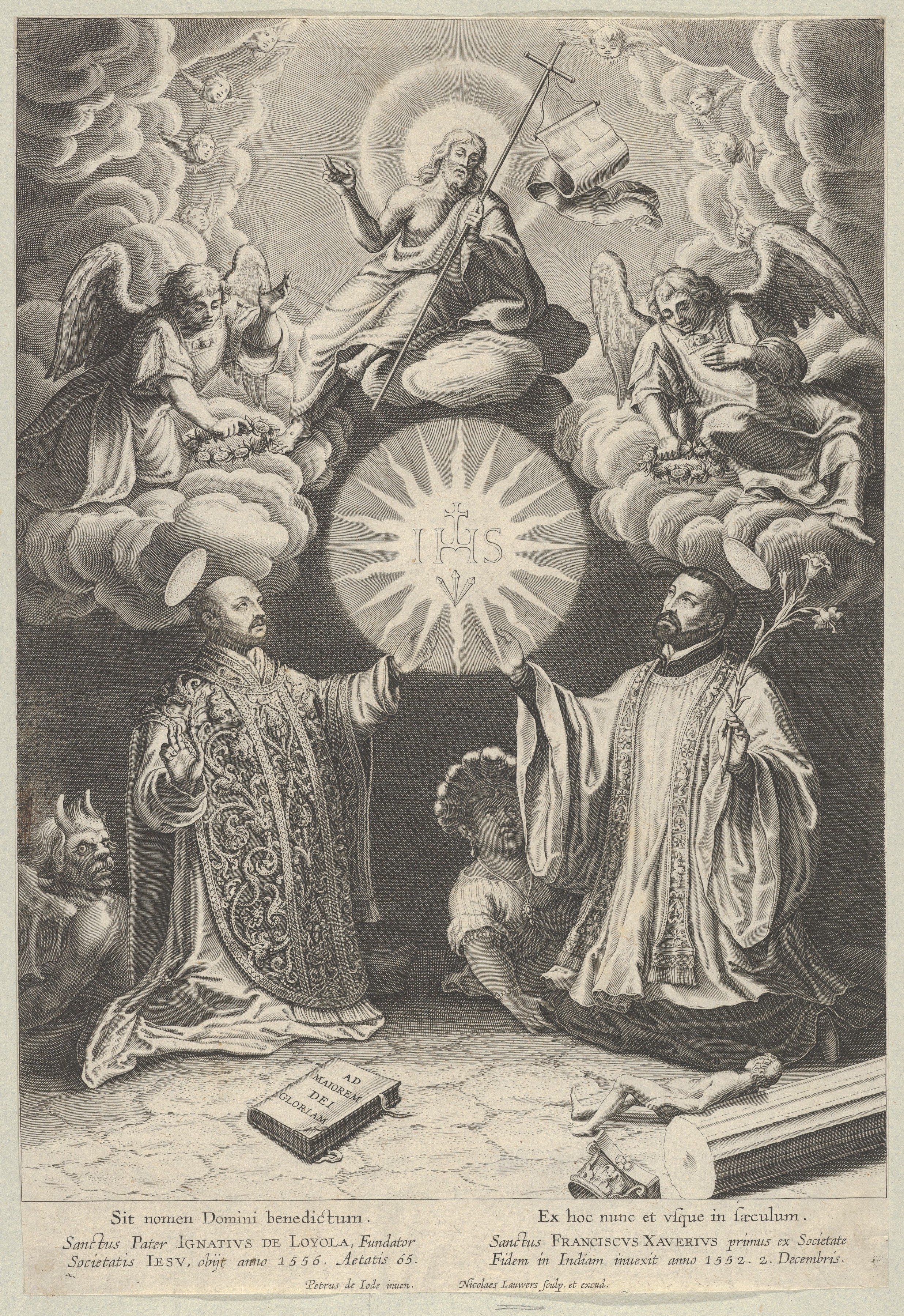
Christ, Ignatius of Loyola and Francis Xavier
Pieter de Jode I|Nicolaes Lauwers|Nicolaes Lauwers
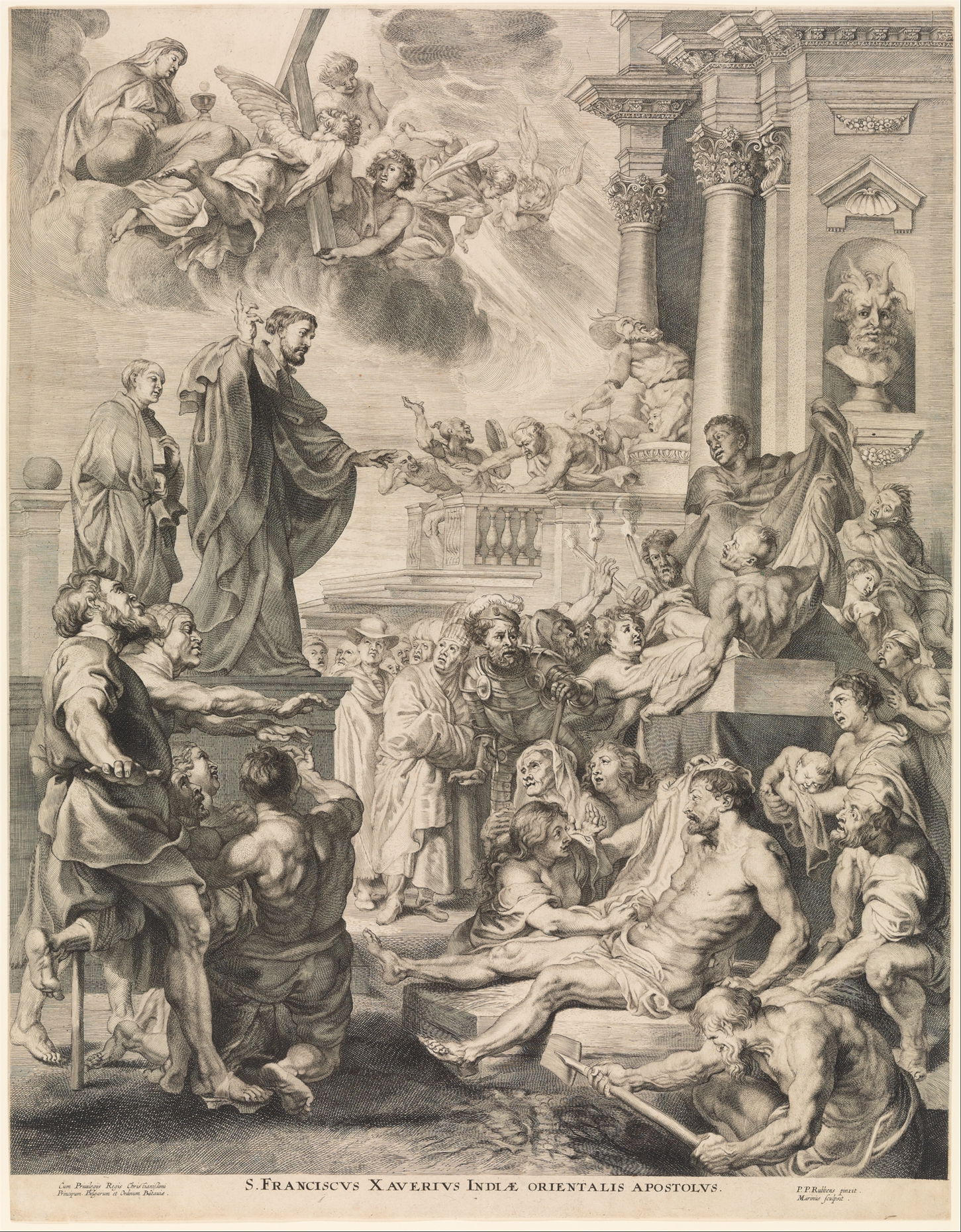
Reproductive Print of the Miracles of St. Francis Xavier Altarpiece
Peter Paul Rubens|Ignatius Cornelis Marinus

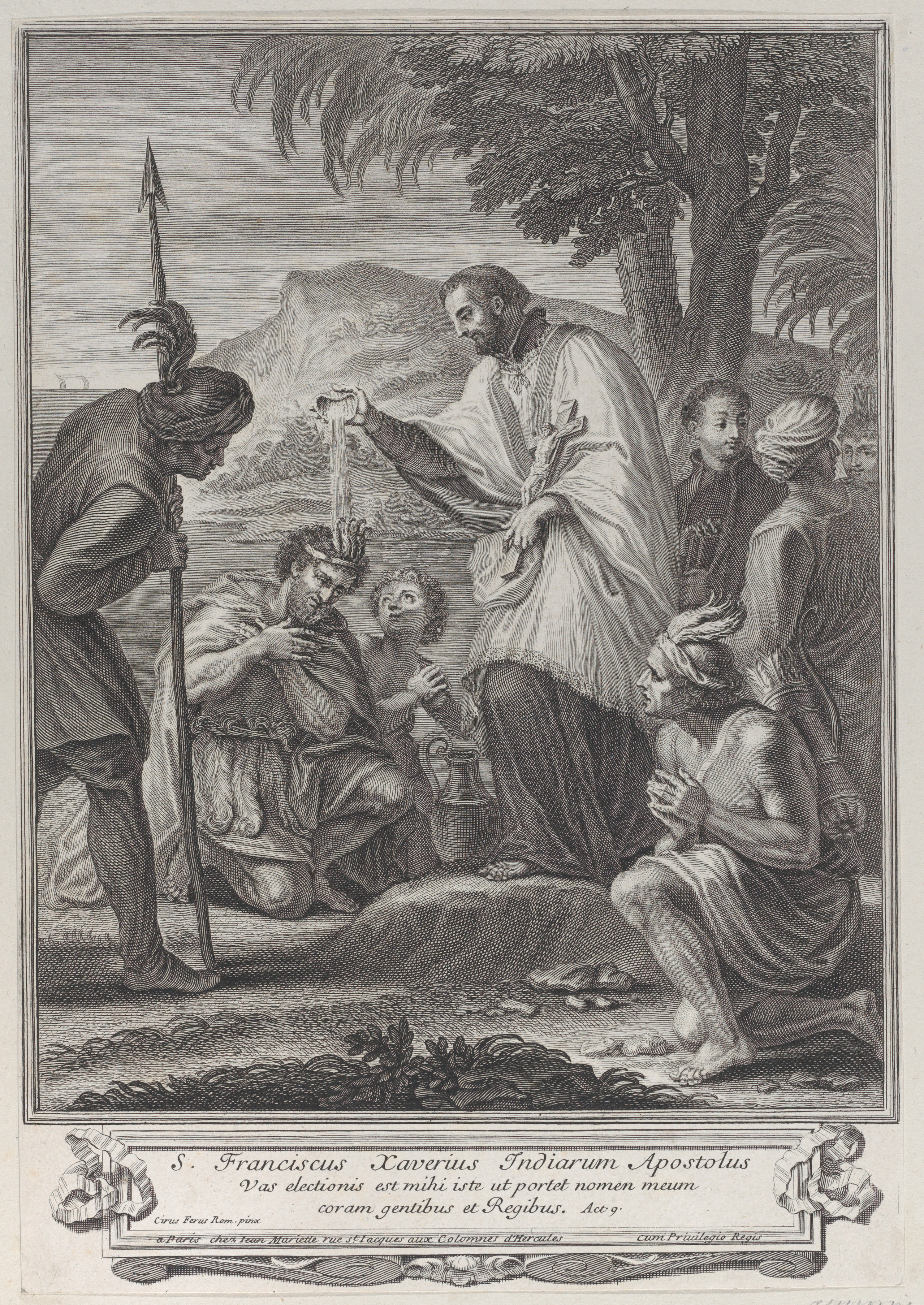
Saint Francis Xavier baptizing the Indians
Pierre Jean Mariette|Anonymous|Ciro Ferri


Saint Francis Xavier and Saint Ignatius of Loyola
Schelte Adams à Bolswert|Peter Paul Rubens
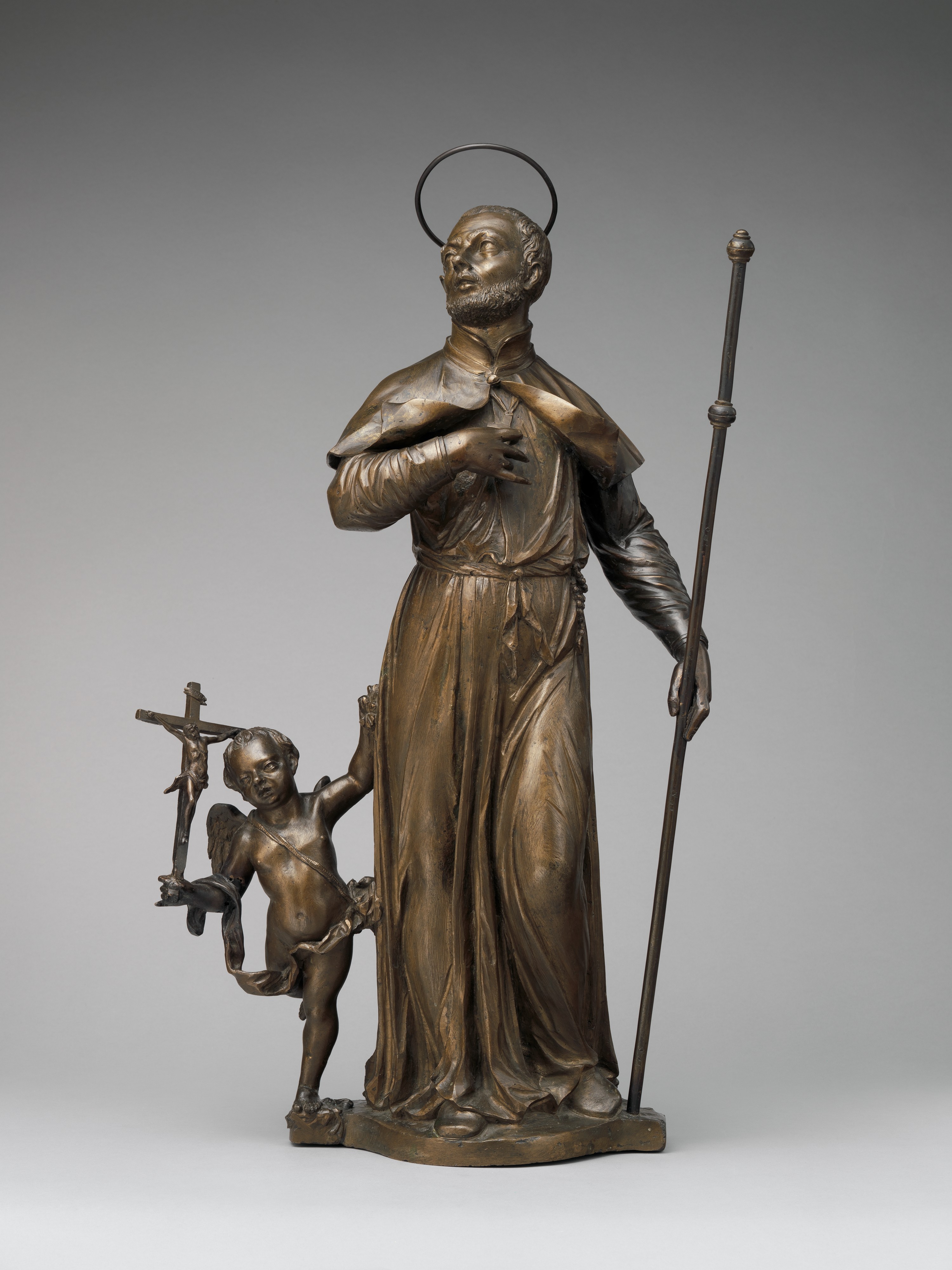
Saint Francis Xavier with an angel holding a crucifix
Francesco Bertos

Commemorating the two Jesuit Saints: Ignatius Loyola (Founder), and Francis Xavier (1506–1552) (greatest missionary)
More from the Renaissance


Explore what happened on the days that shaped Francis Xavier's life. Today In History connects historical figures with the events, births, and deaths that defined their era. Browse all historical figures or explore today's events.