

Historical Figure
Andrei Sakharov
d. 1989
Soviet nuclear physicist and human rights activist (1921–1989)
Talk to Andrei Sakharov
Have a conversation with this historical figure through AI
Biography
Andrei Dmitrievich Sakharov was a Soviet physicist and a Nobel Peace Prize laureate, which he was awarded in 1975 for emphasizing human rights around the world.
Timeline
The story of Andrei Sakharov, told in moments.
At 32, he's the principal designer of the Soviet hydrogen bomb. The first test, RDS-6s, yields 400 kilotons. He is named Hero of Socialist Labor and given a luxury dacha. He is the youngest person ever elected to the Soviet Academy of Sciences.
Helps design the RDS-37, a 1.6-megaton two-stage thermonuclear device dropped over Semipalatinsk. It's the first true Soviet H-bomb. Something shifts in him. He begins advocating for test ban treaties.
Publishes "Reflections on Progress, Peaceful Coexistence, and Intellectual Freedom." The essay, smuggled to the West, calls for nuclear disarmament and an end to Soviet censorship. 18 million copies circulate. He's stripped of his weapons work.
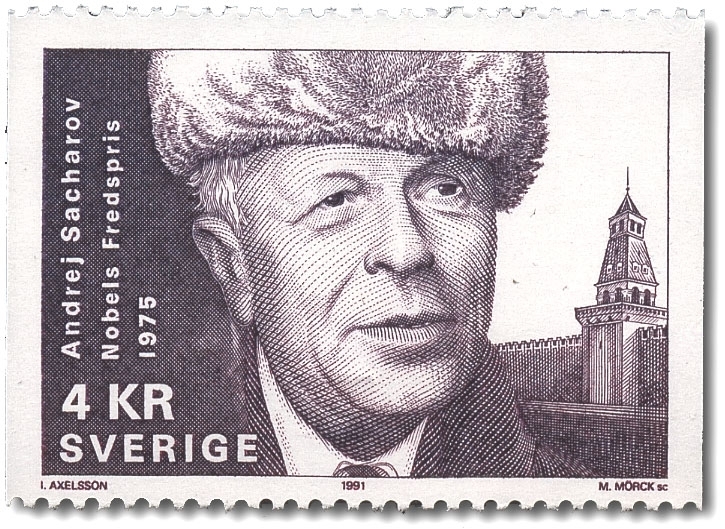
Awarded the Nobel Peace Prize. The Soviet government won't let him leave Moscow to accept it. His wife Yelena Bonner reads his lecture in Oslo.
Arrested without trial and exiled to Gorky, a closed city where foreigners can't visit. He goes on hunger strikes. The KGB force-feeds him. He stays six years.
Gorbachev personally telephones to tell him he can return to Moscow. A phone had been installed in his Gorky apartment the day before, specifically for this call.
Dies of a heart attack in his Moscow apartment at 68. Three days earlier, he'd addressed the Congress of People's Deputies, arguing for multiparty democracy. Gorbachev had told him to sit down. He kept talking.
In Their Own Words (20)
A very large nuclear war would be a calamity of indescribable proportions and absolutely unpredictable consequences, with the uncertainties tending towards the worse...All-out nuclear war would mean the destruction of contemporary civilization, throw man back centuries, cause the deaths of hundreds of millions or billions of people, and, with a certain degree of probability, would cause man to be destroyed as a biological species.
The Dangers of Thermonuclear War, 1983, 1983
Both now and for always, I intend to hold fast to my belief in the hidden strength of the human spirit.
Autobiographical sketch at the official Nobel Prize site, 1975
You all know, even better than I do, that children, e.g. from Denmark, can get on their bicycles and cycle off to the Adriatic. No one would ever think of suggesting that they were "teenage spies". But Soviet children are not allowed to do this!
1975
I grew up in a large communal apartment where most of the rooms were occupied by my family and relations and only a few by outsiders. The house was pervaded by a strong traditional family spirit — a vital enthusiasm for work and respect for professional competence. Within the family we provided one another with mutual support, just as we shared a love of literature and science.
1975
But what about the sufferings of the innocent? Worst of all is the hell that exists in the special psychiatric clinics in Dnieperopetrovsk, Sytshevk, Blagoveshensk, Kazan, Chernakovsk, Oriol, Leningrad, Tashkent, … .
1975
Artifacts (15)

[Blok znaczków podziemnych przedstawiający międzynarodowy wymiar oporu antykomunistycznego]
Poczta Solidarności.

Esbossos i originals per a caricatures de personatges de l'àmbit cultural publicats a La Vanguardia i Tele/expres
Guillén, 1947-

President Ronald Reagan meeting with Soviet dissident Andrei Sakharov in the Oval Office
Series: Reagan White House Photographs, 1/20/1981 - 1/20/1989 Collection: White House Photographic Collection, 1/20/1981 - 1/20/1989
More from the Late 20th Century


Explore what happened on the days that shaped Andrei Sakharov's life. Today In History connects historical figures with the events, births, and deaths that defined their era. Browse all historical figures or explore today's events.