

Historical Figure
Mao Zedong
d. 1976
Leader of China from 1949 to 1976
Talk to Mao Zedong
Have a conversation with this historical figure through AI
Biography
Mao Zedong, also known as Chairman Mao, was a Chinese revolutionary, politician, writer, political theorist and the founder of the People's Republic of China. He led China primarily as the Chairman of the Chinese Communist Party (CCP) from its establishment in October 1949 until his death in September 1976. His theories, which he advocated as a Chinese adaptation of Marxism–Leninism, are known as Maoism.
Timeline
The story of Mao Zedong, told in moments.
Attends the founding meeting of the Chinese Communist Party in Shanghai. Thirteen delegates meet in a girls' school on a street in the French Concession. A stranger walks in and the meeting is moved to a boat on South Lake. Mao is 27. He is not the leader. He takes notes.
The Long March begins. The Red Army, facing annihilation by Chiang Kai-shek's forces, breaks through the Nationalist encirclement and retreats west and north. 86,000 people set out. They march 6,000 miles over 370 days through some of the harshest terrain in China. Roughly 8,000 survive to reach Shaanxi. Mao emerges from the march as the undisputed leader of the party.
Stands at the Gate of Heavenly Peace in Beijing and proclaims the People's Republic of China. "The Chinese people have stood up," he declares. Chiang Kai-shek's Nationalist government has fled to Taiwan. Mao is 55. The civil war that began in 1927 is over.
Launches the Hundred Flowers Campaign, inviting intellectuals to criticize the Communist Party openly. "Let a hundred flowers bloom, let a hundred schools of thought contend." Thousands speak up. Then the Anti-Rightist Campaign begins. 550,000 people are labeled rightists and purged. Many are sent to labor camps.
Launches the Great Leap Forward, ordering the country to surpass Britain in steel production within 15 years. Peasants are forced to melt their farm tools in backyard furnaces. The steel is worthless. Meanwhile, grain rots in the fields. The resulting famine kills between 15 and 55 million people over the next four years. It is the deadliest famine in human history.
Launches the Cultural Revolution. Red Guards, many of them teenagers, are unleashed to purge "bourgeois" elements from Chinese society. Teachers are beaten by their students. Temples are demolished. Books are burned. Intellectuals are sent to labor camps. The decade of chaos kills an estimated 500,000 to 2 million people. Mao uses it to destroy his political rivals.
Dies in Beijing at 82. He has been in declining health for years, suffering from motor neurone disease and congestive heart failure. His personal physician later writes that he had been "ruler of a quarter of the world's population for 27 years." A million people file past his body in the Great Hall of the People. His embalmed remains are placed in a crystal coffin in a mausoleum on Tiananmen Square.
The Communist Party officially reassesses Mao's legacy. The verdict: 70% correct, 30% wrong. The Cultural Revolution is declared a catastrophe. The Great Leap Forward is acknowledged as a disaster. His portrait stays on Tiananmen Square. His face stays on the money. The party he founded still rules China.
In Their Own Words (20)
People who try to commit suicide — don't attempt to save them! . . . China is such a populous nation, it is not as if we cannot do without a few people.
Attributed by Wang Li, "历史将宣告我无罪" (History Will Pronounce Me Innocent), manuscript, Beijing, 1993, p. 7. This source is a privately printed collection of letters and documents concerning Wang Li's expulsion from the CCP. Cited in '''' (2006) by Roderick MacFarquhar and Michael Schoenhal,, 2006
通过实践而发现真理,又通过实践而证实真理和发展真理。从感性认识而能动地发展到理性认识,又从理性认识而能动地指导革命实践,改造主观世界和客观世界。实践、认识、再实践、再认识,这种形式,循环往复以至无穷,而实践和认识之每一循环的内容,都比较地进到了高一级的程度。这就是辩证唯物论的全部认识论,这就是辩证唯物论的知行统一观。
Discover the truth through practice, and again through practice verify and develop the truth. Start from perceptual knowledge and actively develop it into rational knowledge; then start from rational knowledge and actively guide revolutionary practice to change both the subjective and the objective world. Practice, knowledge, again practice, and again knowledge. This form repeats itself in endless cycles, and with each cycle the content of practice and knowledge rises to a higher level. Such is the whole of the dialectical-materialist theory of knowledge, and such is the dialectical-materialist theory of the unity of knowing and doing., 1937
不能把过程中所有的矛盾平均看待,必须把它们区别为主要的和次要的两类,着重于捉住主要的矛盾,已如上述。但是在各种矛盾之中,不论是主要的或次要的,矛盾着的两个方面,又是否可以平均看待呢?也是不可以的。无论什么矛盾,矛盾的诸方面,其发展是不平衡的。有时候似乎势均力敌,然而这只是暂时的和相对的情形,基本的形态则是不平衡。矛盾着的两方面中,必有一方面是主要的,他方面是次要的。其主要的方面,即所谓矛盾起主导作用的方面。事物的性质,主要地是由取得支配地位的矛盾的主要方面所规定的。
As we have said, one must not treat all the contradictions in a process as being equal but must distinguish between the principal and the secondary contradictions, and pay special attention to grasping the principal one. But, in any given contradiction, whether principal or secondary, should the two contradictory aspects be treated as equal? Again, no. In any contradiction the development of the contradictory aspects is uneven. Sometimes they seem to be in equilibrium, which is however only temporary and relative, while unevenness is basic. Of the two contradictory aspects, one must be principal and the other secondary. The principal aspect is the one playing the leading role in the contradiction. The nature of a thing is determined mainly by the principal aspect of a contradiction, the aspect which has gained the dominant position., 1937
如果有了正确的理论,只是把它空谈一阵,束之高阁,并不实行,那末,这种理论再好也是没有意义的。认识从实践始,经过实践得到了理论的认识,还须再回到实践去。认识的能动作用,不但表现于从感性的认识到理性的认识之能动的飞跃,更重要的还须表现于从理性的认识到革命的实践这一个飞跃。抓着了世界的规律性的认识,必须把它再回到改造世界的实践中去,再用到生产的实践、革命的阶级斗争和民族斗争的实践以及科学实验的实践中去。
If we have a correct theory but merely prate about it, pigeonhole it and do not put it into practice, then that theory, however good, is of no significance. Knowledge begins with practice, and theoretical knowledge is acquired through practice and must then return to practice. The active function of knowledge manifests itself not only in the active leap from perceptual to rational knowledge, but--and this is more important--it must manifest itself in the leap from rational knowledge to revolutionary practice. The knowledge which grasps the laws of the world, must be redirected to the practice of changing the world, must be applied anew in the practice of production, in the practice of revolutionary class struggle and revolutionary national struggle and in the practice of scientific experiment., 1937
由此可知,任何过程如果有多数矛盾存在的话,其中必定有一种是主要的,起着领导的、决定的作用,其它则处于次要和服从的地位。因此,研究任何过程,如果是存在着两个以上矛盾的复杂过程的话,就要用全力找出它的主要矛盾。捉住了这个主要矛盾,一切问题就迎刃而解了。这是马克思研究资本主义社会告诉我们的方法。列宁和斯大林研究帝国主义和资本主义总危机的时候,列宁和斯大林研究苏联经济的时候,也告诉了这种方法。万千的学问家和实行家,不懂得这种方法,结果如堕烟海,找不到中心,也就找不到解决矛盾的方法。
Hence, if in any process there are a number of contradictions, one of them must be the principal contradiction playing the leading and decisive role, while the rest occupy a secondary and subordinate position. Therefore, in studying any complex process in which there are two or more contradictions, we must devote every effort to funding its principal contradiction. Once this principal contradiction is grasped, all problems can be readily solved. This is the method Marx taught us in his study of capitalist society. Likewise Lenin and Stalin taught us this method when they studied imperialism and the general crisis of capitalism and when they studied the Soviet economy. There are thousands of scholars and men of action who do not understand it, and the result is that, lost in a fog, they are unable to get to the heart of a problem and naturally cannot find a way to resolve its contradictions., 1937
Artifacts (15)
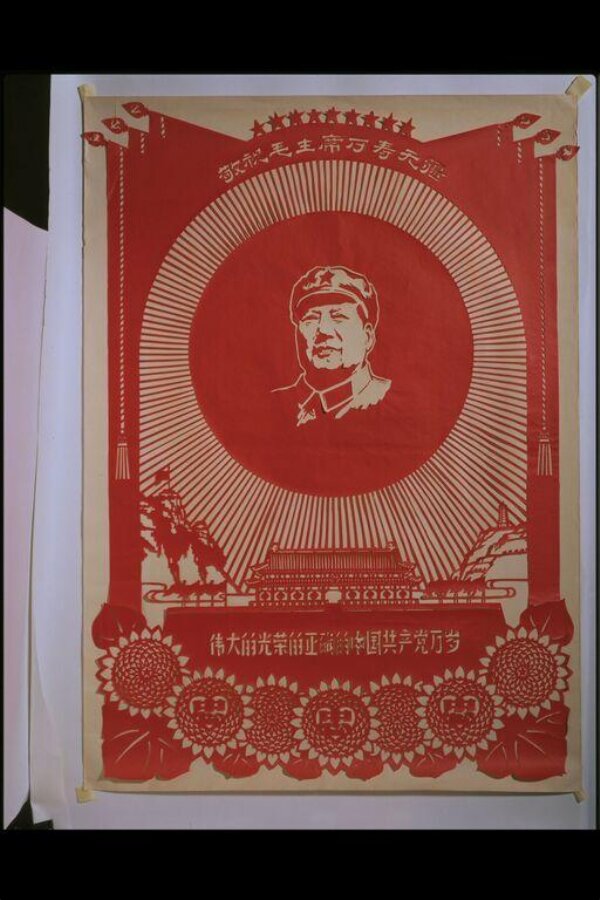


实现无产阶级教育革命 ... At bringe uddannelsen af proletariates revolution ud ...
Deadline (1893-1976) Mao Zedong (1893-1976)

Critique and Ancient Counterfeit
Deadline (1893-1976) Mao Zedong (1893-1976)
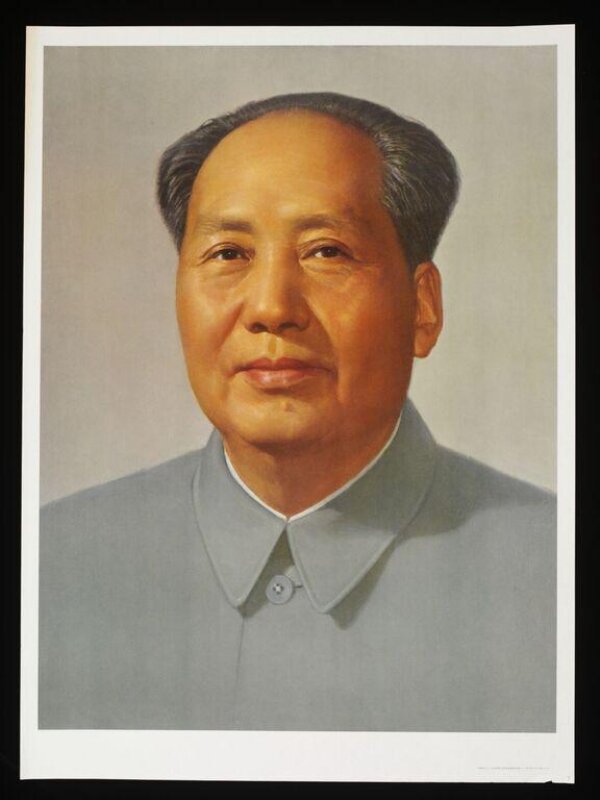

Panel (Depicting Mao Tse Tung)
More from the Late 20th Century


Explore what happened on the days that shaped Mao Zedong's life. Today In History connects historical figures with the events, births, and deaths that defined their era. Browse all historical figures or explore today's events.