

Historical Figure
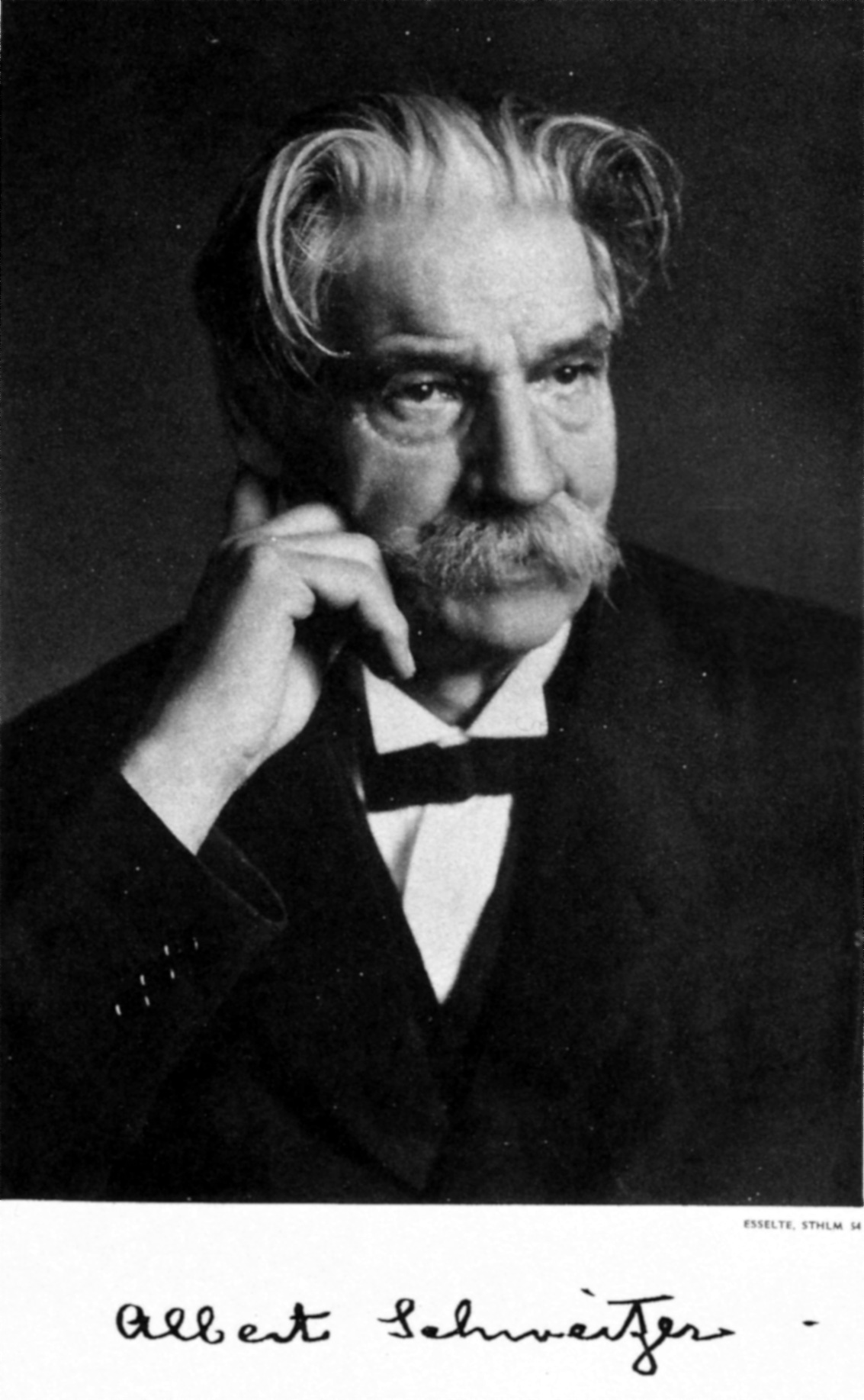
Albert Schweitzer
1875–1965
German polymath (1875–1965)
Talk to Albert Schweitzer
Have a conversation with this historical figure through AI
Biography
Ludwig Philipp Albert Schweitzer was a German polymath from Alsace. He was a theologian, organist, musicologist, writer, humanitarian, philosopher, and physician. As a Lutheran minister, Schweitzer challenged both the secular view of the historical Jesus as depicted by the historical-critical method current at this time, as well as the traditional Christian view. His contributions to the interpretation of Pauline Christianity concern the role of Paul's mysticism of "being in Christ" as primary and the doctrine of justification by faith as secondary.
Timeline
The story of Albert Schweitzer, told in moments.
Already a published theologian, philosopher, and concert organist, he enrolled in medical school at 30. He'd decided to spend his life serving in equatorial Africa.
Opened a hospital in Lambarene, French Equatorial Africa (now Gabon). He funded it with organ recitals and book royalties. Started with a converted chicken coop.
Awarded the Nobel Peace Prize for his philosophy of "Reverence for Life." Used the prize money to expand the hospital and build a leper colony.
Died at his hospital in Lambarene at 90. He'd spent 52 years there. Buried on the hospital grounds beside his wife.
In Their Own Words (20)
I am life which wants to live admidst of lives that want to live.
Ich bin Leben, das leben will, inmitten von Leben, das leben will., 1969
Any religion or philosophy which is not based on a respect for life is not a true religion or philosophy.
Letter to a Japanese Animal Welfare Society (1961); also in The Words of Albert Schweitzer (1984) edited by Norman Cousins, p. 37, 1961
Let me give you a definition of ethics: It is good to maintain and further life — it is bad to damage and destroy life. And this ethic, profound and universal, has the significance of a religion. It is religion.
As quoted in Albert Schweitzer : The Man and His Mind (1947) by George Seaver, p. 366, 1947
Anyone who proposes to do good must not expect people to roll stones out of his way, but must accept his lot calmly if they even roll a few more upon it. A strength which becomes clearer and stronger through its experience of such obstacles is the only strength that can conquer them. Resistance is only a waste of strength.
p. 164, 1947
When Christianity becomes conscious of its innermost nature, it realizes that it is godliness rising our of inward constraint. The highest knowledge is to know that we are surrounded by mystery. Neither knowledge nor hope for the future can be the pivot of our life or determine its direction. It is intended to be solely determined by our allowing ourselves to be gripped by the ethical God, who reveals Himself in us, and by our yielding our will to His.
p. 102, 1947
Artifacts (15)



Albert Schweitzer at the Piano
W. Eugene Smith

More from the Industrial


Explore what happened on the days that shaped Albert Schweitzer's life. Today In History connects historical figures with the events, births, and deaths that defined their era. Browse all historical figures or explore today's events.