
Luftwaffe Fire Rains: London Burns After 200 Die
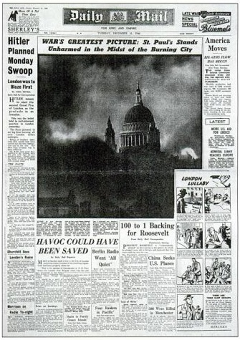
The Luftwaffe dropped over 100,000 incendiary bombs on the City of London on the night of December 29, 1940, igniting a firestorm that destroyed a square mile of the oldest part of the capital and created the most iconic image of the Blitz: the dome of St. Paul Cathedral rising untouched above a sea of smoke and flame. The photograph, taken by Daily Mail photographer Herbert Mason, became the defining symbol of British defiance. The raid was deliberately timed. German intelligence knew that Sunday between Christmas and New Year would find the City deserted, fire-watchers on holiday. The Thames was at exceptionally low tide, making it difficult for brigades to draw water. Buildings locked for the weekend had no one to extinguish incendiaries. The combination created the worst conflagration London had experienced since 1666. Approximately 1,500 fires merged into two major conflagrations, one north of St. Paul and one to its south, creating a furnace of such intensity that firefighters reported the metal fittings on their helmets becoming too hot to touch at a distance of several hundred yards. Nearly 200 civilians were killed, and the fire destroyed or damaged dozens of Wren churches, the Guildhall, eight of the livery company halls, and countless commercial buildings. The area around Paternoster Row, the center of British book publishing for centuries, was annihilated, taking with it an estimated five million books. St. Paul survival was not accidental. A volunteer fire watch organized by the cathedral Dean had been stationed on the roof throughout the Blitz, and that night they extinguished over twenty incendiary bombs that landed on the dome and in the galleries. The raid prompted Churchill to issue an order that St. Paul must be saved at all costs, and subsequent fire-watching requirements were dramatically expanded across London. The burned areas were eventually redeveloped into the Barbican Estate and the modern financial district.
December 29, 1940
86 years ago
Key Figures & Places
London
Wikipedia
World War II
Wikipedia
Luftwaffe
Wikipedia
The Second Great Fire of London
Wikipedia
World War II
Wikipedia
Second Great Fire of London
Wikipedia
Luftwaffe
Wikipedia
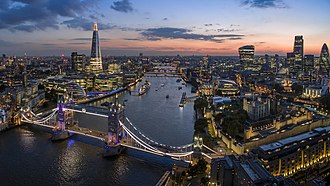
London
Wikipedia
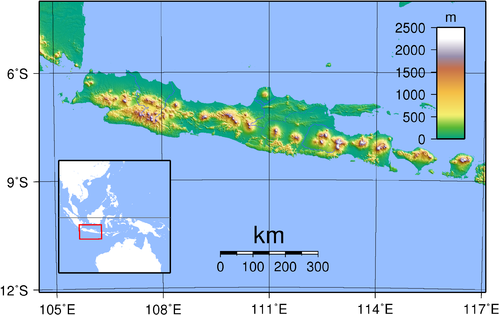
Java
Wikipedia
Indonesia
Wikipedia
Japan
Wikipedia
Washington Naval Treaty
Wikipedia
St Paul's Cathedral
Wikipedia
London Naval Treaty
Wikipedia
Nazi Germany
Wikipedia
British
Wikipedia
What Else Happened on December 29
Four knights walked into Canterbury Cathedral on the evening of December 29, 1170, found Archbishop Thomas Becket at vespers, and hacked him to death with their…
The Ming Dynasty began its final retreat from Hanoi, ending two decades of Chinese occupation in Đại Việt. This withdrawal restored Vietnamese independence unde…
Gonzalo Fernández de Córdoba's Spanish forces crushed the French army at the Garigliano River, ending France's control over southern Italy. This decisive defeat…
Portuguese forces under Francisco de Almeida razed the wealthy trading port of Dabul, slaughtering its inhabitants and burning the city to the ground. This brut…
Pocahontas throws herself between the clubs of Powhatan's warriors and a bound John Smith, halting an execution that would have ended English colonization in Vi…
Three thousand British troops hit Savannah's south side at dawn. The city's 700 defenders—mostly militia who'd never seen combat—broke and ran within an hour. L…
Talk to History
Have a conversation with historical figures who witnessed this era. Ask questions, explore perspectives, and bring history to life.