

Knights Surrender Rhodes: Suleiman Grants Safe Passage
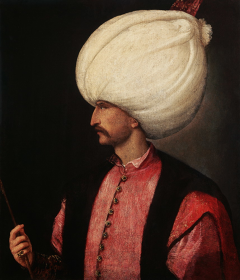
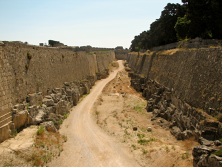
After five months of siege, the last Crusader stronghold in the eastern Mediterranean fell to the Ottoman Empire. On December 20, 1522, Suleiman the Magnificent accepted the surrender of the Knights Hospitaller on Rhodes, ending two centuries of Christian military presence in the Aegean. In a gesture of chivalric respect, Suleiman allowed the surviving knights and civilians to depart with their weapons and possessions. The Knights of St. John had held Rhodes since 1310, transforming the island into a fortified base from which they raided Ottoman shipping and sheltered Christian corsairs. Their presence was a perpetual irritation, sitting astride crucial sea lanes connecting Constantinople to Egypt and the Levant. Suleiman launched his campaign in June 1522 with roughly 400 ships and perhaps 100,000 men. Grand Master Philippe Villiers de L'Isle-Adam commanded only 7,000 defenders, including 500 knights. The fortifications had been extensively modernized, and the defenses proved formidable. Ottoman engineers dug miles of trenches and tunnels, attempting to breach the walls through mining while artillery pounded from above. Multiple assaults were repulsed with heavy losses. But the defenders were hopelessly outnumbered, received no reinforcements from Christian Europe despite desperate appeals, and suffered from dwindling supplies. A Portuguese knight convicted of passing information to the Ottomans weakened the defense further. With ammunition exhausted and the population starving, L'Isle-Adam negotiated terms on December 20. Suleiman, who had lost an estimated 50,000 men, granted generous conditions. The knights sailed to Crete, then wandered the Mediterranean for seven years before Emperor Charles V granted them Malta in 1530. As the Knights of Malta, they faced Suleiman again at the Great Siege of 1565.
December 20, 1522
504 years ago
Key Figures & Places


What Else Happened on December 20
Antonius Primus marched his legions into Rome, slaughtering the supporters of Vitellius to secure the throne for Vespasian. This violent takeover ended the chao…
Vespasian marched into Rome to claim the imperial throne, ending the chaotic Year of the Four Emperors. By establishing the Flavian dynasty, he restored stabili…
Callixtus I became pope over the dead body of theological purity — at least according to Hippolytus, who refused to acknowledge him. The fight wasn't about powe…
Byzantine Emperor Romanos I Lekapenos lost his throne when his own sons, Stephen and Constantine, arrested him and forced his abdication. This palace coup ended…
Three popes. All claiming St. Peter's throne. None backing down. Henry III rode into Rome with an army and a plan: call a council at Sutri, twenty miles north,…

The most famous warrior-king in Christendom was seized while traveling in disguise through enemy territory. On December 20, 1192, Richard I of England was captu…
Talk to History
Have a conversation with historical figures who witnessed this era. Ask questions, explore perspectives, and bring history to life.