

Saddam Hussein Captured: Operation Red Dawn Succeeds
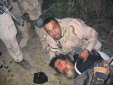
American soldiers pulled the former dictator of Iraq from a hole in the ground. On December 13, 2003, U.S. Special Operations forces found Saddam Hussein hiding in a cramped underground chamber on a farmstead near his hometown of Tikrit, ending an eight-month manhunt that had consumed enormous military resources since the fall of Baghdad in April. Operation Red Dawn, named after the 1984 Patrick Swayze film, targeted two locations designated Wolverine 1 and Wolverine 2 based on intelligence gathered from members of Saddam's inner circle. Roughly 600 soldiers from the 4th Infantry Division and special operations units surrounded the farmstead. Saddam was found in what the military described as a "spider hole," a narrow vertical shaft covered by bricks and dirt, barely large enough for a man to lie down. He was carrying a pistol but offered no resistance. His first words to the soldiers were reportedly, "I am Saddam Hussein. I am the president of Iraq. I want to negotiate." The disheveled, bearded figure bore little resemblance to the man who had ruled Iraq for twenty-four years through a combination of patronage, secret police, and mass murder. His regime had waged war against Iran and Kuwait, used chemical weapons against Kurdish civilians at Halabja, and crushed Shia and Kurdish uprisings with systematic brutality. Saddam's capture was broadcast worldwide, with the U.S. military releasing footage of his medical examination. The Bush administration hoped the arrest would undermine the growing Iraqi insurgency, but violence instead escalated throughout 2004 and beyond. Saddam was tried by the Iraqi Special Tribunal for crimes against humanity, convicted for the 1982 massacre of 148 Shia villagers in Dujail, and executed by hanging on December 30, 2006.
December 13, 2003
23 years ago
Key Figures & Places


What Else Happened on December 13
Robert Guiscard's forces force Salerno's surrender, shattering Norman control over southern Italy and leaving only the citadel under Duke Gisulf's stubborn defe…
An 85-year-old hermit who lived in a cave, ate roots, and hadn't seen Rome in decades became Pope in July 1294. Pietro del Morrone never wanted it. Cardinals ch…
Catholic bishops and theologians convened in Trent to launch a sweeping institutional overhaul in response to the Protestant Reformation. By codifying core doct…
The last priest arrived three years late. Paul III called the council in 1542, but wars between France and the Holy Roman Empire kept delaying it. When bishops …
Sir Francis Drake departed Plymouth with five ships, initiating the second circumnavigation of the globe in history. By returning three years later with a hold …
Twelve men deciding guilt or innocence — the English brought it, but Plymouth made it stick first. Not in Jamestown, where martial law still ruled. Not in Massa…
Talk to History
Have a conversation with historical figures who witnessed this era. Ask questions, explore perspectives, and bring history to life.