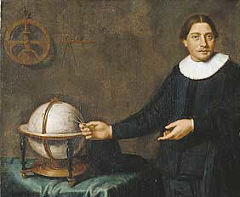
Tasman Spots New Zealand: First European Contact
Abel Tasman was looking for a continent made of gold when he found New Zealand instead. On December 13, 1642, the Dutch navigator and his crew aboard the Heemskerck and Zeehaen became the first Europeans to sight the mountainous coastline of what Maori had called Aotearoa for centuries. The encounter would prove violent, brief, and largely forgotten by Europe for over a hundred years. The Dutch East India Company had sent Tasman south from Batavia, modern-day Jakarta, to search for the fabled Terra Australis, a vast southern continent that European geographers had theorized must exist to balance the landmasses of the Northern Hemisphere. Tasman had already sailed past the southern coast of Australia without realizing it, then discovered the island he named Van Diemen's Land, known today as Tasmania. Continuing east, Tasman's expedition spotted a "large land, uplifted high" on the afternoon of December 13. He sailed north along the South Island's west coast and anchored in what he named Murderers' Bay, now Golden Bay, on December 18. A canoe of Maori warriors approached, and after an exchange of trumpet calls between the ships and canoes, a violent confrontation erupted. Maori paddled a war canoe between the two Dutch ships and rammed a small boat transferring crew between them, killing four Dutch sailors with mere clubs and a short weapon. Tasman withdrew without landing, continuing north along the coast before sailing on to Tonga and Fiji. He charted the western coastline but recorded the land as Staten Landt, believing it might be connected to a landmass near South America. Dutch cartographers soon renamed it Nova Zeelandia, after the Dutch province of Zeeland. No European returned for 127 years, until James Cook's expedition in 1769 mapped the islands comprehensively and initiated sustained European contact with New Zealand's Maori population.
December 13, 1642
384 years ago
Key Figures & Places

What Else Happened on December 13
Robert Guiscard's forces force Salerno's surrender, shattering Norman control over southern Italy and leaving only the citadel under Duke Gisulf's stubborn defe…
An 85-year-old hermit who lived in a cave, ate roots, and hadn't seen Rome in decades became Pope in July 1294. Pietro del Morrone never wanted it. Cardinals ch…
Catholic bishops and theologians convened in Trent to launch a sweeping institutional overhaul in response to the Protestant Reformation. By codifying core doct…
The last priest arrived three years late. Paul III called the council in 1542, but wars between France and the Holy Roman Empire kept delaying it. When bishops …
Sir Francis Drake departed Plymouth with five ships, initiating the second circumnavigation of the globe in history. By returning three years later with a hold …
Twelve men deciding guilt or innocence — the English brought it, but Plymouth made it stick first. Not in Jamestown, where martial law still ruled. Not in Massa…
Talk to History
Have a conversation with historical figures who witnessed this era. Ask questions, explore perspectives, and bring history to life.