Kenya Casts Off Chains: Independence Dawns Under Kenyatta
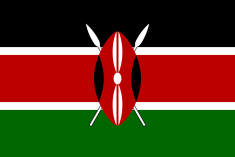
After decades of colonial rule, forced labor, and a bloody uprising that cost thousands of lives, Kenya became an independent nation on December 12, 1963. Jomo Kenyatta, who had spent nine years in British detention as the alleged mastermind of the Mau Mau rebellion, stood before crowds in Nairobi as the country's first prime minister. British control of Kenya dated to the 1890s, when the Imperial British East Africa Company established commercial dominance over the region. The colonial government appropriated vast tracts of fertile highland farmland for white settlers, displacing the Kikuyu, Maasai, and other communities from their ancestral territories. African laborers were confined to crowded reserves and subjected to pass laws that restricted their movement. Resistance simmered for decades before erupting in the Mau Mau uprising of 1952-1960, a guerrilla war fought primarily by Kikuyu fighters against British colonial forces. The British response was ferocious: detention camps holding over a million people, systematic torture, and collective punishment of civilian populations. The conflict killed over 11,000 Africans by official counts, though recent scholarship suggests the true toll was far higher. The brutality ultimately damaged Britain's international reputation and made continued colonial rule politically untenable. Direct elections for African representatives began in 1957, and Kenyatta's Kenya African National Union won a decisive mandate in 1963. Independence was proclaimed at midnight as the Union Jack came down and Kenya's new black, red, and green flag was raised. Exactly one year later, on December 12, 1964, Kenya became a republic with Kenyatta as president. He governed until his death in 1978, overseeing a period of relative stability but also consolidating power in ways that shaped Kenyan politics for generations.
December 12, 1963
63 years ago
Key Figures & Places
What Else Happened on December 12
Emperor Heraclius personally led the Byzantine army against Sasanian Persia at the Battle of Nineveh, fighting in the front ranks during an eleven-hour engageme…
Starving Crusaders breached the walls of Ma'arrat al-Numan on December 12, 1098, and what followed ranks among the most horrifying episodes of the medieval peri…
A 23-year-old widow chose cash over castles. Maria of Enghien, ruling two Greek strongholds she inherited through marriage, sold Argos and Nauplia to Venice for…
Emperor Sigismund lost Bosnia to his own vassal. So he created a chivalric order to bind his nobles closer — through dragon imagery and shared oaths. The Order …
Sigismund of Luxembourg founded it to fight the Ottomans — a knightly order requiring members to wear a dragon coiled around a cross. The catch? You had to be r…
Kempenfelt spotted the French convoy from *Victory*'s deck — 19 warships escorting supply ships bound for the Caribbean. He had just 12 ships. But the wind shif…
Talk to History
Have a conversation with historical figures who witnessed this era. Ask questions, explore perspectives, and bring history to life.