Yuan Shikai Proclaims Emperor: China's Autocracy Returns
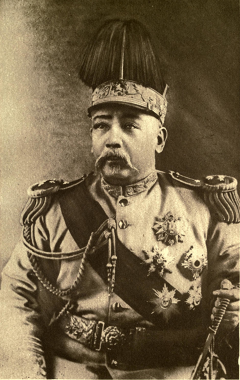
Three years after helping overthrow China's last dynasty, Yuan Shikai decided to start his own. On December 12, 1915, the President of the Republic of China announced his intention to dissolve the republic and proclaim himself Emperor of the Empire of China, reversing the revolution he had helped engineer and plunging the country into political chaos. Yuan had been the most powerful military figure in late Qing Dynasty China, commanding the modernized Beiyang Army. When the Xinhai Revolution erupted in 1911, Yuan brokered a deal: he would persuade the last Qing emperor, six-year-old Puyi, to abdicate in exchange for becoming president of the new republic. Sun Yat-sen, the revolutionary leader, reluctantly agreed, believing Yuan's military support was necessary to hold the fractured nation together. Yuan quickly revealed his authoritarian instincts. He dissolved the parliament, banned the Kuomintang opposition party, and revised the constitution to make himself president for life. By 1915, he took the final step, staging a petition movement in which provincial assemblies conveniently "urged" him to accept the throne. He announced a new dynasty and scheduled his coronation for early 1916. The backlash was immediate and fierce. Military governors in the southern provinces revolted in what became known as the National Protection War. Japan, which had been pressuring Yuan with the humiliating Twenty-One Demands, opposed the monarchy. Even Yuan's own Beiyang officers refused to support the imperial venture. Facing collapse on every front, Yuan rescinded his imperial claims in March 1916 but remained president. He died three months later, widely believed to have succumbed to the stress of his failed ambition. His death fragmented China into the Warlord Era, a decade of competing military fiefdoms that left the nation divided until the Northern Expedition of 1926-1928.
December 12, 1915
111 years ago
Key Figures & Places

What Else Happened on December 12
Emperor Heraclius personally led the Byzantine army against Sasanian Persia at the Battle of Nineveh, fighting in the front ranks during an eleven-hour engageme…
Starving Crusaders breached the walls of Ma'arrat al-Numan on December 12, 1098, and what followed ranks among the most horrifying episodes of the medieval peri…
A 23-year-old widow chose cash over castles. Maria of Enghien, ruling two Greek strongholds she inherited through marriage, sold Argos and Nauplia to Venice for…
Emperor Sigismund lost Bosnia to his own vassal. So he created a chivalric order to bind his nobles closer — through dragon imagery and shared oaths. The Order …
Sigismund of Luxembourg founded it to fight the Ottomans — a knightly order requiring members to wear a dragon coiled around a cross. The catch? You had to be r…
Kempenfelt spotted the French convoy from *Victory*'s deck — 19 warships escorting supply ships bound for the Caribbean. He had just 12 ships. But the wind shif…
Talk to History
Have a conversation with historical figures who witnessed this era. Ask questions, explore perspectives, and bring history to life.