Mosque Demolished: Ayodhya Ignites Religious Violence
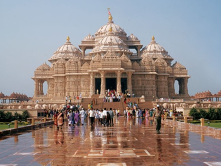
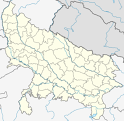
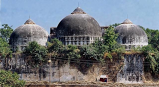
A Hindu nationalist mob of roughly 150,000 people tore down the Babri Masjid mosque in Ayodhya, India, with hammers, pickaxes, and bare hands on December 6, 1992. The 16th-century mosque, built by a commander of the Mughal emperor Babur, stood on a site that Hindus believe to be the birthplace of the god Ram. Its destruction triggered religious riots across India that killed over 2,000 people and fundamentally altered the country's political landscape. The dispute over the Ayodhya site had simmered for over a century. Hindu groups argued that Babur's general Mir Baqi had demolished a temple marking Ram's birthplace to build the mosque in 1528. Muslims maintained that the mosque was a protected place of worship regardless of what preceded it. British colonial administrators had attempted to manage tensions by partitioning the complex, allowing Hindu worship in the outer courtyard and Muslim prayers inside the mosque. The modern crisis accelerated when L.K. Advani of the Bharatiya Janata Party led a cross-country rath yatra, or chariot procession, in 1990 to rally Hindu support for building a Ram temple at the site. The campaign mobilized millions and catapulted the BJP from a marginal party to a major political force. On December 6, 1992, BJP leaders organized a rally at the site that quickly turned into a demolition. Kar sevaks, or volunteer workers, overwhelmed security forces and reduced the mosque to rubble in less than five hours. Communal riots erupted in Bombay, Surat, Ahmedabad, and other cities. Bombay alone saw over 900 deaths in weeks of violence. The demolition permanently polarized Indian politics along religious lines and accelerated the BJP's rise to national power. The Supreme Court of India ruled in 2019 that the disputed land should be given to a trust to build a Hindu temple, while Muslims would receive an alternative site. The Ram Mandir temple was consecrated in January 2024 on the exact spot where the mosque once stood.
December 6, 1992
34 years ago
Key Figures & Places

What Else Happened on December 6
Béla I ascended the Hungarian throne after defeating his brother, Andrew I, in a decisive civil war. His reign stabilized the kingdom by standardizing currency …
Batu Khan's Mongol army breached the walls of Kiev on December 6, 1240, and erased one of medieval Europe's greatest cities from the map. The capital of Kievan …
Christopher Columbus steps ashore on a new island after mistaking Cuba for Japan and searching for gold. He names this land Hispaniola, establishing the first p…
Sebastián de Belalcázar established the city of Quito atop the ruins of an Inca capital, securing a strategic foothold in the northern Andes for the Spanish Cro…
Two hundred and thirty-one members of Parliament arrived at Westminster that December morning. Only 154 made it inside. Colonel Thomas Pride and his musketeers …
Colonel Thomas Pride barred over 140 moderate members from the House of Commons, purging the legislature of those who favored reconciliation with Charles I. Thi…
Talk to History
Have a conversation with historical figures who witnessed this era. Ask questions, explore perspectives, and bring history to life.