

Mongols Sack Kyiv: The Slavic Capital Burns
Batu Khan's forces crush Kiev, toppling its defenses and ending the city's status as a political center under Danylo of Halych and Voivode Dmytro. This conquest shatters the Kievan Rus' state, consigning its surviving principalities into decades of subjugation under the Golden Horde while redirecting trade routes away from the Dnieper River.
December 6, 1240
786 years ago
Key Figures & Places
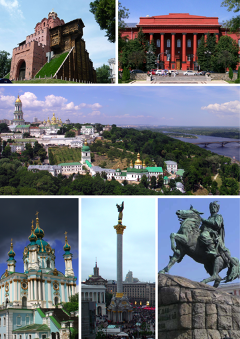
Kiev
Wikipedia
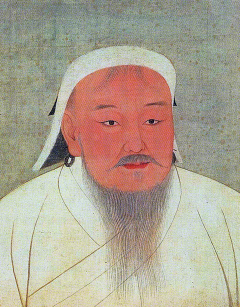
Mongols
Wikipedia
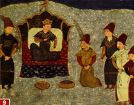
Batu Khan
Wikipedia
Mongol invasion of Rus
Wikipedia
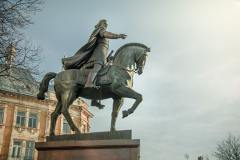
Danylo of Halych
Wikipedia
Voivode Dmytro
Wikipedia
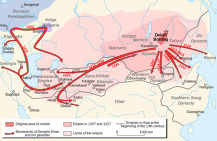
Mongol invasion of Rus'
Wikipedia
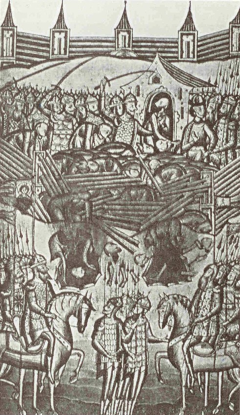
falls
Wikipedia

Mongol invasion of Kievan Rus'
Wikipedia

Kyiv
Wikipedia

Siege of Kiev (1240)
Wikipedia

Mongols
Wikipedia

Batu Khan
Wikipedia

Golden Horde
Wikipedia

Mongol Empire
Wikipedia

Massaker
Wikipedia
What Else Happened on December 6
en la actual Guatemala, se documentan los primeros escritos de América, estelas de época olmeca tardía.
Gerhard von Burgund wird in Siena als Nikolaus II. Papst. Er muss sich des in Rom gewählten Gegenpapstes Benedikt X. erwehren.
Béla I ascended the Hungarian throne after defeating his brother, Andrew I, in a decisive civil war. His reign stabilized the kingdom by standardizing currency …
Tello Pérez de Meneses funda el Hospital de Villamartín y lo dona a la Orden de Santiago.
Vladislav Heinrich aus dem Geschlecht der Přemysliden verzichtet zugunsten seines Bruders Ottokar auf die böhmische Herzogskrone und wird dafür erster Markgraf …
El príncipe Alfonso el Sabio de Castilla entra oficialmente en la ciudad de Alicante, tras la conquista de su castillo dos días atrás.
Talk to History
Have a conversation with historical figures who witnessed this era. Ask questions, explore perspectives, and bring history to life.