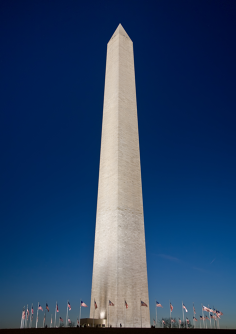
Washington Monument Stands: World's Tallest Obelisk
Workers placed a nine-inch, 100-ounce aluminum capstone atop the Washington Monument on December 6, 1884, completing a structure that had taken 36 years to build and had nearly been abandoned at least twice. At 555 feet, the obelisk became the tallest structure in the world, a record it held until the Eiffel Tower surpassed it five years later. The aluminum tip was the largest single piece of that metal ever cast at the time, chosen because aluminum was then more valuable than silver. The monument's troubled history mirrored the nation's. Congress authorized construction in 1848, and a private society laid the cornerstone on July 4 of that year. Progress stalled almost immediately due to funding shortfalls and political squabbling. When the anti-Catholic Know-Nothing party stole a stone donated by Pope Pius IX in 1854, contributions dried up entirely. By the time the Civil War began, the stump stood at just 156 feet, surrounded by grazing cattle and nicknamed "the national disgrace." Congress finally appropriated federal funds in 1876 to finish the job. The Army Corps of Engineers took over, but geological surveys revealed that the original foundation was inadequate for the planned height. Engineers widened and deepened the base before resuming upward construction. A visible color change roughly one-third of the way up marks the transition between the original marble and the stone quarried after the long hiatus. The completed monument was dedicated on February 21, 1885, with ceremonies that President Chester Arthur attended despite bitter cold. An interior staircase of 897 steps spirals to an observation deck near the top, though visitors now ride an elevator. The monument has survived two major earthquakes, including the 2011 Virginia tremor that cracked stones near the peak and required three years of repairs. The obelisk remains the centerpiece of the National Mall and the most recognized symbol of the American capital.
December 6, 1884
142 years ago
Key Figures & Places
What Else Happened on December 6
Béla I ascended the Hungarian throne after defeating his brother, Andrew I, in a decisive civil war. His reign stabilized the kingdom by standardizing currency …
Batu Khan's Mongol army breached the walls of Kiev on December 6, 1240, and erased one of medieval Europe's greatest cities from the map. The capital of Kievan …
Christopher Columbus steps ashore on a new island after mistaking Cuba for Japan and searching for gold. He names this land Hispaniola, establishing the first p…
Sebastián de Belalcázar established the city of Quito atop the ruins of an Inca capital, securing a strategic foothold in the northern Andes for the Spanish Cro…
Two hundred and thirty-one members of Parliament arrived at Westminster that December morning. Only 154 made it inside. Colonel Thomas Pride and his musketeers …
Colonel Thomas Pride barred over 140 moderate members from the House of Commons, purging the legislature of those who favored reconciliation with Charles I. Thi…
Talk to History
Have a conversation with historical figures who witnessed this era. Ask questions, explore perspectives, and bring history to life.