Bhopal's Deadly Gas Leak: 3,800 Die in Industrial Tragedy
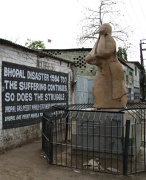
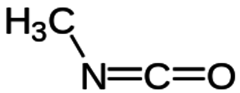
Forty tons of methyl isocyanate gas leaked from a pesticide factory and rolled across a sleeping city. The disaster at the Union Carbide plant in Bhopal, India, on the night of December 2-3, 1984, killed at least 3,800 people immediately and left hundreds of thousands with permanent injuries. Classified as the deadliest industrial accident in history, it exposed the lethal consequences of multinational corporations cutting costs in developing nations. The Bhopal plant manufactured Sevin, a carbamate pesticide, using methyl isocyanate (MIC) as an intermediate chemical. MIC is extraordinarily toxic and volatile. Union Carbide's design called for three safety systems to prevent leaks: a refrigeration unit to keep the MIC cool, a scrubber to neutralize escaping gas, and a flare tower to burn off residual vapor. On the night of the disaster, all three systems were either broken or shut down to save money. The refrigeration unit had been turned off months earlier. Water entered a storage tank holding 42 tons of MIC, triggering a violent exothermic reaction. Pressure built rapidly. A safety valve blew, and a white cloud of lethal gas drifted over the densely packed neighborhoods surrounding the plant. Thousands of residents, many of them slum dwellers, woke choking and blind. Hospitals were overwhelmed. Doctors had no information about the gas or how to treat exposure because Union Carbide had classified MIC's health effects as proprietary. The aftermath compounded the horror. Union Carbide CEO Warren Anderson was briefly arrested upon visiting Bhopal but was allowed to leave the country. The company settled with the Indian government in 1989 for $470 million, roughly $500 per victim. Contaminated groundwater continues to poison residents decades later. Bhopal became shorthand for corporate negligence and the human cost of regulatory failure in the global chemical industry.
December 3, 1984
42 years ago
Key Figures & Places
What Else Happened on December 3
Pope John X crowned Berengar I as Holy Roman Emperor, formalizing a desperate alliance to expel Saracen raiders from their fortified base on the Garigliano Rive…
John Paul Jones raised the Grand Union Flag on the USS Alfred in Philadelphia on December 3, 1775, making it the first ship to display this early symbol of Amer…
The Austrians won at Wiesloch, but nobody remembers. Sztáray de Nagy-Mihaly pushed back French forces in this small Baden town, briefly reversing Radical France…
The Electoral College produced an unprecedented tie between Thomas Jefferson and his own running mate Aaron Burr, each receiving 73 votes. The deadlock threw th…
French General Moreau routed Austrian Archduke John's forces near Munich on December 3, 1800, in a blinding snowstorm that gave France the decisive victory it n…
Illinois entered the Union with a lie already in place. The state constitution banned slavery — except it didn't. Existing enslaved people stayed enslaved. Salt…
Talk to History
Have a conversation with historical figures who witnessed this era. Ask questions, explore perspectives, and bring history to life.