Heart Transplant Succeeds: Barnard Opens Medical Frontier
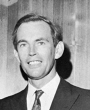
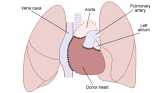
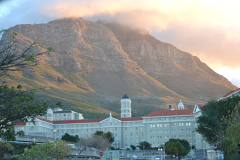
Christiaan Barnard cut open a dying man's chest and replaced his heart with one from a woman killed in a car accident. The surgery at Groote Schuur Hospital in Cape Town on December 3, 1967, lasted nine hours and required a team of thirty. Louis Washkansky, a 54-year-old grocer ravaged by diabetes and heart disease, woke up with the heart of Denise Darvall, a 25-year-old bank clerk, beating inside him. Barnard was not the most obvious candidate to make surgical history. American surgeons Norman Shumway and Richard Lower at Stanford had performed the crucial animal research and developed the techniques Barnard used. But Shumway faced institutional review hurdles and legal uncertainty about when a donor could be declared dead. South Africa had no such constraints. Barnard, who had trained briefly at the University of Minnesota, moved faster. Darvall and her mother were struck by a drunk driver on the evening of December 2. Her mother died instantly. Denise was declared brain dead at Groote Schuur, and her father gave consent for organ donation. Barnard's team cooled her heart, stopped it with potassium, and transplanted it into Washkansky's chest. When they removed the clamps and warmed the heart, it began beating on its own. Barnard later said the sound was "like music." Washkansky survived 18 days before dying of pneumonia, his immune system weakened by the anti-rejection drugs. The brevity of his survival disappointed some, but the surgery proved the concept. Barnard performed a second transplant in January 1968, and the patient lived 19 months. Shumway continued refining the procedure and immunosuppression protocols that made heart transplants routine. Today, roughly 6,000 heart transplants are performed worldwide each year, all of them descendants of one audacious night in Cape Town.
December 3, 1967
59 years ago
Key Figures & Places
What Else Happened on December 3
Pope John X crowned Berengar I as Holy Roman Emperor, formalizing a desperate alliance to expel Saracen raiders from their fortified base on the Garigliano Rive…
John Paul Jones raised the Grand Union Flag on the USS Alfred in Philadelphia on December 3, 1775, making it the first ship to display this early symbol of Amer…
The Austrians won at Wiesloch, but nobody remembers. Sztáray de Nagy-Mihaly pushed back French forces in this small Baden town, briefly reversing Radical France…
The Electoral College produced an unprecedented tie between Thomas Jefferson and his own running mate Aaron Burr, each receiving 73 votes. The deadlock threw th…
French General Moreau routed Austrian Archduke John's forces near Munich on December 3, 1800, in a blinding snowstorm that gave France the decisive victory it n…
Illinois entered the Union with a lie already in place. The state constitution banned slavery — except it didn't. Existing enslaved people stayed enslaved. Salt…
Talk to History
Have a conversation with historical figures who witnessed this era. Ask questions, explore perspectives, and bring history to life.