

Berkeley Students Demand Free Speech: The Movement Begins
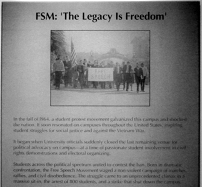
Police carried 773 students out of Sproul Hall one by one in the largest mass arrest in California history. The sit-in at the University of California, Berkeley, on December 2-3, 1964, was the climax of the Free Speech Movement, a student revolt that challenged university administrators' authority to regulate political activity on campus. The arrests did not crush the movement. They transformed it into a national cause. The crisis began in September 1964 when Berkeley's administration banned tables and leafleting at the Bancroft Way entrance to campus, a traditional zone for student political organizing. Civil rights activists who had spent the summer registering voters in Mississippi were particularly outraged. When administrators attempted to arrest a former student for staffing a Congress of Racial Equality table on October 1, thousands of students surrounded the police car for 32 hours, using its roof as a speaking platform. Mario Savio, a 21-year-old philosophy student and Mississippi Freedom Summer veteran, emerged as the movement's most compelling voice. His speech on the steps of Sproul Hall on December 2 electrified the crowd: "There's a time when the operation of the machine becomes so odious, makes you so sick at heart, that you can't take part." He urged students to put their bodies upon the gears. Over a thousand filed into the building for an all-night occupation. Governor Pat Brown ordered the arrests, which took police 12 hours to complete. But a campus-wide faculty vote on December 8 sided overwhelmingly with the students, and the administration capitulated on nearly every demand. The Free Speech Movement established the template for campus activism that defined the late 1960s, from anti-Vietnam War protests to the ethnic studies movement. Berkeley became synonymous with student radicalism, a reputation that persists six decades later.
December 3, 1964
62 years ago
Key Figures & Places
What Else Happened on December 3
Pope John X crowned Berengar I as Holy Roman Emperor, formalizing a desperate alliance to expel Saracen raiders from their fortified base on the Garigliano Rive…
John Paul Jones raised the Grand Union Flag on the USS Alfred in Philadelphia on December 3, 1775, making it the first ship to display this early symbol of Amer…
The Austrians won at Wiesloch, but nobody remembers. Sztáray de Nagy-Mihaly pushed back French forces in this small Baden town, briefly reversing Radical France…
The Electoral College produced an unprecedented tie between Thomas Jefferson and his own running mate Aaron Burr, each receiving 73 votes. The deadlock threw th…
French General Moreau routed Austrian Archduke John's forces near Munich on December 3, 1800, in a blinding snowstorm that gave France the decisive victory it n…
Illinois entered the Union with a lie already in place. The state constitution banned slavery — except it didn't. Existing enslaved people stayed enslaved. Salt…
Talk to History
Have a conversation with historical figures who witnessed this era. Ask questions, explore perspectives, and bring history to life.