Mariner 4 Launches: First Glimpse of Mars from Space
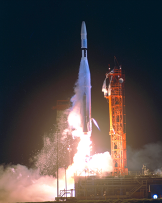
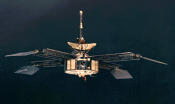
NASA launched the Mariner 4 probe toward Mars on November 28, 1964, from Cape Canaveral, Florida. Eight months later, on July 14-15, 1965, it became the first spacecraft to successfully fly by Mars and return close-up images of the planet's surface. What it revealed shattered a century of hopeful speculation. Before Mariner 4, Mars was imagined as a world that might support life. Percival Lowell had mapped what he believed were canals built by an intelligent civilization. Science fiction writers had populated the planet with everything from Wells's tentacled invaders to Bradbury's poetic ancient Martians. Even scientists expected to see evidence of vegetation, possibly water features, and a thin but present atmosphere. Mariner 4 returned 22 photographs. They showed a cratered, barren, moon-like surface with no canals, no water, no vegetation, and no sign of any geological activity that might support life. The images covered about one percent of the Martian surface, concentrated in the southern hemisphere, and every frame showed the same desolation: impact craters, dust, and rock. The atmospheric measurements were equally discouraging: the surface pressure was only about 1 percent of Earth's, far too low for liquid water to exist. The psychological impact was significant. A generation of scientists and the general public had to abandon their romantic image of Mars in a single week. The search for Martian life, which had been a driving motivation for planetary exploration, had to be reframed. Future missions would look for microbial life, past water, or chemical signatures rather than civilizations or forests. Mariner 4 was a technical triumph. The spacecraft used a television camera, a tape recorder, and a transmitter with only 10 watts of power, equivalent to a dim light bulb, to send its data across 134 million miles. The first image took over eight hours to transmit. Engineers at JPL were so impatient that they colored the first image by hand with pastels as the data came in, number by number, before the computer processing was complete.
November 28, 1964
62 years ago
What Else Happened on November 28
King Guntram of Burgundy formally adopted his nephew Childebert II as his successor, unifying the fractured Merovingian kingdoms under a single line of successi…
Shi Jingtang didn't win his throne — he bought it. To secure Liao's military backing against Emperor Fei of Later Tang, he handed over the strategically critica…
A bishop and a count. That's who Pope Urban II trusted to command one of history's most audacious military campaigns. Adhemar of Le Puy wasn't a general — he wa…
Skanderbeg seized the fortress of Kruja by tricking the Ottoman garrison with a forged sultan’s decree, reclaiming his ancestral lands. By raising the double-he…
Emperor Lê Thánh Tông launched a massive naval and land invasion against the Champa Kingdom, dismantling the Vijaya capital. This decisive campaign shattered Ch…
Three battered ships sailed out of a narrow, storm-lashed strait and into an ocean so vast and calm that their captain wept. Ferdinand Magellan, having spent 38…
Talk to History
Have a conversation with historical figures who witnessed this era. Ask questions, explore perspectives, and bring history to life.