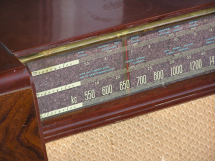
BBC Launches First Broadcast: The Dawn of Global Radio
The British Broadcasting Company transmitted its first radio programs from Marconi's London studio at 2LO, launching a media institution that would grow into the most influential broadcaster in the world. The BBC's birth was uncharacteristically British in its messiness, emerging not from grand national vision but from a commercial compromise among competing wireless manufacturers who needed someone to make programs worth listening to. Radio in 1922 was an unregulated chaos. Multiple companies were manufacturing wireless receivers, but there was almost nothing to receive. The Post Office, which controlled broadcasting licenses, feared the American model of unregulated commercial radio and pressured six major manufacturers, including Marconi, Metropolitan-Vickers, and General Electric, to form a single broadcasting entity. The result was the British Broadcasting Company, Ltd., funded by a license fee of ten shillings per radio set and a royalty on receiver sales. John Reith, a towering Scottish engineer with firm Presbyterian convictions about public service, was appointed general manager in December 1922. Reith transformed the BBC from a commercial convenience into something unprecedented: a broadcaster committed to informing, educating, and entertaining the public in equal measure. His philosophy, later codified when the company became a public corporation in 1927 under a Royal Charter, held that broadcasting was too important to be left to market forces alone. The early programming was modest. News bulletins, weather forecasts, music recitals, and children's programs filled a schedule that ran only a few hours per day. Newspaper publishers, fearing competition, initially restricted the BBC to broadcasting news only after 7 p.m. and only from wire service reports.
November 14, 1922
104 years ago
Key Figures & Places

What Else Happened on November 14
Alexander the Great accepted the double crown of Upper and Lower Egypt in Memphis, ending two centuries of Persian rule. By assuming the title of pharaoh, he se…
Francisco Pizarro and his band of conquistadors marched into the Inca city of Cajamarca, initiating a direct confrontation with Emperor Atahualpa. This encounte…
German astronomer Gottfried Kirch discovered the Great Comet of 1680 on November 14, becoming the first person to find a comet using a telescope. The comet's sp…
Scottish explorer James Bruce reached the source of the Blue Nile at Lake Tana in Ethiopia, believing he had solved one of geography's oldest mysteries. His acc…
French Marshals Victor and Oudinot suffered defeat at the Battle of Smoliani on November 14, 1812, as Russian forces under General Wittgenstein blocked their ad…
Herman Melville's Moby-Dick arrived in American bookshops on November 14, 1851, and was met with confusion, hostility, and commercial failure so complete that t…
Talk to History
Have a conversation with historical figures who witnessed this era. Ask questions, explore perspectives, and bring history to life.