Melville Publishes Moby-Dick: A Literary Masterpiece Emerges
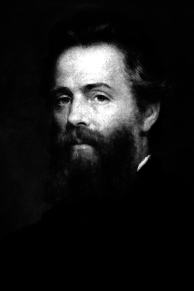
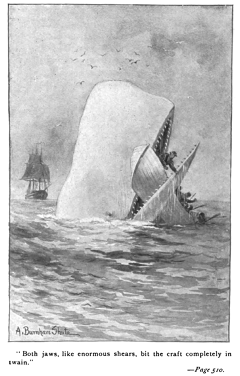
Herman Melville's Moby-Dick arrived in American bookshops on November 14, 1851, and was met with confusion, hostility, and commercial failure so complete that the author spent the remaining four decades of his life in near-total obscurity. The novel that would eventually be recognized as perhaps the greatest work of American literature sold fewer than 3,200 copies during Melville's lifetime. Melville was 32 and riding a wave of success from earlier adventure novels like Typee and Omoo when he began working on a whaling story. The book that emerged over eighteen months of intense composition bore almost no resemblance to the straightforward sea yarn his publisher expected. Moby-Dick was a sprawling, genre-defying work that blended adventure narrative with philosophical meditation, scientific treatise, Shakespearean soliloquy, and dark comedy. Captain Ahab's obsessive pursuit of the white whale operated simultaneously as a gripping adventure story and an allegory about the limits of human will against an indifferent universe. Contemporary reviewers were baffled. The London Athenaeum called it "an ill-compounded mixture of romance and matter-of-fact." American critics were kinder but tepid. The book's fame in the British market was further damaged when the London edition, published a month earlier under the title The Whale, accidentally omitted the epilogue, leaving readers wondering how the narrator had survived to tell the story. Sales were dismal. Melville's publisher eventually reported that the novel had earned him just $556.37 in royalties. Melville continued writing but never recovered commercially. He spent his final nineteen years as a customs inspector on the New York docks, virtually forgotten by the literary world. When he died in 1891, the New York Times obituary misspelled his name.
November 14, 1851
175 years ago
Key Figures & Places
What Else Happened on November 14
Alexander the Great accepted the double crown of Upper and Lower Egypt in Memphis, ending two centuries of Persian rule. By assuming the title of pharaoh, he se…
Francisco Pizarro and his band of conquistadors marched into the Inca city of Cajamarca, initiating a direct confrontation with Emperor Atahualpa. This encounte…
German astronomer Gottfried Kirch discovered the Great Comet of 1680 on November 14, becoming the first person to find a comet using a telescope. The comet's sp…
Scottish explorer James Bruce reached the source of the Blue Nile at Lake Tana in Ethiopia, believing he had solved one of geography's oldest mysteries. His acc…
French Marshals Victor and Oudinot suffered defeat at the Battle of Smoliani on November 14, 1812, as Russian forces under General Wittgenstein blocked their ad…
Herman Melville's Moby-Dick was published in the United States by Harper & Brothers, a week after its British edition appeared as The Whale. The novel sold poor…
Talk to History
Have a conversation with historical figures who witnessed this era. Ask questions, explore perspectives, and bring history to life.