Gunpowder Plot Foiled: Guy Fawkes Executed
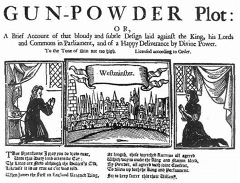
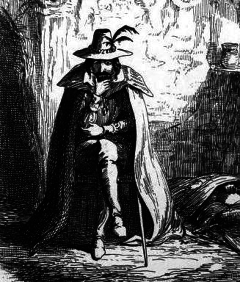
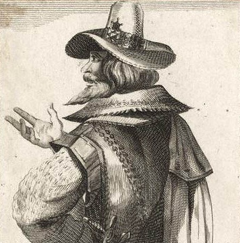
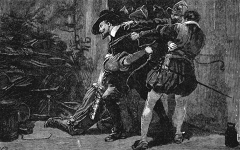
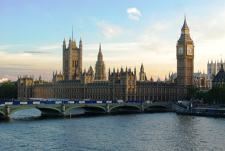
Guards searching the cellars beneath the House of Lords shortly after midnight on November 5, 1605, found a tall man in a cloak standing beside 36 barrels of gunpowder, enough to reduce Parliament to rubble and kill everyone inside, including King James I. The man gave his name as John Johnson. Under torture, he revealed himself as Guy Fawkes, a Catholic soldier recruited into the most ambitious assassination plot in English history. The conspiracy was organized by Robert Catesby, a charismatic Catholic gentleman radicalized by decades of anti-Catholic legislation under Elizabeth I. When James I reinforced existing penal laws against Catholic worship despite expectations of greater tolerance, Catesby assembled thirteen conspirators. Their plan: destroy Parliament during the State Opening, kill the king and Protestant aristocracy in a single explosion, then install James's nine-year-old daughter Elizabeth as a Catholic monarch. Fawkes, who had spent ten years fighting for Catholic Spain in the Netherlands, was given charge of the explosives because of his military expertise. The plotters rented a cellar beneath the House of Lords and smuggled in roughly 2,500 pounds of gunpowder over several months. The plan unraveled when an anonymous letter warned Lord Monteagle to avoid the ceremony. Monteagle reported the letter to the government, and a search party discovered Fawkes at his post. The aftermath was swift and merciless. Catesby and three others died in a shootout with the sheriff's men at Holbeche House in Staffordshire. Eight surviving conspirators, including Fawkes, were convicted of high treason and sentenced to be hanged, drawn, and quartered. Fawkes, weakened by torture, reportedly jumped from the scaffold to break his neck before the full sentence could be carried out. The failed plot triggered a new wave of anti-Catholic legislation and gave England its most enduring annual celebration: Bonfire Night, where effigies of Fawkes burn every November 5.
November 5, 1605
421 years ago
Key Figures & Places
What Else Happened on November 5
Berber forces under Sulayman ibn al-Hakam defeated Umayyad Caliph Muhammad II at the Battle of Qantish on November 5, 1009, shattering his army and forcing him …
Two-year-old Ly Anh Tong was placed on the throne of Vietnam's Ly dynasty, beginning one of the longest reigns in the country's history at 37 years. His minorit…
The Catholicon, a Breton-French-Latin dictionary compiled by Jehan Lagadeuc in 1464, was finally published on November 5, 1499, making it the first printed dict…
The St. Felix’s Flood obliterated the Dutch city of Reimerswaal, permanently submerging the once-prosperous trading hub beneath the Oosterschelde estuary. This …
Akbar’s Mughal forces crushed the army of Hem Chandra Vikramaditya at the Second Battle of Panipat after a stray arrow struck the Hindu king in the eye. This vi…
Guy Fawkes stands caught with thirty-six barrels of gunpowder beneath the House of Lords, his plan to annihilate King James I and Parliament foiled just hours b…
Talk to History
Have a conversation with historical figures who witnessed this era. Ask questions, explore perspectives, and bring history to life.