

Algeria Revolts: Liberation Front Opens War on France
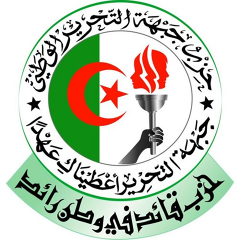
Coordinated attacks struck more than seventy targets across Algeria in the early hours of November 1, 1954, as the newly formed Front de Libération Nationale launched its armed revolt against 124 years of French colonial rule. The attacks, which targeted police stations, military posts, and communication lines from the Aurès Mountains to the Kabylie region, killed eight people and caused limited material damage. But the political shockwave was enormous: Algeria, which France considered not a colony but an integral part of the republic itself, was now at war. The FLN had formed just weeks earlier from a small group of revolutionary activists frustrated by the failure of moderate nationalist movements to achieve independence through political means. The organization's founders, including Ahmed Ben Bella, Krim Belkacem, and Mostefa Ben Boulaïd, believed that only armed struggle could dislodge French power. Their opening declaration, broadcast from Cairo on the day of the attacks, demanded "the restoration of the Algerian state, sovereign, democratic, and social, within the framework of the principles of Islam." France's reaction was immediate and uncompromising. The government of Pierre Mendès France, which had just negotiated France's withdrawal from Indochina after the disaster at Dien Bien Phu, declared that "Algeria is France" and deployed military reinforcements. Interior Minister François Mitterrand (later president of France) told the National Assembly, "The only negotiation is war." Over the following years, France committed more than 400,000 troops to Algeria, used systematic torture against suspected FLN members and sympathizers, relocated more than two million Algerian civilians into "regroupement" camps, and employed collective punishment against entire villages. The FLN responded with guerrilla warfare in the countryside and urban terrorism in the cities, most notoriously during the Battle of Algiers in 1957. The war's brutality radicalized both sides. French paratroopers used waterboarding, electric shocks, and summary executions. The FLN killed suspected collaborators, French civilians, and rival Algerian nationalists. The conflict consumed the Fourth French Republic. In 1958, French military officers in Algeria staged a quasi-coup that brought Charles de Gaulle to power. De Gaulle, initially expected to preserve French Algeria, ultimately negotiated independence, which was achieved in July 1962 after a referendum. The war killed an estimated 300,000 to 1.5 million Algerians and 25,000 French soldiers, displaced millions, and left scars in both countries that remain unhealed.
October 31, 1954
72 years ago
Key Figures & Places
What Else Happened on October 31
The teenage Romulus Augustulus ascended the throne as the final Western Roman Emperor, a puppet ruler installed by his father, Orestes. His brief, powerless rei…
During the Second Islamic Civil War, Umayyad forces besieged Mecca to crush a rival caliph. They launched flaming projectiles over the city walls. One struck th…
Conspirators deposed Empress Irene of Byzantium on October 31, 802, exiling her to the island of Lesbos and installing finance minister Nikephoros as emperor. I…
General Mu'nis al-Muzaffar slaughters Caliph al-Muqtadir during a failed military confrontation, ending the ruler's reign through direct violence. This brutal c…

Martin Luther, an Augustinian monk and theology professor at the University of Wittenberg, nailed a document containing 95 propositions to the door of the Castl…
Leiden University Library opened with 450 books. The collection had been assembled as a gift from the city after the university's founding during the Dutch Revo…
Talk to History
Have a conversation with historical figures who witnessed this era. Ask questions, explore perspectives, and bring history to life.