Battle of Britain Ends: RAF Repels German Invasion
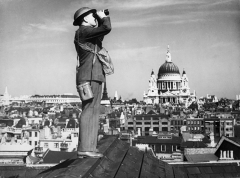
The Luftwaffe's sustained bombing campaign against Britain ended on October 31, 1940, not with a single dramatic event but with the quiet recognition by German planners that Operation Sea Lion, Hitler's planned invasion of England, was no longer feasible. The Royal Air Force, outnumbered and outgunned at the campaign's outset, had inflicted losses that the Luftwaffe could not sustain, and Britain remained undefeated and defiant. The Battle of Britain was the first major campaign fought entirely in the air, and its outcome changed the course of World War II. The battle had begun in earnest in July 1940, after the fall of France left Britain standing alone against Nazi Germany. Hitler's invasion plan required air superiority over the English Channel, and Luftwaffe commander Hermann Göring assured the Führer that his air force could destroy the RAF within weeks. The German plan called for systematic attacks on RAF airfields, radar stations, and aircraft factories, followed by terror bombing of London and other cities to break civilian morale. Fighter Command, led by Air Chief Marshal Hugh Dowding, had roughly 700 operational fighters, mostly Hurricanes and Spitfires, to defend against a Luftwaffe force of over 2,500 aircraft. Dowding's strategy was ruthlessly pragmatic: he refused to commit his limited reserves to individual engagements, instead feeding fresh squadrons into the battle in carefully calculated rotations. The Dowding System, an integrated network of radar stations, ground observers, and centralized plotting rooms, gave RAF controllers the ability to direct fighters to intercept incoming raids with remarkable precision. The critical phase came in early September when sustained attacks on RAF airfields in southeastern England brought Fighter Command close to breaking point. Pilot losses were outpacing replacements, and several key airfields were badly damaged. Then, on September 7, Göring shifted the Luftwaffe's primary target from airfields to London, beginning the Blitz. The decision, intended to terrorize civilians into demanding peace, gave the battered RAF stations time to recover. On September 15, a date celebrated annually as Battle of Britain Day, the RAF destroyed 56 German aircraft in a single day's fighting, demonstrating that air superiority remained beyond the Luftwaffe's reach. Hitler postponed Sea Lion indefinitely. The Battle of Britain cost the Luftwaffe roughly 1,700 aircraft and proved that Nazi Germany could be fought and stopped. Winston Churchill captured its significance: "Never in the field of human conflict was so much owed by so many to so few."
October 31, 1940
86 years ago
Key Figures & Places
What Else Happened on October 31
The teenage Romulus Augustulus ascended the throne as the final Western Roman Emperor, a puppet ruler installed by his father, Orestes. His brief, powerless rei…
During the Second Islamic Civil War, Umayyad forces besieged Mecca to crush a rival caliph. They launched flaming projectiles over the city walls. One struck th…
Conspirators deposed Empress Irene of Byzantium on October 31, 802, exiling her to the island of Lesbos and installing finance minister Nikephoros as emperor. I…
General Mu'nis al-Muzaffar slaughters Caliph al-Muqtadir during a failed military confrontation, ending the ruler's reign through direct violence. This brutal c…
Martin Luther, an Augustinian monk and theology professor at the University of Wittenberg, nailed a document containing 95 propositions to the door of the Castl…
Leiden University Library opened with 450 books. The collection had been assembled as a gift from the city after the university's founding during the Dutch Revo…
Talk to History
Have a conversation with historical figures who witnessed this era. Ask questions, explore perspectives, and bring history to life.