Continental Navy Born: Congress Authorizes Fleet
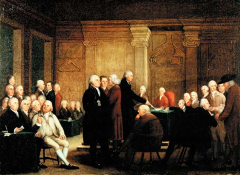
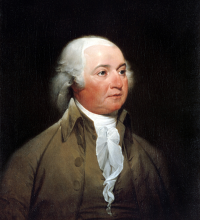
The Continental Congress authorized the purchase of two armed vessels on October 13, 1775, creating what would become the United States Navy from almost nothing. The fledgling American colonies were taking on the most powerful maritime force the world had ever seen, and they were starting with a handful of converted merchant ships and a prayer. The decision came after months of debate. Many delegates were reluctant to challenge British naval supremacy, arguing that building a navy was prohibitively expensive and strategically futile. John Adams of Massachusetts became the fleet's most forceful advocate, arguing that even a small naval force could disrupt British supply lines, capture enemy provisions, and protect American merchant shipping. A Naval Committee of seven delegates was appointed to oversee the effort. The first ships acquired were modest vessels — nothing like the ships of the line that formed the backbone of the Royal Navy. Captain Esek Hopkins was appointed as commander-in-chief of the nascent fleet, and the first Marines were recruited at Tun Tavern in Philadelphia. The Continental Navy's earliest operations focused on raiding British supply ships and harassing commerce, with captains like John Paul Jones becoming folk heroes for their daring attacks on British shipping and even coastal towns in Britain itself. The Continental Navy never came close to matching British naval power in conventional terms. At its peak it had fewer than 65 ships, compared to the Royal Navy's hundreds. Yet its strategic impact was considerable, particularly in capturing British supply vessels that provided desperately needed arms and provisions to the Continental Army. After the Revolutionary War ended, the navy was disbanded and its ships sold. Congress would not authorize a permanent naval force until 1794, when the threat of Barbary pirates demanded it, creating the United States Navy that exists today.
October 13, 1775
251 years ago
Key Figures & Places
What Else Happened on October 13
Claudius died at dinner after eating mushrooms. He was 63. His wife Agrippina probably poisoned him — she'd married him five years earlier to position her son N…
Nero ascends the throne after Claudius dies from poison, sidelining the emperor's biological son Britannicus. This succession shift unleashes a decade of brutal…
Vandals and Alans breached the Pyrenees on this day, ending Roman administrative control over the Iberian Peninsula. This migration fractured the Western Empire…
Westminster Abbey's current building was consecrated on October 13, 1269, after 23 years of construction. Henry III had demolished the old Norman church to buil…
At dawn on Friday, October 13, 1307, royal agents throughout France simultaneously broke down the doors of Templar houses and arrested hundreds of knights on ch…
King Philip the Fair ordered the arrest of hundreds of Knights Templar across France at dawn, crushing a powerful military order that had long held vast wealth …
Talk to History
Have a conversation with historical figures who witnessed this era. Ask questions, explore perspectives, and bring history to life.