India Becomes Republic: Constitution Takes Effect
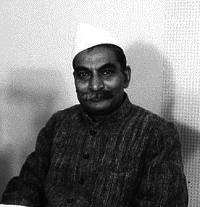
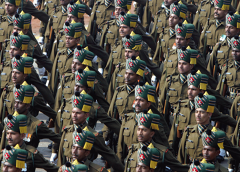
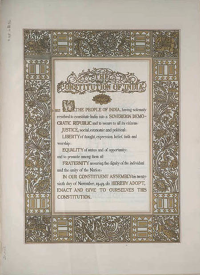
India became the world''s largest democracy at the stroke of midnight on January 26, 1950, when its new constitution took effect and replaced the colonial Government of India Act that had governed the subcontinent under British rule. The document, at 146,385 words the longest written constitution of any sovereign nation, had taken nearly three years to draft and represented the aspirations of 350 million people who had won their freedom just 30 months earlier. The Constituent Assembly, convened in 1946, was chaired by Rajendra Prasad and guided by the formidable intellect of B.R. Ambedkar, the chairman of the drafting committee. Ambedkar, born into the Dalit "untouchable" caste, brought a fierce commitment to social justice that shaped the document''s most radical provisions. The constitution abolished untouchability, guaranteed fundamental rights regardless of caste, creed, or gender, established universal adult suffrage, and created a parliamentary democracy with an independent judiciary—a structure that drew from British, American, Irish, and French constitutional traditions. The date was chosen deliberately. January 26, 1930, had been declared "Purna Swaraj Day" (Complete Independence Day) by the Indian National Congress under Mahatma Gandhi, when Congress first publicly committed to full independence from Britain. By choosing the same date for the constitution''s enactment, the new republic connected its legal birth to the independence movement''s foundational moment. Gandhi himself did not live to see it—he had been assassinated almost exactly two years earlier. Republic Day quickly became India''s grandest national celebration, marked by a massive military parade down Rajpath (now Kartavya Path) in New Delhi. The constitution''s durability has been remarkable: it has been amended over 100 times but never replaced, surviving wars, emergency rule, partition, and the governance of the world''s most diverse nation. India''s constitutional democracy, with over 900 million eligible voters in the 21st century, remains one of history''s most ambitious experiments in self-government.
January 26, 1950
76 years ago
Key Figures & Places
What Else Happened on January 26
Ali ibn Abi Talib was praying when the sword struck. A poisoned blade, wielded by a Kharijite assassin named Ibn Muljam, cut down Muhammad's cousin and son-in-l…
King Edward III formally claimed the French throne, asserting his right through his mother, Isabella of France. This declaration escalated the dynastic tensions…
Vicente Yáñez Pinzón, who had captained the Niña during Columbus''s first voyage, made landfall on a coast that no European had seen before. On January 26, 1500…
A massive earthquake leveled Lisbon on this day in 1531, claiming thirty thousand lives and reducing the city’s infrastructure to rubble. The catastrophe forced…
A massive earthquake shattered Lisbon on this day in 1531, leveling hundreds of homes and killing thousands of residents. The disaster forced King John III to s…
The Lithuanian cavalry thundered across the muddy field, their Polish-style winged hussars casting massive shadows. Muscovite soldiers watched in terror as thes…
Talk to History
Have a conversation with historical figures who witnessed this era. Ask questions, explore perspectives, and bring history to life.