Pinzon Lands Brazil: First European on South America
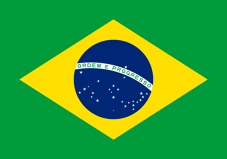
Vicente Yáñez Pinzón, who had captained the Niña during Columbus''s first voyage, made landfall on a coast that no European had seen before. On January 26, 1500, Pinzón''s expedition reached the northeastern coast of present-day Brazil, near what is now the state of Pernambuco—three months before Pedro Álvares Cabral''s more famous Portuguese arrival in April. The discovery was an accident: Pinzón had been sailing southwest looking for new territories to claim for Spain when currents carried his small fleet across the Atlantic. Pinzón commanded four caravels and a crew of seasoned sailors, many of whom had crossed the Atlantic before. The expedition had departed Palos de la Frontera in December 1499, following Columbus''s route to the Cape Verde Islands before turning west into uncharted waters. When they reached the coast, the crew encountered Indigenous Tupinambá people, dense tropical forest, and the mouth of an enormous river—likely the Amazon—which Pinzón named the "Mar Dulce" (Freshwater Sea) because its discharge turned the ocean fresh for miles offshore. The expedition explored roughly 300 miles of coastline, taking on fresh water and claiming the territory for the Spanish Crown. Relations with the Indigenous population were initially peaceful but turned violent; in one encounter, eight of Pinzón''s sailors were killed. The expedition captured approximately 36 Indigenous people to bring back to Spain as slaves. Pinzón then sailed north along the coast, crossed the equator, and explored the mouth of the Orinoco River before returning to Spain in September 1500. Pinzón''s discovery became legally irrelevant almost immediately. The Treaty of Tordesillas, signed in 1494, had divided the non-European world between Spain and Portugal along a line 370 leagues west of the Cape Verde Islands. Brazil fell on Portugal''s side of that line. When Cabral arrived three months later, Portugal''s legal claim superseded Spain''s. Pinzón spent years in court arguing for rights to the lands he had found, but the treaty held. His voyage is remembered primarily as a footnote—the European discovery of South America''s largest country, by a man who got no credit for it.
January 26, 1500
526 years ago
Key Figures & Places
What Else Happened on January 26
Ali ibn Abi Talib was praying when the sword struck. A poisoned blade, wielded by a Kharijite assassin named Ibn Muljam, cut down Muhammad's cousin and son-in-l…
King Edward III formally claimed the French throne, asserting his right through his mother, Isabella of France. This declaration escalated the dynastic tensions…
A massive earthquake leveled Lisbon on this day in 1531, claiming thirty thousand lives and reducing the city’s infrastructure to rubble. The catastrophe forced…
A massive earthquake shattered Lisbon on this day in 1531, leveling hundreds of homes and killing thousands of residents. The disaster forced King John III to s…
The Lithuanian cavalry thundered across the muddy field, their Polish-style winged hussars casting massive shadows. Muscovite soldiers watched in terror as thes…
The Council of Trent issued its final decrees on January 26, 1564, concluding eighteen years of deliberation that produced the most comprehensive reform of the …
Talk to History
Have a conversation with historical figures who witnessed this era. Ask questions, explore perspectives, and bring history to life.