Today In History logo TIH
Turbines buried 600 feet inside the Black Canyon of the Colorado River began spi
Featured Event 1936 Event

October 9

Hoover Dam Powers Up: Electricity for the Southwest

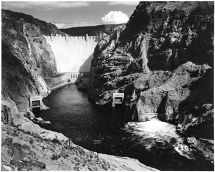
Turbines buried 600 feet inside the Black Canyon of the Colorado River began spinning on October 9, 1936, sending electricity 266 miles across the Mojave Desert to Los Angeles. Hoover Dam — originally named Boulder Dam and renamed in 1947 — was the largest concrete structure on Earth, a Depression-era monument to engineering ambition that tamed the most unpredictable river in North America and electrified the American Southwest. The Colorado had flooded and dried up capriciously for millennia, alternately drowning and parching the farms of the Imperial Valley in Southern California. The 1905 flood, which broke through an irrigation headgate and created the Salton Sea, demonstrated the river's destructive potential. By the 1920s, seven states were competing for the Colorado's water, and Southern California was running out of both water and electricity for its exploding population. The dam's construction, authorized by Congress in 1928, required building a city (Boulder City, Nevada), digging four diversion tunnels through solid canyon walls, and pouring 3.25 million cubic yards of concrete — enough to build a two-lane highway from San Francisco to New York. The concrete was poured in interlocking columns rather than as a single mass because a monolithic pour would have taken 125 years to cool and cure. Refrigeration pipes were embedded in each column to accelerate cooling. Working conditions were brutal. Temperatures in the canyon routinely exceeded 120 degrees Fahrenheit. Workers died from heat stroke, falls, rock slides, and carbon monoxide poisoning in the diversion tunnels. Official records count 96 industrial fatalities; the actual number was higher, since heat-related deaths were often classified as pneumonia by company doctors to avoid liability. The workforce peaked at 5,251 men — many of them desperate Depression-era migrants willing to accept any job. The dam was completed two years ahead of schedule in 1935. Lake Mead, the reservoir it created, became the largest artificial lake in the Western Hemisphere. The power plant's seventeen generators eventually produced over four billion kilowatt-hours annually, supplying electricity to Nevada, Arizona, and Southern California — the energy foundation for the Sun Belt boom that transformed American demographics in the postwar decades. Hoover Dam proved that the federal government could execute infrastructure at a continental scale, a lesson applied to the Tennessee Valley Authority and the interstate highway system.

October 9, 1936

90 years ago

Key Figures & Places
What Else Happened on October 9

Talk to History

Have a conversation with historical figures who witnessed this era. Ask questions, explore perspectives, and bring history to life.

Start Talking