

King and Minister Assassinated in Marseille
A gunman leaped onto the running board of a slow-moving royal motorcade on the streets of Marseille on October 9, 1934, and fired a semiautomatic pistol into the open car, killing King Alexander I of Yugoslavia and French Foreign Minister Louis Barthou. The assassination — captured on newsreel cameras in the first political murder filmed in real time — was the most consequential act of political violence in Europe between the two world wars and exposed the fragility of the international order that was supposed to prevent another conflict. The assassin was Vlado Chernozemski, a Bulgarian revolutionary working for the Internal Macedonian Revolutionary Organization (IMRO) in coordination with the Croatian Ustasha movement. Both groups wanted to destroy the Yugoslav state: IMRO sought Macedonian independence, while the Ustasha, led by Ante Pavelic from exile in fascist Italy, wanted to separate Croatia from Serbian-dominated Yugoslavia. The plot received material support from Hungary and Italy, both of which had territorial grievances against Yugoslavia and France's alliance system. Alexander had arrived in Marseille that morning on a state visit intended to strengthen the Franco-Yugoslav alliance against Nazi Germany and revisionist Hungary. The security arrangements were catastrophically inadequate. The motorcade moved through crowded streets at walking speed with minimal police escort. When Chernozemski broke through the thin crowd barrier and reached the car, he emptied his pistol's magazine before being cut down by a mounted policeman's saber and beaten to death by the crowd. Barthou, sitting beside Alexander, was struck in the arm. The wound was survivable, but in the chaos he was transported to a hospital without receiving a tourniquet. He bled to death from a severed artery — a failure of basic first aid that altered European diplomacy. Barthou had been the architect of France's eastern alliance system, working to encircle Germany through treaties with the Soviet Union, Yugoslavia, and other eastern European states. His death removed the most capable and energetic anti-German voice in French foreign policy. Barthou's successor, Pierre Laval, pivoted toward appeasement, eventually signing accords with Mussolini and undermining the alliances Barthou had built. The assassination's long-term consequence was the weakening of precisely the diplomatic framework that might have contained Hitler's expansion before it became unstoppable.
October 9, 1934
92 years ago
Key Figures & Places
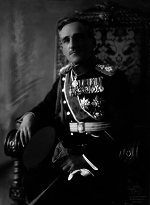
Alexander I of Yugoslavia
Wikipedia
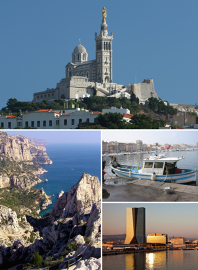
Marseille
Wikipedia
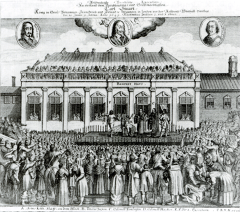
Regicide
Wikipedia
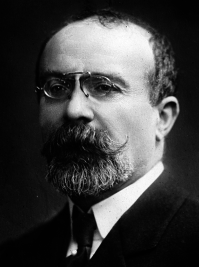
Louis Barthou
Wikipedia

Ustaše
Wikipedia

Alexander I of Yugoslavia
Wikipedia

Louis Barthou
Wikipedia

Prime Minister of France
Wikipedia

Kingdom of Yugoslavia
Wikipedia

Internal Macedonian Revolutionary Organization
Wikipedia

Assassination
Wikipedia

Geschichte Jugoslawiens
Wikipedia

Marseille
Wikipedia
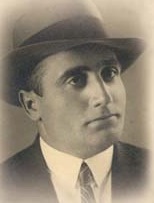
Vlado Chernozemski
Wikipedia
1888
Wikipedia
1862
Wikipedia
What Else Happened on October 9
Pepin the Short died in 768 and split his kingdom between his two sons. Carloman got the center. Charlemagne got a crescent of territory wrapping around it — ha…

Five centuries before Columbus reached the Caribbean, a Norse expedition led by Leif Erikson made landfall on the coast of North America, establishing a settlem…
James I of Aragon captured the city of Valencia from the Almohad Caliphate, ending five centuries of Islamic rule in the region. By establishing the Kingdom of …
Alfonso X of Castile captured the strategic city of Jerez, ending over five centuries of Muslim rule in the region. This victory dismantled a key stronghold of …
The Prague astronomical clock was first mentioned in 1410, making it the oldest working clock of its kind. It displays Babylonian time, Old Czech time, German t…
King Sejong published hangul, an alphabet designed from scratch for Korean. The writing system before that was Chinese characters, which took years to master an…
Talk to History
Have a conversation with historical figures who witnessed this era. Ask questions, explore perspectives, and bring history to life.