Black Sox Scandal: Cincinnati Wins Tainted Series
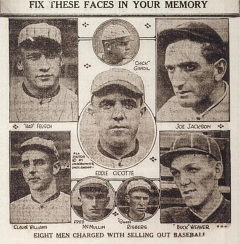
Eight members of the Chicago White Sox conspired with gamblers to lose the 1919 World Series on purpose, and when the Cincinnati Reds won the championship on October 9, the fix was already an open secret in press boxes and betting parlors across the country. The Black Sox Scandal nearly destroyed professional baseball, produced the sport's most famous ban, and created the commissioner system that governs the game to this day. The conspiracy was born from resentment. White Sox owner Charles Comiskey was the most notoriously cheap owner in baseball. His players — including "Shoeless" Joe Jackson, one of the greatest hitters in the game's history — were paid well below market rate. Comiskey had promised bonuses that never materialized and charged players for laundering their own uniforms. First baseman Chick Gandil, already connected to gambling circles, approached gambler Joseph "Sport" Sullivan with a proposition: for $100,000, he could deliver a World Series loss. Sullivan lacked the bankroll, so the scheme expanded to include Arnold Rothstein, the New York underworld financier later immortalized as Meyer Wolfsheim in "The Great Gatsby." Rothstein's involvement brought both capital and organizational sophistication. Eight White Sox players — Gandil, pitcher Eddie Cicotte, shortstop Swede Risberg, utility man Fred McMullin, center fielder Happy Felsch, third baseman Buck Weaver, pitcher Lefty Williams, and Jackson — were recruited into the fix, though their individual levels of participation varied dramatically. The Series itself was transparently crooked to anyone paying attention. Cicotte, the ace pitcher, hit the first batter he faced — reportedly the prearranged signal that the fix was on — and lost Game 1 by making uncharacteristic errors. Williams lost Games 2 and 8. Sportswriters noted suspicious plays throughout, and gambling odds shifted wildly between games as the fixers struggled to control which games would be thrown. A grand jury investigation in September 1920 produced confessions from Cicotte and Jackson, though both later recanted. All eight players were acquitted at trial in August 1921 when key evidence — including the signed confessions — mysteriously vanished from the prosecutor's files. Federal Judge Kenesaw Mountain Landis, hired as baseball's first commissioner specifically to restore public trust, banned all eight players for life regardless of the verdict. Jackson's lifetime ban remains baseball's most debated injustice, given his .375 batting average in the Series and his disputed degree of participation.
October 9, 1919
107 years ago
Key Figures & Places

What Else Happened on October 9
Pepin the Short died in 768 and split his kingdom between his two sons. Carloman got the center. Charlemagne got a crescent of territory wrapping around it — ha…
Five centuries before Columbus reached the Caribbean, a Norse expedition led by Leif Erikson made landfall on the coast of North America, establishing a settlem…
James I of Aragon captured the city of Valencia from the Almohad Caliphate, ending five centuries of Islamic rule in the region. By establishing the Kingdom of …
Alfonso X of Castile captured the strategic city of Jerez, ending over five centuries of Muslim rule in the region. This victory dismantled a key stronghold of …
The Prague astronomical clock was first mentioned in 1410, making it the oldest working clock of its kind. It displays Babylonian time, Old Czech time, German t…
King Sejong published hangul, an alphabet designed from scratch for Korean. The writing system before that was Chinese characters, which took years to master an…
Talk to History
Have a conversation with historical figures who witnessed this era. Ask questions, explore perspectives, and bring history to life.