National Parks Born: Yosemite and Yellowstone Protected
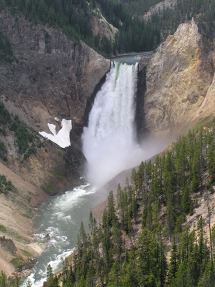
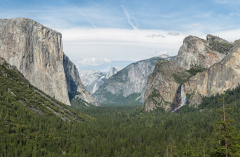
Half Dome and the giant sequoias had survived millennia of geological upheaval, but they nearly fell to sawmills and sheep. On October 1, 1890, the United States Congress established Yosemite National Park, placing over 1,500 square miles of California's Sierra Nevada under federal protection just eighteen years after creating the world's first national park at Yellowstone. The campaign to protect Yosemite traced back to 1864, when Abraham Lincoln signed a grant deeding Yosemite Valley and the Mariposa Grove to California for public use — the first time any government set aside wild land purely for preservation. But state management proved disastrous. Livestock grazed meadows to dust, loggers felled ancient trees, and tourism operators carved roads without regard for the landscape. By the 1880s, naturalist John Muir was publishing furious dispatches describing the destruction, calling the valley floor "a devastated sheep camp." Muir's articles in Century Magazine caught the attention of editor Robert Underwood Johnson, and together they launched a lobbying effort that reached Congress. Their argument was both aesthetic and scientific: Yosemite's granite walls, waterfalls, and ecosystems represented irreplaceable natural heritage that no private interest should be permitted to exploit. The bill moved quickly through both chambers, and President Benjamin Harrison signed it into law. The park's creation built directly on the Yellowstone precedent of 1872, when Congress had designated two million acres of Wyoming Territory as a public park — a concept so novel it had no legal framework. Yellowstone's early years were plagued by poaching, vandalism, and underfunding until the Army was called in to patrol its boundaries. Lessons from Yellowstone's rocky start informed how Yosemite would be managed. Together, these two parks established the principle that wild landscapes belong to the public, not to the highest bidder. That idea eventually produced the National Park Service in 1916 and a system that now protects over 85 million acres.
October 1, 1890
136 years ago
Key Figures & Places
What Else Happened on October 1
Three hundred thousand Persian soldiers held the plain near modern-day Mosul, their ranks bolstered by war elephants, scythed chariots, and cavalry drawn from e…
Damasus I became pope on October 1, 366 after his supporters killed 137 followers of his rival Ursinus in a three-day street battle. Both men claimed election. …
During a siege, worshippers packed into the Blachernae church saw the Virgin Mary appear above them, holding her veil over the congregation. St. Andrew witnesse…
Edgar the Peaceable became king of all England in 959 at age 16, but he'd already been king of Mercia for two years. His brother had ruled the south and died my…
John XIII became pope on October 1, 965 after Emperor Otto I forced the Roman nobles to elect him. The nobles hated it. They kidnapped John three months later, …
Gerard de Ridefort fell in battle outside the walls of Acre, ending a contentious five-year tenure as Grandmaster of the Knights Templar. His death during the T…
Talk to History
Have a conversation with historical figures who witnessed this era. Ask questions, explore perspectives, and bring history to life.