Nazi-Soviet Pact Divides Poland: WWII Escalates
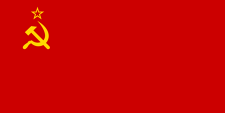
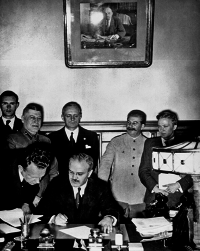
Adolf Hitler and Joseph Stalin had agreed to carve up Eastern Europe before either of them fired a shot. On September 28, 1939, as German and Soviet armies completed their conquest of Poland, the two dictatorships signed the German-Soviet Boundary and Friendship Treaty in Moscow, formalizing the partition of Poland along the Bug River and adding Lithuania to the Soviet sphere of influence. The agreement was an extension of the Molotov-Ribbentrop Pact signed on August 23, 1939, whose secret protocol had divided Eastern Europe into German and Soviet zones. When Germany invaded Poland on September 1, the Soviet Union waited sixteen days before invading from the east on September 17. Polish forces, already reeling from the German blitzkrieg, could not fight on two fronts. Organized resistance effectively ended by early October. The partition was brutal. Germany annexed western Poland directly into the Reich and created the General Government, a colonial administration over central Poland that became the site of the Holocaust's worst atrocities. The Soviets absorbed eastern Poland into the Ukrainian and Belorussian Soviet Socialist Republics. Both occupiers immediately began campaigns of terror against the Polish population. The Soviet secret police, the NKVD, deported over a million Poles to Siberia and Central Asia in 1940 and 1941. In April 1940, on Stalin's direct orders, the NKVD executed approximately 22,000 Polish military officers, police, and intellectuals in the Katyn Forest and other sites, a massacre the Soviet Union denied responsibility for until 1990. The Germans implemented increasingly savage policies against both Polish Christians and Jews, culminating in the construction of extermination camps at Auschwitz, Treblinka, and Sobibor on Polish soil. Poland lost approximately six million citizens during World War II, roughly half of them Jewish, representing about 17 percent of the prewar population, the highest proportional loss of any nation in the conflict. The September 28 treaty revealed the cynicism underlying both totalitarian regimes, allies of convenience who would be at each other's throats within twenty months.
September 28, 1939
87 years ago
Key Figures & Places
What Else Happened on September 28
Gnaeus Pompeius Magnus, the most celebrated Roman general of his generation, stepped off a small boat onto the Egyptian shore and was stabbed to death before he…
Pompey the Great stepped ashore at Pelusium in 48 BC, expecting Egyptian hospitality after his defeat at Pharsalus. Instead, agents of King Ptolemy XIII stabbed…
Pompey the Great stepped onto the Egyptian shore seeking refuge, only to be betrayed and stabbed by agents of King Ptolemy XIII. This cold-blooded execution end…
Pope Pontian became the first pope to formally resign — not over scandal, but because the Roman Emperor Maximinus Thrax had him arrested and sentenced to the mi…
Constantius II crushed the forces of the usurper Magnentius at the Battle of Mursa Major, reuniting the fractured Roman Empire under his sole rule. The staggeri…
Procopius was a minor relative of Julian the Apostate and, by most accounts, not particularly ambitious — until he spotted two legions marching through Constant…
Talk to History
Have a conversation with historical figures who witnessed this era. Ask questions, explore perspectives, and bring history to life.