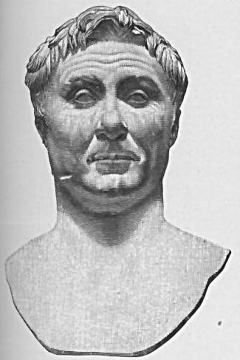
Pompey Falls: Egypt Betrays Rome's Greatest General
Gnaeus Pompeius Magnus, the most celebrated Roman general of his generation, stepped off a small boat onto the Egyptian shore and was stabbed to death before he could reach dry land. On September 28, 48 BC, the man who had conquered the eastern Mediterranean, cleared the seas of pirates, and reorganized a dozen kingdoms was murdered on the orders of the teenage Pharaoh Ptolemy XIII, who hoped to curry favor with Pompey's pursuing rival, Julius Caesar. Pompey had dominated Roman politics for two decades. His military campaigns in the east from 66 to 63 BC had expanded Roman territory from the Black Sea to the Red Sea, annexing Syria, reorganizing Asia Minor, and capturing Jerusalem. His triumphs earned him the cognomen Magnus, "the Great," a title that invited comparison with Alexander. Together with Caesar and Marcus Crassus, he formed the First Triumvirate, an informal alliance that controlled the Roman Republic. The alliance collapsed after Crassus died at Carrhae in 53 BC. Pompey, alarmed by Caesar's growing power and popularity after the conquest of Gaul, allied with the Roman Senate to demand that Caesar disband his legions. Caesar refused and crossed the Rubicon in January 49 BC, igniting civil war. Pompey's strategy was sound but slow. He withdrew from Italy to Greece, where he planned to gather eastern armies and navies for a decisive campaign. At the Battle of Pharsalus on August 9, 48 BC, Caesar's outnumbered but veteran legions shattered Pompey's larger force. Pompey fled by ship to Egypt, where he expected hospitality from young Ptolemy XIII, whose father had been a Roman client. Ptolemy's advisors calculated differently. Sheltering Caesar's enemy would invite Roman invasion; killing Pompey would win Caesar's gratitude. As Pompey's boat approached the shore, former Roman officers in Ptolemy's service drew their swords and cut him down. His head was preserved and presented to Caesar when he arrived days later. According to ancient sources, Caesar wept at the sight. The murder disgusted rather than pleased Caesar, who deposed Ptolemy and installed Cleopatra on the Egyptian throne. Pompey's assassination eliminated the last figure capable of challenging Caesar's supremacy and accelerated the Republic's collapse into dictatorship.
September 28, 48 BC
Key Figures & Places

What Else Happened on September 28
Pompey the Great stepped ashore at Pelusium in 48 BC, expecting Egyptian hospitality after his defeat at Pharsalus. Instead, agents of King Ptolemy XIII stabbed…
Pompey the Great stepped onto the Egyptian shore seeking refuge, only to be betrayed and stabbed by agents of King Ptolemy XIII. This cold-blooded execution end…
Pope Pontian became the first pope to formally resign — not over scandal, but because the Roman Emperor Maximinus Thrax had him arrested and sentenced to the mi…
Constantius II crushed the forces of the usurper Magnentius at the Battle of Mursa Major, reuniting the fractured Roman Empire under his sole rule. The staggeri…
Procopius was a minor relative of Julian the Apostate and, by most accounts, not particularly ambitious — until he spotted two legions marching through Constant…
Wenceslas was ambushed on his way to morning Mass. His brother Boleslaus had invited him to a festival the night before — the invitation itself was the trap. We…
Talk to History
Have a conversation with historical figures who witnessed this era. Ask questions, explore perspectives, and bring history to life.