

Yorktown Siege Begins: Revolution's Final Act
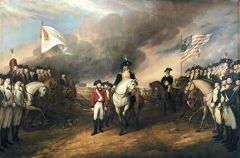
George Washington had spent six years waiting for this moment. On September 28, 1781, a combined force of 17,000 American and French soldiers began the siege of Yorktown, Virginia, trapping 9,000 British troops under Lord Cornwallis in a tightening ring of trenches, artillery, and warships. The battle that followed would end the American Revolution. The trap was the product of a French alliance that had finally delivered decisive results. Admiral François-Joseph Paul de Grasse's fleet of 24 warships had sailed from the Caribbean and defeated a British relief squadron at the Battle of the Chesapeake on September 5, sealing the mouth of Chesapeake Bay. Without naval support, Cornwallis could neither escape by sea nor receive reinforcements or supplies. Washington and French General Jean-Baptiste Donatien de Vimeur, Comte de Rochambeau, had originally planned to attack British-held New York City. When de Grasse informed them he was sailing for the Chesapeake, Washington made the audacious decision to march his army 450 miles south from the Hudson Valley to Virginia in a matter of weeks, one of the most remarkable strategic pivots of the 18th century. The siege followed classical European military engineering. Allied forces dug parallel trenches progressively closer to the British defenses while heavy artillery pounded Cornwallis's positions. On the night of October 14, French troops stormed Redoubt 9 and Alexander Hamilton led an American assault on Redoubt 10, capturing key defensive positions at bayonet point. Cornwallis attempted a desperate evacuation across the York River on the night of October 16, but a storm scattered his boats. On October 17, a British drummer appeared on the parapet beating a signal for parley. Two days later, Cornwallis formally surrendered his entire army. As British troops marched out to lay down their arms, their band reportedly played "The World Turned Upside Down." The defeat shattered Britain's will to continue the war. Parliament voted against further offensive operations in North America, and peace negotiations began in Paris. The Treaty of Paris, signed in September 1783, recognized American independence. Yorktown was the battle that turned a rebellion into a nation.
September 28, 1781
245 years ago
Key Figures & Places


What Else Happened on September 28

Gnaeus Pompeius Magnus, the most celebrated Roman general of his generation, stepped off a small boat onto the Egyptian shore and was stabbed to death before he…
Pompey the Great stepped ashore at Pelusium in 48 BC, expecting Egyptian hospitality after his defeat at Pharsalus. Instead, agents of King Ptolemy XIII stabbed…
Pompey the Great stepped onto the Egyptian shore seeking refuge, only to be betrayed and stabbed by agents of King Ptolemy XIII. This cold-blooded execution end…
Pope Pontian became the first pope to formally resign — not over scandal, but because the Roman Emperor Maximinus Thrax had him arrested and sentenced to the mi…
Constantius II crushed the forces of the usurper Magnentius at the Battle of Mursa Major, reuniting the fractured Roman Empire under his sole rule. The staggeri…
Procopius was a minor relative of Julian the Apostate and, by most accounts, not particularly ambitious — until he spotted two legions marching through Constant…
Talk to History
Have a conversation with historical figures who witnessed this era. Ask questions, explore perspectives, and bring history to life.