Taliban Captures Kabul: Afghanistan's Dark Era Begins
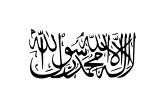
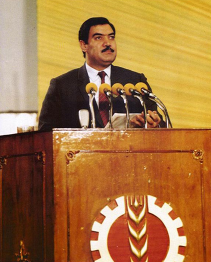
Kabul fell without a fight. On September 27, 1996, Taliban fighters rolled into the Afghan capital in pickup trucks as the forces of President Burhanuddin Rabbani melted away to the north. Among their first acts was to seize former communist president Mohammad Najibullah from the United Nations compound where he had sheltered since 1992, torture him, and hang his mutilated body from a traffic pole in the city center. The Taliban had emerged just two years earlier from the chaos of the Afghan civil war. After the Soviet-backed government collapsed in 1992, rival mujahideen factions fought a devastating conflict that reduced Kabul to rubble and killed an estimated 50,000 civilians. The Taliban, a movement of religious students from Pashtun madrasas in southern Afghanistan and Pakistani border regions, gained popular support by promising to restore order, disarm the warlords, and impose strict Islamic law. Their military advance was swift. Supported by Pakistani intelligence, Saudi financing, and a steady supply of recruits from religious schools, the Taliban captured Kandahar in November 1994 and swept through western and eastern Afghanistan over the following two years. Their entry into Kabul gave them control of roughly three-quarters of the country. Only the Northern Alliance under Ahmad Shah Massoud held out in the northeast. The regime that followed imposed the most extreme interpretation of Islamic law seen in the modern world. Women were barred from schools, workplaces, and public life without a male guardian. Music, television, kite flying, and chess were banned. Public executions and amputations were carried out in Kabul's soccer stadium. The ancient Bamiyan Buddhas, carved into a cliff face in the 6th century, were dynamited in March 2001. The Taliban's decision to shelter Osama bin Laden and al-Qaeda proved fatally consequential. After the September 11, 2001, attacks, the United States invaded Afghanistan, and the Taliban government collapsed within weeks. The movement regrouped, fought a twenty-year insurgency, and recaptured Kabul in August 2021 after the American withdrawal, returning to power with many of the same leaders and the same ideology.
September 27, 1996
30 years ago
Key Figures & Places
What Else Happened on September 27
Odoacer had already lost to Theodoric once, at the Isonzo River. Then again at Milan. Now Verona. He kept losing battles but wouldn't surrender — retreating eac…
William, Duke of Normandy, had been waiting for weeks for the wind to change. On September 27, 1066, it finally blew from the south, and his invasion fleet of r…
Polish forces clashed with the Teutonic Order at Płowce, stalling the knights' advance despite suffering a tactical defeat. By preventing the capture of King Wł…
Polish forces under Władysław I the Elbow-high ambushed a retreating Teutonic Order column near Płowce, capturing high-ranking commanders and inflicting heavy c…
The Treaty of Melno ended something unusual: a border dispute between the Teutonic Knights and Lithuania that had been running, in one form or another, for over…
Suleiman the Magnificent arrived outside Vienna with somewhere between 100,000 and 300,000 troops — the estimates vary wildly because the number was almost inco…
Talk to History
Have a conversation with historical figures who witnessed this era. Ask questions, explore perspectives, and bring history to life.