Normans Set Sail: William's Conquest of England Begins
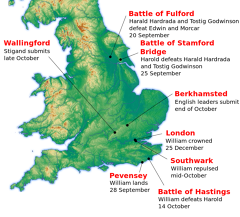
William, Duke of Normandy, had been waiting for weeks for the wind to change. On September 27, 1066, it finally blew from the south, and his invasion fleet of roughly 700 ships carrying 7,000 soldiers and 2,000 horses set sail from the mouth of the River Somme, launching the Norman conquest that would transform England, its language, its laws, and its ruling class forever. William's claim to the English throne rested on a tangle of promises and betrayals. Edward the Confessor, the childless English king, had allegedly promised the crown to William during a visit to Normandy around 1051. Harold Godwinson, England's most powerful earl, had supposedly sworn an oath supporting William's claim while a guest in Normandy in 1064. When Edward died on January 5, 1066, Harold took the throne for himself. William declared him an oath-breaker and began assembling an army. The invasion was an enormous logistical gamble. No army had successfully crossed the English Channel by force since the Romans. William spent months building ships, recruiting mercenaries from across France and Italy, and securing papal approval for his campaign. The fleet gathered at Dives-sur-Mer in August but was pinned down by unfavorable northerly winds for over a month. Meanwhile, Harold faced a second invasion threat from Harald Hardrada of Norway, who landed in Yorkshire with a Viking army. Harold force-marched north and destroyed the Norwegian invasion at the Battle of Stamford Bridge on September 25. Two days later, William's fleet crossed the Channel, landing at Pevensey Bay on the Sussex coast on September 28. Harold raced south with his exhausted army. The armies met at the Battle of Hastings on October 14, 1066. Harold was killed, traditionally depicted with an arrow through his eye, though the actual manner of his death remains debated. William marched on London and was crowned king on Christmas Day. The conquest replaced the entire English ruling class with a French-speaking Norman aristocracy, introduced feudal land tenure, reshaped the legal system, and injected thousands of French words into the English language. The England that emerged from 1066 was fundamentally different from the Anglo-Saxon kingdom that preceded it.
September 27, 1066
960 years ago
Key Figures & Places
What Else Happened on September 27
Odoacer had already lost to Theodoric once, at the Isonzo River. Then again at Milan. Now Verona. He kept losing battles but wouldn't surrender — retreating eac…
Polish forces clashed with the Teutonic Order at Płowce, stalling the knights' advance despite suffering a tactical defeat. By preventing the capture of King Wł…
Polish forces under Władysław I the Elbow-high ambushed a retreating Teutonic Order column near Płowce, capturing high-ranking commanders and inflicting heavy c…
The Treaty of Melno ended something unusual: a border dispute between the Teutonic Knights and Lithuania that had been running, in one form or another, for over…
Suleiman the Magnificent arrived outside Vienna with somewhere between 100,000 and 300,000 troops — the estimates vary wildly because the number was almost inco…
Ignatius of Loyola was a wounded soldier who became a saint, and the religious order he founded became the most influential educational and missionary organizat…
Talk to History
Have a conversation with historical figures who witnessed this era. Ask questions, explore perspectives, and bring history to life.