Neptune Discovered: Math Predicts a New World
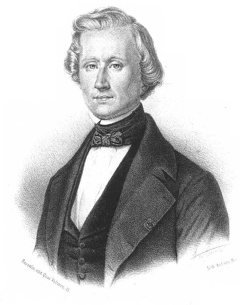
Mathematics found a planet before any telescope could see it. On September 23, 1846, German astronomer Johann Gottfried Galle pointed the Berlin Observatory's refractor at coordinates calculated by French mathematician Urbain Le Verrier and found Neptune within one degree of the predicted position, completing one of the most spectacular triumphs of theoretical science in history. The search began with an anomaly. Since William Herschel's discovery of Uranus in 1781, astronomers had noticed that the planet refused to follow its predicted orbit. Something massive and unseen was pulling it off course. By the 1840s, two mathematicians working independently tackled the problem: Le Verrier in Paris and John Couch Adams in Cambridge. Both used Newtonian gravitational theory to calculate where an unknown planet must be to produce the observed perturbations in Uranus's orbit. Adams finished his calculations first but struggled to get anyone to look. The Astronomer Royal, George Biddell Airy, was skeptical and slow to act. The Cambridge Observatory conducted a desultory search but failed to recognize Neptune in their own observations. Le Verrier, facing similar indifference in France, wrote directly to Galle in Berlin. Galle received the letter on September 23 and began observing that same night. His student Heinrich d'Arrest suggested comparing the sky against a recently published star chart. Within an hour, they identified an object that was not on the chart. The next night confirmed it had moved: a planet. The discovery ignited a bitter priority dispute between Britain and France that echoed through scientific institutions for decades. Adams's supporters argued he had solved the problem first; Le Verrier's camp pointed out that his calculations actually led to the discovery. Modern historians generally credit both mathematicians while giving Galle the observational discovery. Neptune's detection validated Newtonian mechanics on a cosmic scale and demonstrated that mathematics could reveal objects invisible to the human eye. The planet itself turned out to be an ice giant 17 times Earth's mass, orbiting so far from the Sun that it takes 165 years to complete a single circuit.
September 23, 1846
180 years ago
Key Figures & Places

What Else Happened on September 23
Caligula elevated his late sister Drusilla to the status of a goddess, the first time a Roman woman received such an honor. By granting her divine rank, he asse…
A fifty-year power struggle between popes and emperors ended with a handshake and a piece of parchment. On September 23, 1122, Pope Callixtus II and Holy Roman …
The English ship Christofer carried three iron cannons and one hand gun into the harbor at Arnemuiden in 1338 — and changed naval warfare before anyone knew wha…
French forces decimated an English fleet off the coast of Arnemuiden, capturing five ships and seizing a massive cargo of wool. This clash introduced gunpowder …
Mongol forces crushed a Ming Chinese army at the Battle of Kherlen, securing their second major military triumph since the collapse of the Yuan Dynasty. This vi…
Yorkist forces under the Earl of Salisbury routed a larger Lancastrian army at Blore Heath in Staffordshire, the first major bloodshed of the Wars of the Roses.…
Talk to History
Have a conversation with historical figures who witnessed this era. Ask questions, explore perspectives, and bring history to life.