Concordat of Worms: Church and Empire Divided
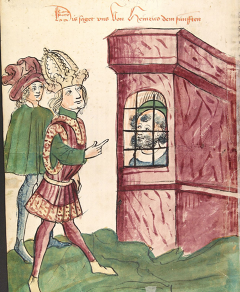
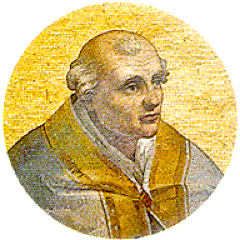
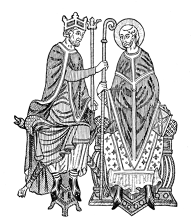
A fifty-year power struggle between popes and emperors ended with a handshake and a piece of parchment. On September 23, 1122, Pope Callixtus II and Holy Roman Emperor Henry V signed the Concordat of Worms in the German city of that name, settling the Investiture Controversy that had torn medieval Europe apart and redefined the boundary between church and state. The conflict centered on a deceptively simple question: who had the right to appoint bishops and abbots? Since the early Middle Ages, secular rulers had invested clergy with both spiritual authority (symbolized by the ring and staff) and temporal lands. Popes tolerated the arrangement until 1075, when Gregory VII declared that only the papacy could appoint church officials. Emperor Henry IV responded by declaring Gregory deposed. Gregory excommunicated Henry. What followed was decades of war, rebellion, and political chaos. Henry IV famously stood barefoot in the snow at Canossa in 1077, begging Gregory's forgiveness. The reconciliation was temporary. Armies loyal to popes and emperors clashed across Germany and Italy. Anti-popes were installed, bishops were deposed and reinstated, and the German nobility exploited the chaos to expand their own power at the emperor's expense. The Concordat of Worms split the difference. The emperor gave up the right to invest bishops with ring and staff, acknowledging the pope's spiritual authority over the clergy. In return, the pope conceded that the emperor could be present at elections of German bishops and invest them with secular lands and obligations. In practice, both sides retained significant influence over church appointments. The compromise mattered far beyond its immediate terms. By formally distinguishing spiritual from temporal authority, the Concordat established a principle that would echo through Western political thought for centuries: the idea that religious and governmental power operate in separate spheres. Every subsequent debate about church-state separation, from the English Reformation to the First Amendment, drew on precedents shaped by this medieval quarrel.
September 23, 1122
904 years ago
Key Figures & Places
What Else Happened on September 23
Caligula elevated his late sister Drusilla to the status of a goddess, the first time a Roman woman received such an honor. By granting her divine rank, he asse…
The English ship Christofer carried three iron cannons and one hand gun into the harbor at Arnemuiden in 1338 — and changed naval warfare before anyone knew wha…
French forces decimated an English fleet off the coast of Arnemuiden, capturing five ships and seizing a massive cargo of wool. This clash introduced gunpowder …
Mongol forces crushed a Ming Chinese army at the Battle of Kherlen, securing their second major military triumph since the collapse of the Yuan Dynasty. This vi…
Yorkist forces under the Earl of Salisbury routed a larger Lancastrian army at Blore Heath in Staffordshire, the first major bloodshed of the Wars of the Roses.…
Suleiman the Magnificent had marched an army of roughly 120,000 men from Istanbul to the gates of Vienna — a journey of nearly 1,000 miles. But he arrived in Se…
Talk to History
Have a conversation with historical figures who witnessed this era. Ask questions, explore perspectives, and bring history to life.