Soviet Nuclear Satellite Crashes Over Canada
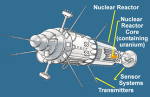
A Soviet nuclear-powered satellite broke apart over northern Canada on January 24, 1978, scattering radioactive debris across 124,000 square kilometers of the Northwest Territories. Cosmos 954, a radar ocean reconnaissance satellite carrying a nuclear reactor with approximately 50 kilograms of enriched uranium-235, had been tumbling out of control since late 1977. When it finally re-entered the atmosphere, the reactor did not separate as designed, and fragments rained down across the frozen tundra. The satellite was part of the Soviet RORSAT program (Radar Ocean Reconnaissance Satellite), designed to track NATO naval vessels using a powerful onboard radar powered by a small nuclear reactor. Normally, at end of mission, the reactor core would be boosted into a high "graveyard orbit" to allow centuries of radioactive decay. But Cosmos 954''s attitude control system failed, and Soviet ground controllers could not command the separation. American intelligence tracked the dying satellite for weeks, quietly warning allies while calculating where the debris might land. Operation Morning Light, the joint Canadian-American cleanup effort, became the largest radiological search in history. Teams using gamma-ray spectrometers mounted on aircraft and ground vehicles systematically swept the debris field through the brutal northern winter. They recovered approximately 65 kilograms of material, including pieces of the reactor core, some emitting radiation levels dangerous enough to kill a person with prolonged exposure. The largest fragment was found on the ice of Great Slave Lake. Overall, only about one percent of the reactor''s fuel was recovered. Canada presented the Soviet Union with a cleanup bill of $6 million Canadian dollars. After years of diplomatic wrangling, the Soviets paid $3 million in 1981—an implicit admission of liability without a formal apology. The incident accelerated international negotiations that produced the 1992 Principles Relevant to the Use of Nuclear Power Sources in Outer Space. Cosmos 954 demonstrated the risks of the Cold War''s most dangerous technology race: not the missiles aimed at cities, but the reactors silently orbiting overhead.
January 24, 1978
48 years ago
Key Figures & Places

What Else Happened on January 24
The Praetorian Guard found Claudius hiding behind a curtain, trembling and expecting death. But instead of killing him, they declared him emperor—a man previous…
Cassius Chaerea, a tribune of the Praetorian Guard, struck the first blow in a narrow underground passage beneath the Palatine Hill. The emperor Caligula, 28 ye…
Stabbed repeatedly in a palace corridor, Caligula never saw it coming. His own Praetorian Guards—the elite soldiers meant to protect him—turned executioners aft…
The Fatimids didn't just want Egypt. They wanted everything. Led by Ubayd Allah al-Mahdi, these North African Ismaili Shi'a Muslims launched a massive naval inv…
The Council of Basel formally suspended Pope Eugene IV, escalating a bitter power struggle between the papacy and the church hierarchy. Simultaneously, the firs…
The Vatican's power game turned brutal when a renegade church council essentially fired Pope Eugene IV—and meant it. Frustrated by papal corruption and desperat…
Talk to History
Have a conversation with historical figures who witnessed this era. Ask questions, explore perspectives, and bring history to life.