
Byzantine Revolt: Isaac Angelos Seizes the Throne
A desperate act of self-defense in the streets of Constantinople toppled an emperor and installed his would-be victim on the Byzantine throne. On September 11, 1185, Isaac Angelos killed Stephen Hagiochristophorites, the chief minister of Emperor Andronikos I Komnenos, when imperial agents came to arrest him on charges of conspiracy. Rather than await execution, Isaac fled to the Hagia Sophia and rallied the city’s population to open revolt. Andronikos I had seized power two years earlier through a campaign of calculated terror. Originally a provincial aristocrat and adventurer, he entered Constantinople in 1183 as a supposed protector of the young Emperor Alexios II, then ordered the boy strangled with a bowstring. Andronikos ruled through purges and public executions, turning the aristocracy and merchant class against him while simultaneously alienating the Norman Kingdom of Sicily, whose forces sacked Thessalonica in August 1185. The arrest attempt against Isaac proved to be the spark the city needed. When word spread that a nobleman had killed the hated Hagiochristophorites and taken sanctuary in the great cathedral, crowds surged through the streets. The city garrison refused to act against the mob. Within hours, Andronikos found himself abandoned by his guards and courtiers. He attempted to flee by boat across the Bosphorus but was captured, dragged back to the capital, and subjected to days of public torture before being killed in the Hippodrome. Isaac II Angelos was crowned emperor, founding a dynasty that would hold the throne intermittently until the Latin conquest of 1204. His reign brought temporary stability but ultimately proved unable to reverse the empire’s territorial losses or curb the power of provincial magnates. The Angeloi period is remembered as one of decline, culminating in the Fourth Crusade’s catastrophic sack of Constantinople, an event Isaac’s own deposed son helped provoke.
September 11, 1185
841 years ago
Key Figures & Places
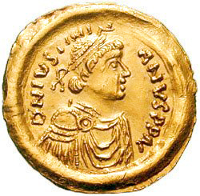
Byzantine Empire
Wikipedia
Isaac II Angelus
Wikipedia
Stephanus Hagiochristophorites
Wikipedia
Andronicus I Comnenus
Wikipedia
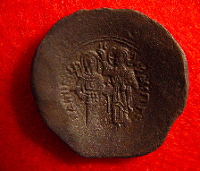
Andronikos I Komnenos
Wikipedia
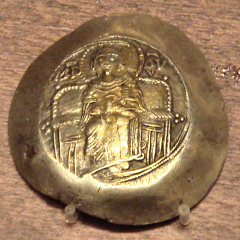
Isaac II Angelos
Wikipedia
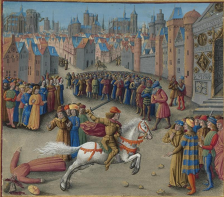
Stephen Hagiochristophorites
Wikipedia
Isaac II Angelos
Wikipedia
Stephen Hagiochristophorites
Wikipedia
Andronikos I Komnenos
Wikipedia
Byzantine Empire
Wikipedia
Basileos
Wikipedia
1130
Wikipedia
What Else Happened on September 11
Three Roman legions marched into the Teutoburg Forest and never came out. Germanic warriors under Arminius ambushed and annihilated an entire army of 20,000 men…
Three Roman legions — roughly 20,000 soldiers — walked into the Teutoburg Forest and didn't walk out. Germanic chieftain Arminius had served in the Roman army, …
Bishops of Visigothic Gaul gathered at the Council of Agde to codify forty-seven canons governing church discipline and clerical conduct. By standardizing rules…
Before 1226, the Eucharist was kept in locked tabernacles — venerated privately, not displayed publicly in parishes. King Louis VIII of France requested the pra…
A powerful earthquake struck southern Great Britain, leveling the original St. Michael’s Church atop Glastonbury Tor and claiming multiple lives. The collapse f…
English heavy cavalry, the most feared force on any medieval European battlefield, plunged into the River Forth as the narrow wooden bridge beneath them collaps…
Talk to History
Have a conversation with historical figures who witnessed this era. Ask questions, explore perspectives, and bring history to life.