Mariner 2 Launched: First Probe Bound for Venus
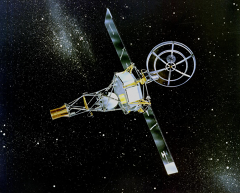
NASA's Mariner 2 spacecraft lifted off from Cape Canaveral on August 27, 1962, atop an Atlas-Agena rocket bound for Venus. Three and a half months later, it flew within 34,773 kilometers of the planet's surface, becoming the first spacecraft to successfully encounter another planet and transmitting data that demolished a century of romantic speculation about Earth's nearest neighbor. The mission almost did not happen. Mariner 1, launched five weeks earlier, had to be destroyed 293 seconds after liftoff when a guidance system error sent it veering off course. The failure was traced to a missing mathematical symbol in the flight computer's software, sometimes called the most expensive hyphen in history. NASA engineers scrambled to prepare the backup spacecraft, and Mariner 2 launched successfully on its first attempt. But the journey was plagued with problems: a solar panel failed, a gyroscope malfunctioned, and the spacecraft overheated dangerously as it approached the Sun. Despite the technical difficulties, Mariner 2 reached Venus on December 14, 1962, and its instruments delivered stunning results. The microwave radiometer measured surface temperatures exceeding 425 degrees Celsius, hot enough to melt lead. The infrared radiometer confirmed dense cloud cover. There was no detectable magnetic field. Venus, long imagined as a tropical paradise potentially teeming with life beneath its clouds, was revealed as a hellish pressure cooker with a crushing carbon dioxide atmosphere. The flyby lasted 42 minutes. Mariner 2 transmitted data for 129 days before contact was lost on January 3, 1963. The spacecraft remains in orbit around the Sun. The mission's success was a critical victory for NASA during the space race with the Soviet Union, whose own Venus probes had failed. More importantly, Mariner 2 proved that interplanetary exploration was technically feasible and scientifically transformative. Every subsequent mission to Mars, Jupiter, Saturn, and beyond built on the engineering lessons and institutional confidence that originated with a 203-kilogram spacecraft hurtling toward the second planet from the Sun.
August 27, 1962
64 years ago
Key Figures & Places

What Else Happened on August 27
The Persians had invaded Greece twice before Plataea. At Marathon, Athens stopped them alone. At Thermopylae, a small Spartan force held long enough for the fle…
Alaric I and his Visigoth army breached the Salarian Gate of Rome on August 24, 410 AD, and for three days the city that had ruled the Western world for centuri…
The combined Tang Chinese and Silla Korean fleets crushed the Baekje-Japanese alliance on the Geum River, destroying over 400 ships and ending Japan's first att…
Henry the Young King and Margaret of France were crowned in a lavish ceremony at Winchester Cathedral, an attempt by Henry II to secure the succession by crowni…
The Formulary of Adjudications — Goseibai Shikimoku — was a 51-article legal code issued by Hojo Yasutoki in 1232, the first comprehensive written law for Japan…
Shikken Hojo Yasutoki promulgated the Goseibai Shikimoku on August 27, 1232, establishing Japan's first written legal code designed specifically for the samurai…
Talk to History
Have a conversation with historical figures who witnessed this era. Ask questions, explore perspectives, and bring history to life.