

King John Marries Isabella: Seeds of Future Conflict
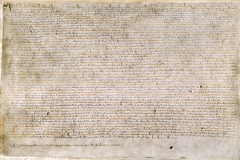
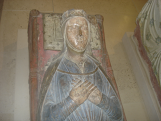
King John of England married the twelve-year-old Isabella of Angouleme in Bordeaux Cathedral on August 24, 1200, in a union driven as much by lust and territorial ambition as by diplomatic calculation. The marriage enraged the French nobleman to whom Isabella was already betrothed and set in motion a chain of feudal disputes that cost John nearly all of England's continental possessions. Isabella had been promised to Hugh IX of Lusignan, a powerful lord in Aquitaine whose family controlled strategically important territories in western France. John, who had recently divorced his first wife, was reportedly captivated by Isabella's beauty during a visit to her father's court. He married her without attempting to compensate or even properly notify the Lusignans. Hugh appealed to their mutual overlord for the French territories: King Philip II of France. Philip summoned John to appear before his court as Duke of Aquitaine to answer the Lusignan complaint. When John refused, Philip declared his French fiefs forfeit and launched an invasion. By 1204, Normandy, Anjou, Maine, and most of Aquitaine had fallen to the French crown. England lost territories the Norman and Angevin kings had held for over a century. The disaster was not solely caused by the marriage, but John's impulsive seizure of another lord's betrothed gave Philip the legal pretext he needed to strike. The loss of continental lands had enormous consequences for English history. John's desperate attempts to fund a reconquest led to heavy taxation and baronial resentment that culminated in the Magna Carta of 1215, the foundational document of English constitutional law. Isabella, for her part, outlived John by nearly three decades. After his death in 1216 she returned to France, married Hugh X of Lusignan (the son of her original betrothed), and wielded political influence in Aquitaine until she retired to Fontevraud Abbey. Her marriage to John had been the spark that reshaped the medieval balance of power between England and France.
August 24, 1200
826 years ago
Key Figures & Places


What Else Happened on August 24
Gaius Scribonius Curio crossed into Africa in 49 BC with two legions, chasing Pompey's allies, certain he had the upper hand. He didn't. Publius Attius Varus ha…

A column of superheated gas and rock shot 33 kilometers into the sky above the Bay of Naples on August 24, 79 AD, as Mount Vesuvius tore itself apart in one of …
Valentinian I elevated his eight-year-old son Gratian to the rank of co-Augustus, formalizing a dynastic succession plan to secure the imperial throne. This mov…
The last known inscription in Egyptian hieroglyphs was carved at the Temple of Isis on the island of Philae in 394 AD, a dedication by a priest named Esmet-Akho…
Alaric I and his Visigoth forces breached the Salarian Gate, initiating the first sack of Rome in eight centuries. This collapse of the city’s perceived invulne…
Vandal King Genseric led his forces into Rome in 455 AD after Pope Leo I negotiated terms: the gates would be opened in exchange for the Vandals refraining from…
Talk to History
Have a conversation with historical figures who witnessed this era. Ask questions, explore perspectives, and bring history to life.