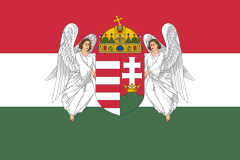
Stephen Crowned: Hungary Becomes a Christian Kingdom
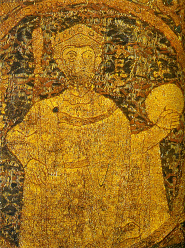
Stephen I received his crown from Pope Sylvester II on Christmas Day 1000 (or possibly January 1, 1001), but Hungary commemorates August 20 as its founding date, marking the day when the kingdom was formally established as a Christian state and Stephen was recognized as its first king. The coronation transformed the Magyars from a confederation of semi-nomadic pagan tribes feared across Europe into a settled Christian kingdom aligned with the Latin West. The decision shaped Central European politics for the next millennium. The Magyars had arrived in the Carpathian Basin around 895, migrating from the Eurasian steppe. For the next six decades, their mounted raiders terrorized Western Europe, striking as far as Germany, Italy, and France. The devastating defeat at the Battle of Lechfeld in 955, inflicted by King Otto I of Germany, ended the raids and forced the Magyar leadership to seek a new relationship with their Christian neighbors. Stephen's father, Geza, initiated the process of conversion, inviting missionaries and marrying his son to Gisela of Bavaria. Stephen completed the transformation with a combination of diplomatic skill and ruthless force. He defeated rival clan leaders who resisted Christianization, most notably his kinsman Koppany, and organized Hungary into a system of counties modeled on Carolingian administration. He established a network of bishoprics, founded Benedictine monasteries, and required every ten villages to build a church. Laws mandated church attendance and the observance of Christian fasting days. Paganism was not tolerated. The papal crown was the key to Stephen's strategy. By accepting his crown from Rome rather than from the Holy Roman Emperor, Stephen established Hungary as an independent Christian kingdom rather than a vassal state. This distinction gave Hungary sovereign status within medieval Europe's political order. Stephen was canonized in 1083, and his crown, known as the Holy Crown of Hungary, became a sacred national symbol with its own legal personality. August 20 remains Hungary's most important national holiday, celebrating the moment when a warrior people chose to become a European nation.
August 20, 1000
1026 years ago
Key Figures & Places
What Else Happened on August 20
Agrippa Postumus, the last surviving grandson of Augustus and his adopted son, was executed by his guards while in exile on the island of Planasia within days o…
Six days of fighting on the plains east of the Sea of Galilee in August 636 ended the Byzantine Empire's 600-year hold on Syria and Palestine and opened the Mid…
Tsar Simeon I crushed the Byzantine army at the Battle of Acheloos, ending the empire's dominance in the Balkans. This victory forced Constantinople to recogniz…
Pope Gregory VII canonized King Stephen I and his son Emeric, formalizing the Christian identity of the Hungarian state. By elevating the Arpad dynasty to saint…
Pope Gregory VII canonized Hungary's first king, Stephen I, and his son Prince Emeric on August 20, 1083, elevating them from royal founders to spiritual patron…
Richard I of England orders the execution of 2,700 Muslim soldiers and 300 women and children at Ayyadieh after accusing Saladin of reneging on ransom promises.…
Talk to History
Have a conversation with historical figures who witnessed this era. Ask questions, explore perspectives, and bring history to life.