Yarmouk: Arab Armies Crush Byzantium, Reshape History
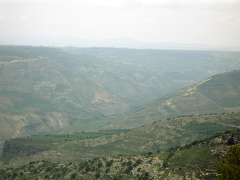
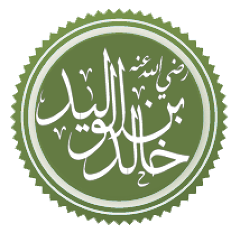
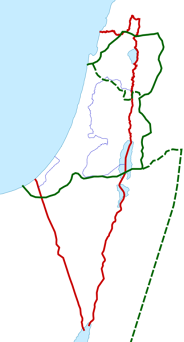
Six days of fighting on the plains east of the Sea of Galilee in August 636 ended the Byzantine Empire's 600-year hold on Syria and Palestine and opened the Middle East to Arab-Muslim conquest. The Battle of Yarmouk, fought near the Yarmouk River between the forces of the Rashidun Caliphate under Khalid ibn al-Walid and a Byzantine army under Emperor Heraclius, was one of the most consequential military engagements in world history. The Arab victory reshaped the political, religious, and cultural map of the region permanently. The Byzantine Empire, weakened by a devastating 26-year war with the Sassanid Persian Empire that had ended only in 628, was unprepared for a new threat from the Arabian Peninsula. The Arab armies that emerged from the desert after the Prophet Muhammad's death in 632 were motivated by religious fervor, bound by tribal loyalty, and led by commanders of extraordinary tactical ability. Khalid ibn al-Walid, known as "the Sword of God," had never lost a battle. Emperor Heraclius assembled what may have been the largest Byzantine army since the days of Justinian, with estimates ranging from 40,000 to over 100,000 soldiers. He committed this force to a single decisive engagement on the Yarmouk plain. Khalid, commanding roughly 25,000 to 40,000 Arab warriors, chose the terrain carefully. The battlefield was bounded by deep gorges on three sides, limiting Byzantine options for retreat and neutralizing their advantage in heavy cavalry. On the final day, Khalid launched a coordinated cavalry assault that drove the Byzantine forces backward toward the ravines. The retreat became a rout, then a massacre. Thousands of Byzantine soldiers fell into the gorges or were cut down as they fled. Heraclius, who had watched from Antioch, reportedly said, "Farewell, Syria, a beautiful land to the enemy." Within a decade, the Arabs had conquered Jerusalem, Egypt, Persia, and much of North Africa. The linguistic, religious, and cultural transformation that Yarmouk initiated remains the defining feature of the Middle East thirteen centuries later.
August 20, 636
1390 years ago
Key Figures & Places
What Else Happened on August 20
Agrippa Postumus, the last surviving grandson of Augustus and his adopted son, was executed by his guards while in exile on the island of Planasia within days o…
Tsar Simeon I crushed the Byzantine army at the Battle of Acheloos, ending the empire's dominance in the Balkans. This victory forced Constantinople to recogniz…
Stephen I received his crown from Pope Sylvester II on Christmas Day 1000 (or possibly January 1, 1001), but Hungary commemorates August 20 as its founding date…
Pope Gregory VII canonized King Stephen I and his son Emeric, formalizing the Christian identity of the Hungarian state. By elevating the Arpad dynasty to saint…
Pope Gregory VII canonized Hungary's first king, Stephen I, and his son Prince Emeric on August 20, 1083, elevating them from royal founders to spiritual patron…
Richard I of England orders the execution of 2,700 Muslim soldiers and 300 women and children at Ayyadieh after accusing Saladin of reneging on ransom promises.…
Talk to History
Have a conversation with historical figures who witnessed this era. Ask questions, explore perspectives, and bring history to life.