19th Amendment Ratified: Women Win the Vote
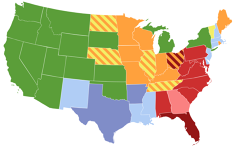
Tennessee's state legislature voted 49-47 on August 18, 1920, to ratify the Nineteenth Amendment, and with that single-vote margin, American women won the constitutional right to vote after a struggle that had lasted more than seven decades. The deciding ballot was cast by 24-year-old Harry T. Burn, the youngest member of the Tennessee House, who had planned to vote against ratification until he received a letter from his mother. "Be a good boy," Febb Burn wrote, "and help Mrs. Catt put the Rat in Ratification." The women's suffrage movement in America had its formal origin at the Seneca Falls Convention of 1848, where Elizabeth Cady Stanton and Lucretia Mott organized the first women's rights convention and issued a Declaration of Sentiments modeled on the Declaration of Independence. For the next 72 years, suffragists marched, petitioned, lobbied, were arrested, went on hunger strikes, and were forcibly fed in prison. The movement fractured along racial lines, with some white suffragists explicitly excluding Black women to avoid alienating Southern legislators. The amendment was first introduced in Congress by Senator Aaron Sargent in 1878 and was repeatedly voted down for four decades. World War I proved a turning point, as women's contributions to the war effort made opposition to their political participation increasingly difficult to justify. President Woodrow Wilson, who had long been ambivalent, finally endorsed the amendment in 1918. Congress passed it on June 4, 1919, and sent it to the states for ratification. Ratification required 36 of the 48 states. By the summer of 1920, 35 had ratified, and Tennessee became the critical battleground. Anti-suffrage forces, financed in part by the liquor industry, which feared women would vote for Prohibition enforcement, lobbied intensely. The vote in the Tennessee Senate passed comfortably, but the House was deadlocked until young Burn changed his mind. His mother's letter became one of the most consequential pieces of personal correspondence in American history. When the amendment took effect on August 26, 1920, approximately 26 million women became eligible to vote.
August 18, 1920
106 years ago
Key Figures & Places
What Else Happened on August 18
Rome dedicates its first known temple to Venus, establishing the festival of Vinalia Rustica — originally a wine harvest celebration tied to Jupiter that absorb…
Umayyad partisans defeated supporters of Ibn al-Zubayr at the Battle of Marj Rahit in 684 CE, cementing Umayyad control over Syria. The battle was fought betwee…
Princess Abe became Empress Genmei of Japan, the fourth woman to rule as sovereign in her own right. During her eight-year reign, she commissioned the Kojiki — …
Bishop Albert of Buxhoeveden founds Riga as a base for the Christianization of the Baltic peoples. The settlement grew rapidly into a major Hanseatic trading po…
The man who conquered more territory than any individual in human history died in August 1227, during the final campaign against the Western Xia kingdom in nort…
French knights and Flemish infantry fought to a bloody stalemate at Mons-en-Pévèle, exhausting both sides after a day of brutal combat. While the tactical draw …
Talk to History
Have a conversation with historical figures who witnessed this era. Ask questions, explore perspectives, and bring history to life.