Kennedy Inaugurated: Ask Not What Your Country Can Do
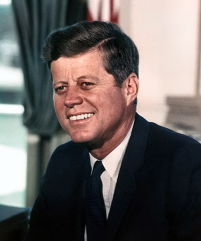
Eight inches of snow had fallen on Washington the night before, and the temperature at noon was 22 degrees, but John Fitzgerald Kennedy removed his overcoat before stepping to the podium on January 20, 1961, projecting the youthful vigor that had defined his campaign. At forty-three, he was the youngest elected president in American history and the first Roman Catholic, and his inaugural address would produce the most quoted line in the history of presidential rhetoric: "Ask not what your country can do for you; ask what you can do for your country." Kennedy had won the presidency by the narrowest popular vote margin of the twentieth century, defeating Vice President Richard Nixon by roughly 112,000 votes out of nearly 69 million cast. The electoral college margin was more comfortable, 303 to 219, but the closeness of the popular vote left questions about his mandate. His Catholicism had been a significant liability; anti-Catholic sentiment remained widespread enough that Kennedy had been forced to address the issue directly in a speech to Protestant ministers in Houston during the campaign, pledging that his faith would not dictate his governance. The inauguration itself was a meticulously staged production. Kennedy had recruited poet Robert Frost, then eighty-six years old, to read a poem, the first time a poet had participated in a presidential inauguration. The winter sun glared so brightly off the snow that Frost could not read his prepared piece and instead recited "The Gift Outright" from memory. The moment became an iconic image of the ceremony. Kennedy's address was fourteen minutes long, one of the shortest inaugurals in history, and every sentence had been polished by speechwriter Ted Sorensen over weeks of revision. The speech was explicitly Cold War in its framework, promising to "pay any price, bear any burden" in the defense of liberty. It challenged both Americans and the world to pursue public service and international cooperation, and its idealism inspired the creation of the Peace Corps within weeks. The address also contained a darker note that would prove prescient. "In the long history of the world, only a few generations have been granted the role of defending freedom in its hour of maximum danger," Kennedy said. "I do not shrink from this responsibility. I welcome it." Less than three years later, he would be assassinated in Dallas. The inauguration marked the arrival of a new political generation, the first president born in the twentieth century, replacing the seventy-year-old Eisenhower with a leader who represented ambition, risk, and a restless confidence that the country could be remade.
January 20, 1961
65 years ago
Key Figures & Places
What Else Happened on January 20
Pope Fabian died under the sword during Emperor Decius’s systematic purge of Christians, becoming one of the first high-profile casualties of the Roman state’s …
Emperor Decius launched a systematic persecution of Christians across the Roman Empire beginning on January 20, 250, requiring every citizen to perform a sacrif…
King Chindasuinth crowned his son Recceswinth as co-ruler of the Visigothic Kingdom at the urging of Bishop Braulio of Zaragoza, securing a smooth dynastic succ…
Lalli, a Finnish peasant, struck down Bishop Henry on the frozen surface of Lake Köyliö after a dispute over food and hospitality. This act of violence transfor…
Simon de Montfort convened the first English parliament to include representatives from major towns alongside the traditional nobility at the Palace of Westmins…
Simon de Montfort, Earl of Leicester, summoned representatives to the Palace of Westminster on January 20, 1265, creating an assembly that for the first time in…
Talk to History
Have a conversation with historical figures who witnessed this era. Ask questions, explore perspectives, and bring history to life.